AC Voltage and Current Transducers: Bridging the Gap Between High Voltage and Control Systems
The Core Function: Accurate Signal Translation and Safe Isolation
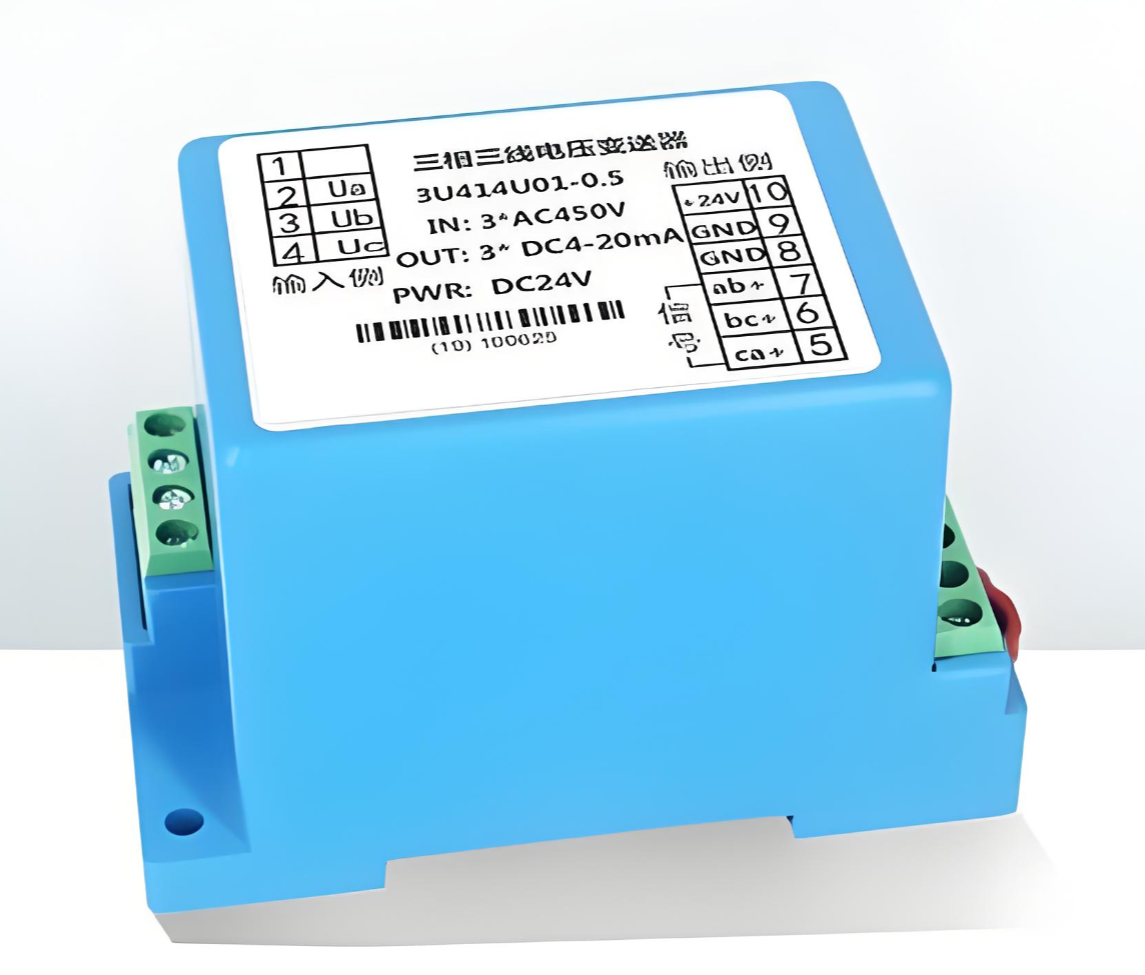
In industrial automation, renewable energy plants, and smart building management, a critical challenge exists: how to safely and accurately monitor high-voltage, high-current AC power lines using low-voltage electronic control systems. This is the precise role of AC voltage and current transducers. They act as intelligent translators, converting a high-level input parameter (e.g., 0-500VAC or 0-100AAC) into a standardized, low-level, and isolated output signal—typically a 0-5VDC, 0-10VDC, or 4-20mA analog signal. The most vital function they perform is galvanic isolation. Using technologies like precision current transformers for current and potential transformers or resistive dividers for voltage, coupled with advanced signal conditioning circuits, they create a complete dielectric barrier. This isolation protects sensitive PLCs, SCADA inputs, and data acquisition cards from destructive high-voltage transients, ground loops, and noise, ensuring system safety and signal integrity. High-performance transducers from manufacturers like Oswell are engineered to provide this isolation with high dielectric strength (e.g., 2-4kV) while maintaining precise signal translation, forming the fundamental bridge between the power and control worlds.
Enabling Intelligence: From Basic Monitoring to Advanced Grid Support
The standardized output from these transducers is the universal language for control and monitoring systems. In a motor control center, current transducers provide real-time load feedback for overload protection and efficiency tracking. In a solar PV inverter, they measure AC output current and voltage for grid synchronization, power factor control, and feed-in tariff metering. Their role becomes even more critical in advanced grid support functions like static VAT compensators and active harmonic filters, where millisecond-level, high-fidelity measurements of grid parameters are required for real-time compensation. Modern transducers go beyond basic conversion; they offer features like true RMS measurement for accurate readings on nonlinear loads, wide frequency response for harmonic analysis, and high linearity across the entire input range. This ensures that the data fed into the energy management system or grid controller is an accurate representation of the actual power conditions. By providing reliable, noise-free signals, transducers from suppliers like Oswell enable precise control algorithms, predictive maintenance, and data-driven optimization of electrical systems.
Selection Criteria: Matching the Transducer to the Application
Choosing the right transducer is critical for system performance. Key specifications must be matched to the application:
Input Range and Output Signal: The input rating (e.g., 0-100A AC) must safely exceed the maximum measurable current. The output type (e.g., 4-20mA for long-distance transmission, 0-5V for board-level integration) must match the controller's input card.
Accuracy Class: For revenue metering or precise control, a high accuracy class (e.g., 0.5%) is essential. For general monitoring, Class 1.0 may suffice.
Response Time: Applications like fast protection require transducers with very low response times (<100ms).
Power Supply and Mounting: Modern transducers are typically loop-powered (for 4-20mA models) or require a small auxiliary supply (e.g., 24VDC). Their form factor must suit the panel layout, with options for DIN rail mounting being industry-standard for ease of installation.
Suppliers like Oswell offer comprehensive portfolios designed for diverse industrial and energy applications, ensuring that engineers can find a transducer that delivers the right combination of precision, reliability, and form factor for their specific bridge between high voltage and the digital control system.
In conclusion, AC voltage and current transducers are far more than simple converters; they are the indispensable, intelligent data highways of modern electrified systems. They provide the critical, safe, and accurate interface that allows digital control systems to "see," analyze, and intelligently manage high-power electrical processes. Their performance directly impacts system safety, control precision, energy efficiency, and asset protection. For system integrators and procurement specialists, selecting transducers is a strategic decision that affects the entire project's intelligence and reliability. Partnering with established component manufacturers like Oswell, who design and build these critical interface devices with a focus on measurement accuracy, robust isolation, and industrial durability, ensures that the bridge between the high-power field and the control room is not just functional, but is a cornerstone of a safe, efficient, and intelligent operational infrastructure.
Related product and article resources
For procurement comparison and technical evaluation, readers can continue with these related product pages and supporting articles.