BMS Shunt Resistor: The Core Component for Accurate Battery Management
BMS Shunt Resistor: The Core Component for Accurate Battery Management
The Principle of High-Precision Current Measurement in BMS
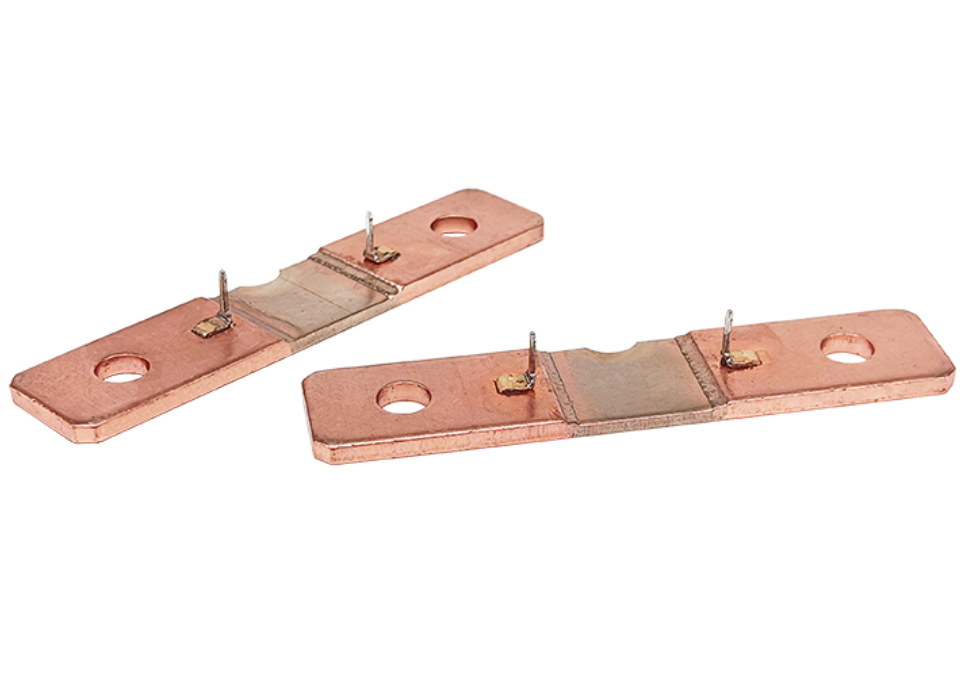
At the heart of every sophisticated Battery Management System (BMS) lies a seemingly simple component: the shunt resistor. This precision resistor, connected in series with the battery pack, operates on the fundamental principle of Ohm's Law. As current flows through the battery, it passes through the shunt, generating a minute but highly proportional voltage drop across it. The BMS's dedicated metering Integrated Circuit (IC) then measures this precise micro-voltage. The accuracy of the entire system's current measurement—critical for State of Charge (SOC) calculation, State of Health (SOH) estimation, and protection—hinges entirely on the stability and precision of this shunt resistor. Its low resistance value (typically in the micro-ohm range) minimizes power loss and heat generation, while its exceptional long-term stability and low temperature coefficient ensure that the measured voltage signal remains a true and reliable representation of the actual current over the battery's entire lifecycle and under varying environmental conditions.
Beyond Measurement: Enabling Protection, Efficiency, and Data Integrity
The role of the BMS shunt resistor extends far beyond mere measurement; it is the foundational sensor enabling system safety, efficiency, and data-driven management. By providing real-time, high-fidelity current data, it allows the BMS to execute critical protective functions. It can instantaneously detect dangerous overcurrent conditions, triggering safeguards to prevent thermal runaway. It is also indispensable for precise Coulomb counting, the primary method for determining SOC, ensuring users have an accurate reading of remaining battery capacity. Furthermore, in applications like electric vehicles and energy storage systems, this data is vital for optimizing charge/discharge cycles, balancing cells, and predicting maintenance needs. A high-quality shunt, with its minimal parasitic inductance and robust construction, ensures that even fast transient currents are captured accurately, preventing data corruption and enabling the BMS to make reliable, split-second decisions that protect both the battery asset and the end-user.

Key Selection Criteria: Stability, Precision, and Thermal Performance
Selecting the right shunt resistor is not a matter of choosing the lowest cost option; it is an engineering decision critical to system performance. Key parameters must be meticulously evaluated. First, the resistor's temperature coefficient must be extremely low to ensure measurement accuracy is maintained across the wide operational temperature range of a battery pack. Second, the long-term stability and low drift are paramount, as any change in resistance value over time directly translates to a cumulative error in SOC calculation, a phenomenon known as "SOC drift." Third, the power rating and thermal management are crucial. The resistor must dissipate I²R heat effectively without self-heating causing significant measurement error or degradation. This is often achieved through designs with integrated thermal pads or mounts. Finally, the low resistance value and tight tolerance (often within 0.1% or better) are essential for minimizing voltage burden and ensuring measurement precision from the outset. Manufacturers like Oswell specialize in producing shunts that meet these demanding criteria for metering and BMS applications.
In conclusion, the BMS shunt resistor is far more than a passive component; it is the critical sensory organ of the battery management system. Its unparalleled precision in translating current flow into a measurable signal forms the bedrock for accurate state estimation, robust safety protection, and optimal system efficiency. The choice of a shunt resistor with excellent metrological characteristics—low temperature coefficient, high stability, and precise tolerance—is therefore a decisive factor in the reliability, safety, and longevity of any lithium-ion battery system. Investing in a high-quality shunt, such as those engineered for precision metering, is an investment in the integrity and performance of the entire BMS.