Comparing Split-Core and Solid-Core CTs
Comparing Split-Core and Solid-Core CTs
Core Distinction: Installation Flexibility vs. Performance Integrity
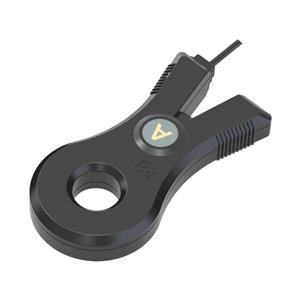
The most fundamental difference between split-core and solid-core (toroidal) Current Transformers lies in their physical design and the resulting installation method. A solid-core CT features a continuous, one-piece toroidal core, typically made of high-permeability steel or nanocrystalline material. The primary conductor must be physically passed throughthe center of the core aperture during installation, which often necessitates disconnecting the cable, threading it through, and re-terminating. This process is time-consuming and usually requires a planned power shutdown. In contrast, a split-core CT is engineered with a hinged or clamp-open mechanism, allowing the core to be opened, placed around an existing live conductor, and then closed. This enables a non-intrusive, live installation without any need to cut or disconnect the primary cable. This single feature makes split-core CTs the de factostandard for retrofitting monitoring equipment onto existing, energized systems. However, the physical break in the magnetic circuit of a split-core CT introduces a small air gap, which can slightly affect performance parameters compared to a perfect, unbroken toroid.
Performance Analysis: Accuracy, Stability, and Application Suitability
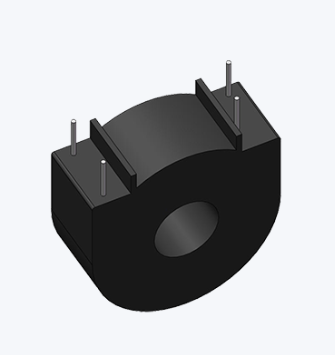
The design trade-off directly translates to measurable differences in performance, dictating their ideal application scenarios. Solid-core CTs generally offer superior accuracy and stability. Their continuous, symmetrical core provides an ideal, low-reluctance magnetic path, resulting in excellent linearity, minimal phase error, and higher resistance to external electromagnetic interference. They are the preferred choice for revenue metering and high-precision power quality analysis where the highest accuracy classes (e.g., Class 0.2S) are required. They are typically installed in new builds or panels where the primary conductor can be routed through the CT before final termination. Split-core CTs, while highly accurate for most applications (commonly achieving Class 0.5 or 0.5S), may exhibit slightly higher ratio and phase errors, especially at very low currents, due to the non-ideal magnetic circuit. Their paramount advantage is application flexibility. They are indispensable for retrofit projects, temporary monitoring, and maintenance on live equipment where shutdowns are costly or impossible. The SDQ series, for example, is designed to deliver reliable performance in this convenient split-core form factor, making advanced energy monitoring accessible without operational disruption.
Long-Term Considerations: Cost of Ownership and System Integration
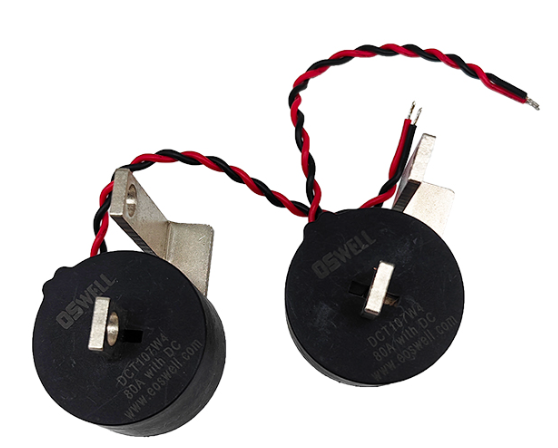
The choice between CT types also impacts the total cost of ownership and system design philosophy. The initial unit cost of a precision split-core CT is typically higher than that of an equivalent-accuracy solid-core CT, reflecting its more complex mechanical design. However, the total installed cost for a retrofit scenario overwhelmingly favors the split-core type. The elimination of labor for cable disconnection/re-termination and, critically, the avoidance of revenue loss or operational impact from a system shutdown, result in massive savings. For new installations, solid-core CTs often present a lower total cost. Regarding long-term reliability, the moving parts (hinge, latch) in a split-core CT introduce a potential failure mode not present in a solid-core unit. High-quality split-core CTs mitigate this with robust, over-engineered mechanical components and protective epoxy potting. For system integration, both types integrate seamlessly with modern meters. The decision ultimately hinges on the project's primary constraint: Is it a new construction where optimal performance and cost are key? Then solid-core is ideal. Is it an existing system where minimizing downtime and installation complexity is paramount? Then split-core is the clear and necessary solution.

In conclusion, the choice between split-core and solid-core Current Transformers is not about which is universally "better," but about selecting the right tool for a specific application challenge. Solid-core CTs excel in environments where maximum accuracy, stability, and cost-efficiency for new installations are the priorities. Split-core CTs provide an indispensable, practical solution for modernizing existing infrastructure, enabling live installation, and facilitating energy audits and monitoring where system interruption is not an option. Understanding this core trade-off—between the theoretical performance perfection of a solid toroid and the unparalleled installation flexibility of a split-core design—is essential for engineers and project planners to deploy effective, reliable, and economical current sensing solutions.