How Current Sensors Improve Battery Safety in Modern Electric Vehicles
How Current Sensors Improve Battery Safety in Modern Electric Vehicles
As electric vehicles continue to expand across global markets, battery safety has become one of the most important concerns for EV manufacturers, battery pack integrators, and procurement teams. Modern electric vehicle systems rely on precise current monitoring to maintain stable charging and discharging, protect battery cells, and ensure the safe operation of the entire power system. In this process, current sensors are not just electronic components—they are critical safety devices that directly affect vehicle reliability, battery life, and system efficiency.
For buyers and sourcing managers, selecting the right current sensor supplier is increasingly important. A qualified current sensor should offer high accuracy, thermal stability, fast response, and long-term consistency under demanding automotive conditions. In EV battery applications, poor current measurement can lead to overcurrent risk, overheating, inaccurate state-of-charge calculation, and even reduced battery lifespan. That is why high-performance current sensors are becoming a key part of the electric vehicle supply chain.
1. Why Accurate Current Monitoring Is Essential for Battery Safety
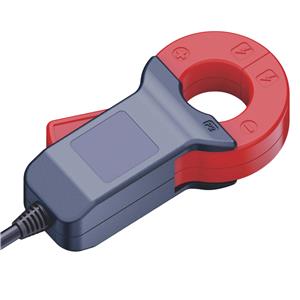
The battery pack is the most valuable and sensitive subsystem in an electric vehicle. During operation, it continuously experiences dynamic load changes caused by acceleration, braking, charging, discharging, and temperature fluctuations. To manage these conditions safely, the Battery Management System (BMS) must receive accurate, real-time current data. Current sensors provide this data by detecting the electrical current flowing through the battery circuit and sending measurement signals to the control system.
This current information is essential for several key safety functions. First, it helps the BMS prevent overcurrent and short-circuit events, both of which can damage battery cells or other power electronics. Second, it supports accurate battery balancing and state-of-charge estimation, which are necessary for maintaining performance consistency across the pack. Third, it enables thermal protection strategies, because the system can identify abnormal current behavior before overheating develops into a more serious safety issue.
In addition, current sensors play an important role during charging. Fast charging systems place significant stress on the battery, and even small measurement errors can influence charging control logic. With high-precision current sensing, the BMS can regulate charging current more effectively, improve battery protection, and reduce the risk of overcharging. For EV manufacturers, this means safer vehicles, fewer warranty risks, and better customer confidence in the final product.
2. What Procurement Teams Should Look for When Sourcing Current Sensors
From a procurement perspective, current sensors should be evaluated not only on price, but also on performance, reliability, and supplier capability. In EV applications, component quality has a direct impact on system safety, so choosing the lowest-cost option without technical verification can introduce unnecessary risk. Buyers should pay close attention to measurement accuracy, temperature performance, response speed, insulation characteristics, and long-term stability.
Accuracy is one of the most critical indicators. A small deviation in current measurement can affect battery state calculations, charging efficiency, and protective control functions. Thermal stability is equally important, especially in electric vehicles where current loads can be high and operating temperatures can vary widely. A current sensor that performs well at room temperature but becomes unstable under heat may not meet automotive requirements in real use.
Procurement teams should also assess the supplier’s manufacturing consistency and ability to support customization. Different EV systems may require different current ranges, mounting structures, package sizes, or interface types. Suppliers with experience in automotive electronics can usually provide better engineering support, validation assistance, and customization options for battery pack and BMS applications.
Another important factor is supply reliability. As EV production volumes grow, manufacturers need dependable partners that can maintain stable quality and delivery performance. For international buyers, suppliers with clear quality systems, application expertise, and responsive technical communication are far more valuable than vendors who only compete on unit cost. In practice, a reliable current sensor supplier can help reduce qualification time, improve sourcing efficiency, and strengthen long-term supply chain resilience.
3. How Advanced Current Sensors Support the Future of Electric Vehicles
The future of electric vehicles is moving toward higher voltage platforms, larger battery capacities, faster charging speeds, and smarter energy management. These trends are increasing the performance demands placed on current measurement components. Advanced current sensors help support this transition by delivering faster, more accurate, and more stable electrical monitoring under complex operating conditions.
In next-generation EV systems, current sensors are used not only in the main battery pack, but also in onboard chargers, DC-DC converters, inverters, energy storage modules, and charging infrastructure. Their role is expanding from simple current detection to broader support for intelligent energy control and predictive safety management. With more precise sensing data, EV systems can optimize energy use, improve vehicle range, and enhance the overall efficiency of battery operation.
For procurement managers and technical buyers, this creates both an opportunity and a responsibility. The opportunity lies in selecting components that can help future-proof vehicle platforms and support higher-value product development. The responsibility lies in partnering with suppliers that understand EV applications and can deliver products aligned with evolving automotive standards. As the EV market becomes more competitive, sourcing higher-quality current sensors will be an increasingly important part of building safer and more efficient electric mobility solutions.
Conclusion
Current sensors are a vital part of modern electric vehicle battery safety, providing the precise measurement data needed for overcurrent protection, charging control, thermal management, and overall BMS performance. For procurement teams, the value of a current sensor goes far beyond its component cost—it affects product safety, battery life, and supply chain reliability. By choosing accurate, durable, and application-ready current sensing solutions, EV manufacturers can improve battery safety while building more efficient and competitive electric vehicles for the global market.