How Current Transformers Support Real-Time Load Monitoring in Commercial and Industrial Power Systems
How Current Transformers Support Real-Time Load Monitoring in Commercial and Industrial Power Systems
Commercial buildings and industrial facilities are facing increasing pressure to improve energy efficiency, control operating costs, and maintain stable electrical systems. As electrical loads become more complex, traditional periodic meter readings are no longer sufficient for modern power management. Facility operators increasingly need real-time information about where electricity is being consumed, when peak loads occur, and whether equipment is operating within normal conditions.
Current transformers (CTs) provide a practical and reliable way to collect this information. By converting large AC currents into standardized, measurable secondary signals, CTs allow smart meters, power monitoring equipment, energy management systems, and industrial controllers to continuously monitor electrical loads without directly exposing measurement devices to high primary currents.
For panel builders, smart meter manufacturers, power monitoring equipment suppliers, and industrial procurement teams, selecting the right current transformer can directly affect measurement accuracy, installation efficiency, system reliability, and the long-term value of a monitoring solution.
1. Why Real-Time Load Monitoring Has Become Essential for Modern Power Systems
Electrical demand in commercial and industrial facilities is rarely constant. HVAC equipment, motors, pumps, compressors, production lines, elevators, data centers, and charging equipment can create large changes in power consumption throughout the day. Without continuous monitoring, operators may only discover excessive demand or abnormal equipment behavior after energy costs have already increased or a fault has occurred.
Real-time load monitoring gives facility managers and automation systems immediate visibility into electrical conditions. Current transformers installed on feeders, branch circuits, machinery, or distribution panels provide continuous current data that can be used to understand operating loads and identify unusual changes.
Typical applications include:
Monitoring main incoming power and branch circuits
Tracking production line and machine loads
Identifying peak demand periods
Detecting overloaded circuits or abnormal current increases
Supporting energy allocation between departments or tenants
Providing data for building and factory energy management systems
For industrial users, this visibility can also support preventive maintenance. A motor or machine that gradually draws more current than its normal operating level may indicate mechanical wear, increased friction, process problems, or other developing faults. Early detection allows maintenance teams to investigate before the issue causes unplanned downtime.
2. What Buyers Should Consider When Selecting Current Transformers for Load Monitoring
Not every current transformer is suitable for every monitoring project. Procurement teams should match CT specifications to the actual electrical system rather than choosing products based only on price or rated current.
Primary Current Range:
The CT should match the expected operating current of the monitored circuit. Selecting an unnecessarily high current rating may reduce useful measurement resolution at lower loads, while an undersized CT may not provide the required operating margin.
Accuracy:
Measurement accuracy becomes especially important when CT data is used for energy analysis, cost allocation, efficiency evaluation, or smart metering. Buyers should evaluate accuracy performance across the expected operating range rather than focusing only on a single nominal point.
Installation Design:
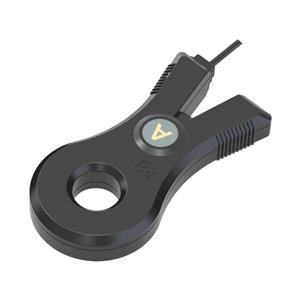
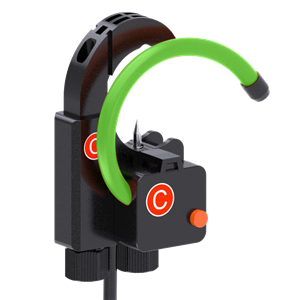
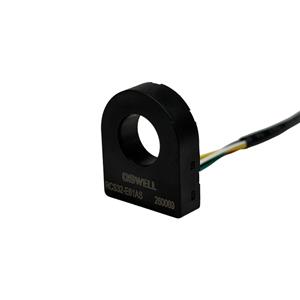
Solid-core CTs may be appropriate for new equipment where conductors can be installed through the transformer during assembly. Split-core current transformers can be attractive for retrofit projects because they can often be installed around existing cables without disconnecting the conductor, reducing installation time and downtime.
Output and System Compatibility:
The CT output must be compatible with the connected meter, monitoring module, controller, or energy management system. Buyers should confirm ratio, burden, secondary output, mechanical dimensions, and wiring requirements during the design stage.
Long-Term Stability:
Commercial and industrial monitoring equipment may operate continuously for many years. Consistent materials, controlled manufacturing processes, insulation performance, and stable measurement characteristics are therefore important procurement considerations.
For OEM customers, customization can also be valuable. Different panels and monitoring devices may require specific apertures, mounting structures, lead wires, terminals, ratios, or mechanical dimensions. Working with a manufacturer capable of supporting application-specific designs can simplify integration and reduce redesign work.
3. How Reliable CT Data Creates More Value for Energy Management and Industrial Operations
The value of a current transformer extends beyond the component itself. Accurate and stable current data becomes the foundation for broader energy management and operational decisions.
When integrated with smart meters, power analyzers, building management systems, or industrial monitoring platforms, CT measurements can help users compare loads between equipment, production areas, floors, tenants, or operating periods. This makes it easier to identify where energy-saving actions can deliver the greatest return.
Real-time CT data can also support demand management. Commercial facilities may use load information to avoid unnecessary demand peaks, while factories can coordinate high-power machinery to reduce simultaneous load spikes. In facilities using solar generation, battery storage, or EV charging, current monitoring provides additional visibility into how energy is generated, distributed, stored, and consumed.
For equipment manufacturers and system integrators, supplier capability should therefore be evaluated as part of the complete monitoring solution. Important factors include:
Consistent measurement performance between production batches
Reliable quality control and electrical testing
Ability to support different current ratios and structures
Engineering support during product integration
Stable production capacity for OEM and volume projects
A dependable CT supplier can help reduce qualification risk and make it easier for manufacturers to standardize current measurement across multiple products or monitoring platforms. For buyers managing long-term programs, component consistency and supply stability can be as important as initial unit price.
Conclusion
Current transformers are a fundamental component of real-time load monitoring in commercial and industrial power systems. By providing safe, accurate, and continuous current data, CTs help facilities understand electricity consumption, identify peak loads, detect abnormal equipment behavior, and improve energy management. For smart meter manufacturers, monitoring equipment suppliers, panel builders, and industrial procurement teams, selecting the right CT means considering not only current rating and accuracy, but also installation design, long-term stability, system compatibility, customization capability, and supplier consistency. A well-matched current transformer solution provides reliable measurement data that can support lower operating costs, better equipment management, and more intelligent power systems.