How To Choose The Best Current Transformer For Smart Meter Accuracy And Stability
How To Choose The Best Current Transformer For Smart Meter Accuracy And Stability
In smart meter design, the current transformer is not just another component. It directly affects measurement accuracy, long-term stability, product safety, and the overall reliability of the meter in real operating conditions. A poor CT choice can lead to ratio errors, unstable readings, temperature drift, installation limitations, and inconsistent field performance. This guide explains what engineers, purchasing teams, and project managers should evaluate before selecting the best current transformer for smart meter applications.
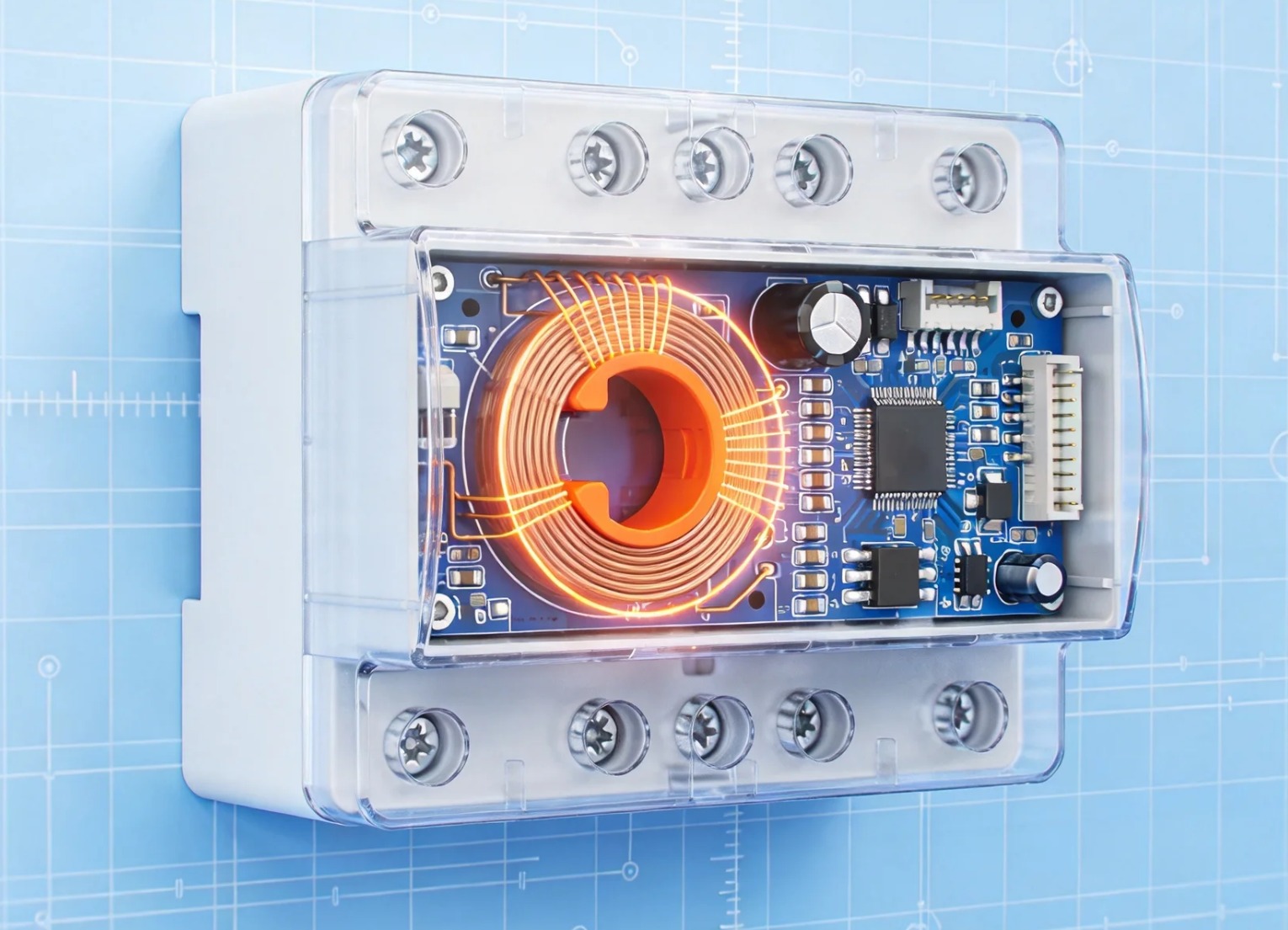
1. Why Current Transformer Selection Matters In Smart Meter Design
A smart meter must perform accurately over a long service life, often under changing load conditions, fluctuating ambient temperatures, and demanding installation environments. In this context, the current transformer plays a central role in ensuring that the meter can capture current signals precisely and convert them into stable, usable measurement data. If the CT is not properly matched to the meter design, even a well-developed electronic system may struggle to maintain reliable performance.
The best current transformer for a smart meter is not always the smallest or the lowest-cost option. It should be selected based on the expected current range, target accuracy level, insulation requirements, mechanical space, thermal conditions, and long-term consistency. For example, a CT designed for general monitoring may not be suitable for precision metering if its linearity and error stability are not tightly controlled. Likewise, a compact CT may save board space, but if it introduces excess burden or weaker thermal behavior, it can reduce the meter’s performance over time.
Another important point is product consistency. In laboratory testing, many CTs may perform acceptably. However, smart meter projects usually require stable performance across large production volumes. This means the selected CT should not only meet technical targets on paper, but also deliver repeatable electrical characteristics, reliable insulation performance, and manufacturing consistency from batch to batch. That is why smart meter developers should evaluate the current transformer from both a design perspective and a supply reliability perspective.
In short, CT selection affects more than measurement. It influences calibration difficulty, testing efficiency, field reliability, and even after-sales risk. A better selection process at the beginning helps reduce hidden problems later in certification, production, and real-world operation.
2. What Technical Factors Should Be Evaluated Before Final Selection
The first factor is the current range and transformation ratio. The CT should be matched to the nominal current, overload range, and expected operating profile of the smart meter. A ratio that looks acceptable in theory may still create measurement instability if the actual load profile is highly dynamic. Designers should evaluate how the CT performs across low, medium, and high current points instead of focusing only on one standard condition.
The second factor is accuracy behavior across the working range. Accuracy is not only about one calibration result. It is about how well the CT maintains predictable performance under different loads, temperatures, and time periods. Engineers should review ratio error, phase error, linearity, repeatability, and temperature drift together. In high-volume smart meter production, stable electrical behavior can reduce calibration complexity and improve final product consistency.
The third factor is burden compatibility. If the CT is not matched well with the meter circuit and sampling design, measurement quality can be affected. A proper burden relationship helps keep the signal clean and stable. This is especially important in compact smart meter layouts, where electrical performance and mechanical space must be balanced carefully.
Insulation performance is another major consideration. Smart meters must operate safely in demanding electrical environments, so the CT should provide reliable isolation between primary and secondary sides. This affects not only electrical safety, but also long-term product credibility in regulated markets. Temperature stability is equally important. A CT that performs well in room temperature testing but drifts excessively at higher temperatures may create hidden field issues later.
Finally, designers should check dimensional fit, mounting structure, and manufacturing tolerance. In a real smart meter project, a technically capable CT still needs to integrate smoothly into the housing, PCB layout, and assembly process. Good dimensional control and mechanical compatibility improve both product design efficiency and production stability.

| Selection Factor | Why It Matters | What To Check |
|---|---|---|
| Current Ratio | Affects signal conversion and metering suitability | Nominal current, overload range, operating profile |
| Accuracy Stability | Determines measurement consistency over time | Ratio error, repeatability, linearity, temperature drift |
| Burden Matching | Influences signal quality and circuit compatibility | Output behavior, burden conditions, circuit fit |
| Insulation Safety | Supports safe and reliable meter operation | Isolation performance, dielectric reliability |
| Temperature Performance | Reduces drift under real field conditions | High/low temperature stability, long-term drift |
| Mechanical Fit | Improves assembly efficiency and layout compatibility | Dimensions, mounting method, tolerance control |
3. How To Make A Practical CT Decision For Smart Meter Projects
In practice, the best selection process starts with the application rather than the catalog. Teams should first define the meter type, expected current range, installation constraints, target market, and required long-term performance level. Once these conditions are clear, it becomes easier to narrow down which CT structure, size, and electrical profile are most appropriate. This reduces the risk of choosing a technically acceptable part that later causes integration problems.
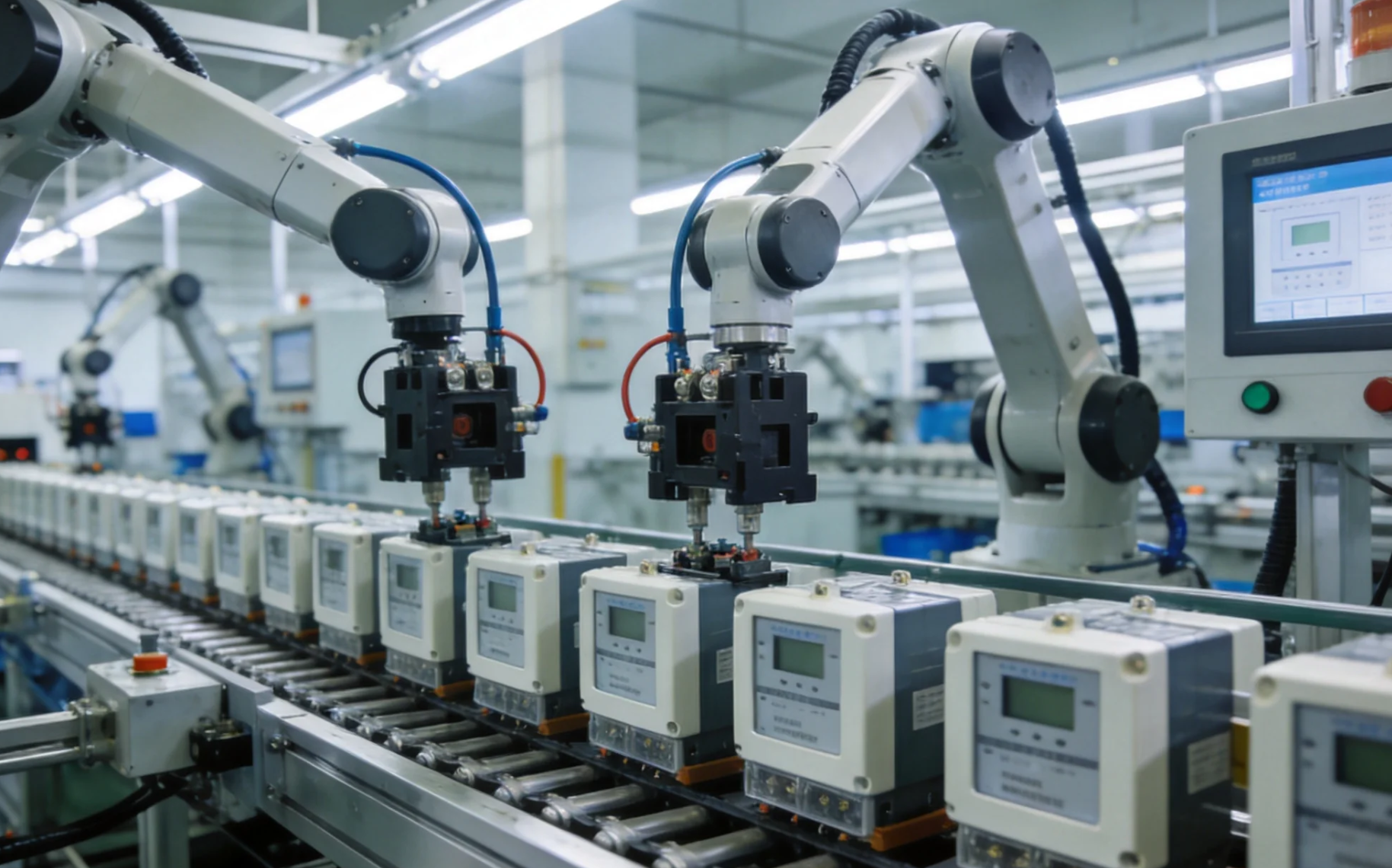
It is also wise to compare more than one sample under the same test method. A reliable CT supplier should be able to provide sample consistency, technical support, and clear testing data. For smart meter projects, this is extremely important because the selected component must remain stable not only in engineering validation, but also during mass production and long-term field use. Procurement teams should therefore review quality control capability, incoming material control, production process stability, and final inspection methods in addition to the product specification sheet.
Another useful step is to evaluate the CT together with the full metering system. Smart meter accuracy and stability are influenced by the interaction between the current transformer, voltage sampling design, metering IC, PCB layout, and calibration method. When these factors are reviewed together, teams can make better decisions and avoid isolated component choices that later create system-level issues.
The best current transformer is therefore the one that fits the actual meter design, supports stable electrical performance, integrates smoothly into production, and remains reliable over time. By focusing on both technical suitability and supply consistency, smart meter developers can reduce design risk, improve product stability, and build more dependable metering solutions for demanding markets.
Conclusion
Choosing the best current transformer for smart meter accuracy and stability requires more than checking a few catalog parameters. The right CT should match the meter’s electrical design, mechanical layout, safety requirements, and production goals. When ratio performance, accuracy behavior, burden compatibility, insulation reliability, thermal stability, and manufacturing consistency are evaluated together, smart meter projects can achieve better long-term performance and lower development risk. A careful selection process leads to more stable meters, smoother production, and stronger confidence in field operation.
Contact Us
Looking for the right current transformer for your smart meter project? Contact our team to discuss your application, technical requirements, and product matching needs.