How To Choose The Right Shunt Resistor For Battery Management Systems
In a battery management system, the shunt resistor is not a minor passive part. It directly affects current measurement, state-of-charge calculation, protection behavior, efficiency, and long-term system confidence. Texas Instruments notes that shunt resistors are a common choice in BMS current measurement because they offer high accuracy, low cost, and simplicity, but it also warns that shunt error can dominate the total current-measurement error if the design and calibration are not handled correctly.
Start With Resistance Value, Current Range, And Signal Chain Matching
The first step is to confirm the real current range of the battery pack, not just the nominal operating current. A BMS shunt resistor must match continuous current, peak current, regen current, fault current, and the measurement range expected by the current-sense amplifier or ADC. TI shows that for high-current BMS designs, ultra-low-resistance shunts can be necessary, and the right shunt value depends on amplifier gain, supply limits, and the full-scale measurement target. In practical terms, the resistor value should be chosen together with the sensing IC, because the shunt does not work alone.
The second issue is the tradeoff between signal level and power loss. TI’s current-sensing guide explains that a larger shunt resistance creates a larger voltage signal, which helps the sensing amplifier, but it also increases system power loss. That is the central selection challenge in BMS design: if the resistance is too low, low-current accuracy becomes difficult because amplifier offset error matters more; if the resistance is too high, heat and efficiency loss increase at high current. A good purchasing decision therefore begins with one question: what resistance value gives enough measurable signal without adding unacceptable I²R loss to the pack?
Buyers should also check whether the intended resistor value fits bidirectional current measurement and the real operating profile of the pack. BMS systems do not only measure discharge. They often need accurate charge and discharge tracking across a wide dynamic range, including very small currents during standby and very high currents during peak events. A resistor that looks fine for one operating point may still be the wrong choice if the pack needs both fine low-current resolution and stable high-current thermal behavior.

Focus On Accuracy Over Temperature, Not Only Room-Temperature Tolerance
For BMS current sensing, accuracy is not just about the nominal tolerance printed on the datasheet. TI states that resistance tolerance and temperature coefficient of resistance, or TCR, are the key specifications representing resistor accuracy. It also notes that room-temperature calibration can remove much of the initial tolerance error, but temperature-drift error is much harder to calibrate out because it changes with operating temperature. That makes low TCR one of the most important checkpoints when choosing a shunt resistor for a battery system.
Thermal behavior matters because BMS environments are rarely thermally ideal. Some battery packs rely on natural cooling, and current levels can change quickly, so even small resistance drift can distort the measured current over time. TI also points out that thermal EMF can introduce tens to hundreds of microvolts, which becomes unacceptable when the full-scale measurement range is very small. Vishay’s recent WSBE data goes even further, showing a TCR below 10 ppm/°C across -55 °C to 150 °C for that family and positioning that stability as a way to reduce or even avoid temperature compensation in some designs.
Long-term drift is just as important as initial precision. Isabellenhütte’s BSL data for BMS/ESS use lists high temperature measurement stability, thermal EMF below 0.6 µV/K, and maximum resistance drift below 0.75% after 2,000 hours of continuous operation at maximum temperature. Those numbers matter because buyers are not only choosing a resistor for first-pass validation. They are choosing whether current measurement will remain trustworthy after months or years of real load and heat exposure.

Check Package Style, Kelvin Sensing, Power Rating, And System Integration
A BMS shunt resistor also has to fit the physical and electrical architecture of the pack. Eaton’s high-current CSSA8436 data shows how much package style, measuring-pin options, resistance range, power rating, and operating temperature can vary even within one family: 0.025 mΩ to 0.2 mΩ, up to 40 W, optional measuring pins, and operating temperatures from -55 °C to +170 °C. In other words, the right choice is not only about resistance value. It is also about how the resistor mounts, how it connects, and how much heat and current it can survive in the intended busbar or pack layout.
Connection method matters more than many buyers expect. Vishay’s application note on three-sense-pin battery shunts explains that current flow within the sense circuit can create voltage drops that affect ADC readings, and that an additional ground-side sense connection can reduce this problem by minimizing the voltage difference between analog ground and the sense pin. For procurement, this means the right shunt resistor is not only a low-ohm metal element. It is also a layout and signal-integrity decision. Kelvin-style or dedicated measuring-pin options can materially improve measurement quality in real BMS hardware.
Finally, buyers should judge reliability in terms of the whole lifecycle. AEC-Q200 qualification, pulse-power capability, power derating behavior, thermal resistance, and traceability features such as measured-value marking or DMC coding are all practical indicators of whether the resistor is ready for demanding battery environments. A lower unit price may still become the more expensive choice if it increases calibration time, raises drift risk, or forces extra compensation work in the BMS design. The better question is this: will this shunt resistor keep current sensing accurate, thermally stable, and integration-friendly across the full life of the pack?
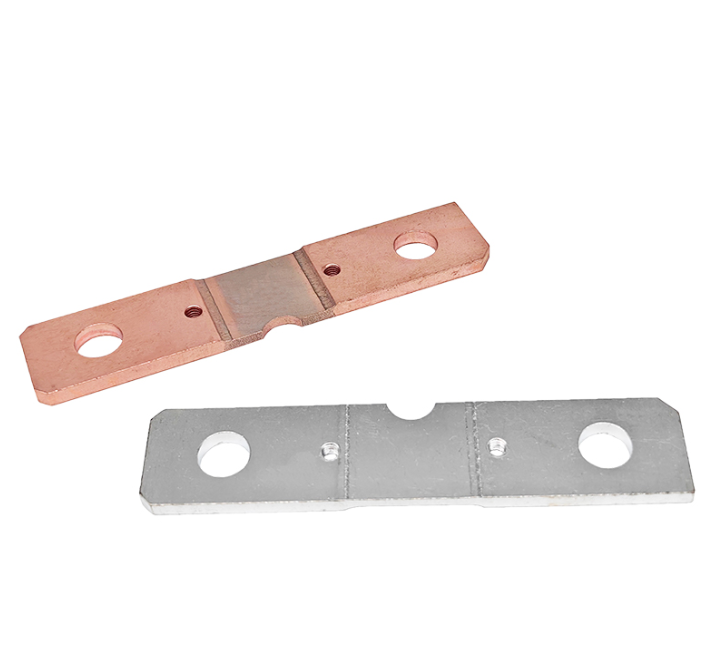
Choosing the right shunt resistor for a battery management system means balancing four things at the same time: measurable signal, power loss, temperature stability, and integration quality. The best choice is usually not the one with the lowest resistance or the lowest price by itself. It is the one that fits the pack’s current profile, maintains accuracy across temperature, supports clean sensing connections, and stays stable over real operating life. That is the kind of choice that improves BMS performance instead of creating hidden cost later.