Latching Relay vs. Standard Relay in Energy Meters
Latching Relay vs. Standard Relay in Energy Meters
Core Operational Principle and Power Consumption Battle
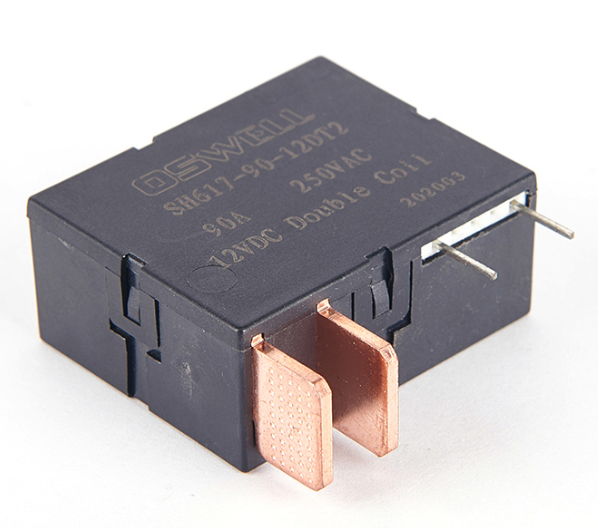
At the heart of the functional difference between a standard (monostable) relay and a latching (bistable) relay lies a fundamental distinction in their operational logic. A standard electromagnetic relay requires a continuous flow of coil current to maintain its switched state (either Normally Open or Normally Closed). The moment the control signal is removed, the relay's contacts revert to their default position due to a built-in spring mechanism. In contrast, a latching relay, a key product offering from precision component manufacturers like Oswell E-Group, utilizes a permanent magnet or a magnetic latch mechanism. Its unique bistable operation means it requires only a short, momentary pulse of current (of correct polarity) to change its contact state. Once switched, it will maintain its position indefinitely without any power applied to the coil. This defining characteristic leads to the most significant advantage: drastic energy savings. In an energy meter, where a relay might be tasked with tariff switching or load control, a standard relay would consume power continuously while active, contributing to meter's own standby power consumption. A latching relay, however, consumes power only during the brief switching moment, making it vastly superior for applications where minimizing meter self-consumption and enhancing overall energy efficiency are paramount.
Reliability, Lifespan, and Design Implications
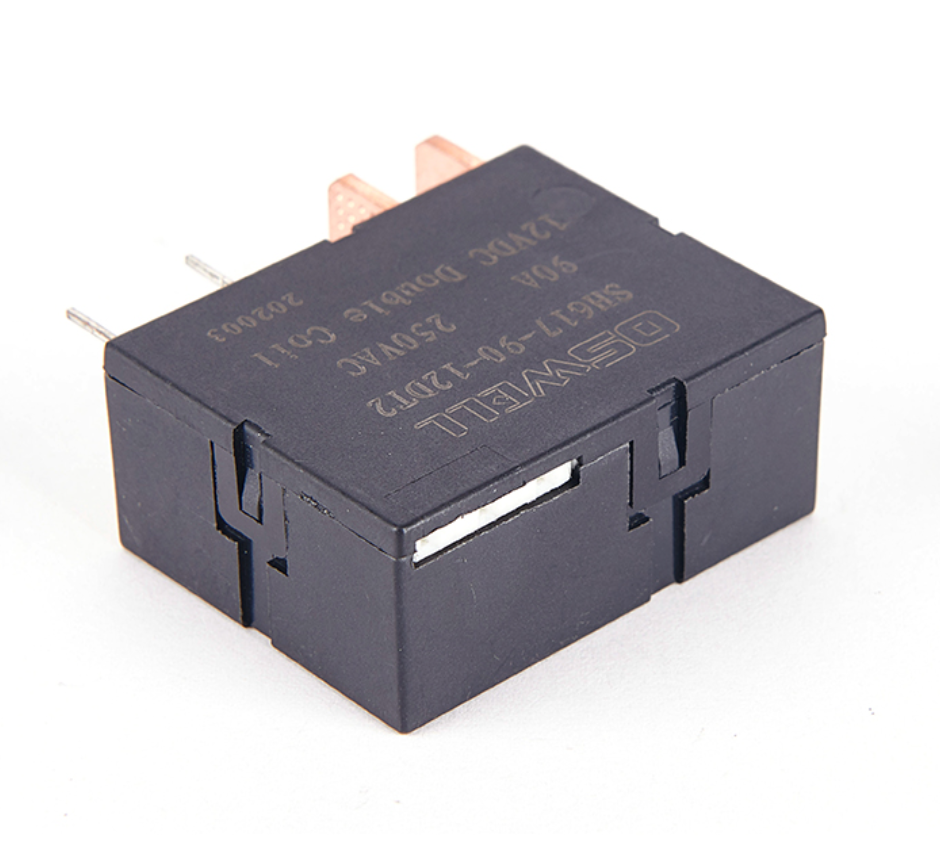
The operational dichotomy has profound implications for reliability, longevity, and system design. The need for constant coil energization in a standard relay generates sustained heat dissipation, which can accelerate contact oxidation, degrade coil insulation over time, and potentially lead to premature failure. The zero-power holding state of a latching relay eliminates this constant heat source, leading to inherently lower operating temperature and reduced thermal stress on internal components. This directly translates to enhanced long-term reliability and a dramatically extended mechanical and electrical lifespan, crucial for energy meters that are often deployed for decades. From a system design perspective, the latching relay's pulse-driven nature simplifies driver circuit requirements. It eliminates the need for a continuous high-current output from the meter's microcontroller, allowing for the use of smaller, more cost-effective driver components. Moreover, its inherent position memory is a critical safety and data integrity feature. In the event of a power outage, a latching relay will retain its last commanded state, ensuring the load remains disconnected (for safety) or that the correct tariff is applied upon restoration, without requiring a complex recovery routine. Standard relays would default to their spring-return state during a blackout, which could be undesirable or unsafe.
Application-Specific Suitability and the Oswell Advantage
While latching relays offer compelling benefits, the choice between the two technologies is ultimately application-specific. Standard relays are simpler in control logic, as a single, non-polarized signal suffices. They may be suitable for meters where the relay is rarely activated or where continuous coil power is inconsequential. However, for the core functionalities of modern smart meters and Advanced Metering Infrastructure (AMI), the latching relay is overwhelmingly the preferred choice. Its near-zero holding power consumption is essential for meeting stringent energy efficiency standards for meters. Its robustness supports frequent switching operations in demand-response programs or prepayment metering systems. Manufacturers like Oswell E-Group enhance this inherent advantage through precision engineering. Their latching relays feature optimized magnetic circuit design and high-quality contact materials to ensure low and stable contact resistance, crucial for minimizing power loss in the switched path. Advanced automated production and 100% testing ensure consistent performance and high insulation resistance, directly contributing to the overall metering accuracy and safety of the end product. Therefore, specifying a high-quality latching relay is not just a component selection; it's a strategic decision impacting the meter's operational cost, functional reliability, and compliance with modern grid requirements.
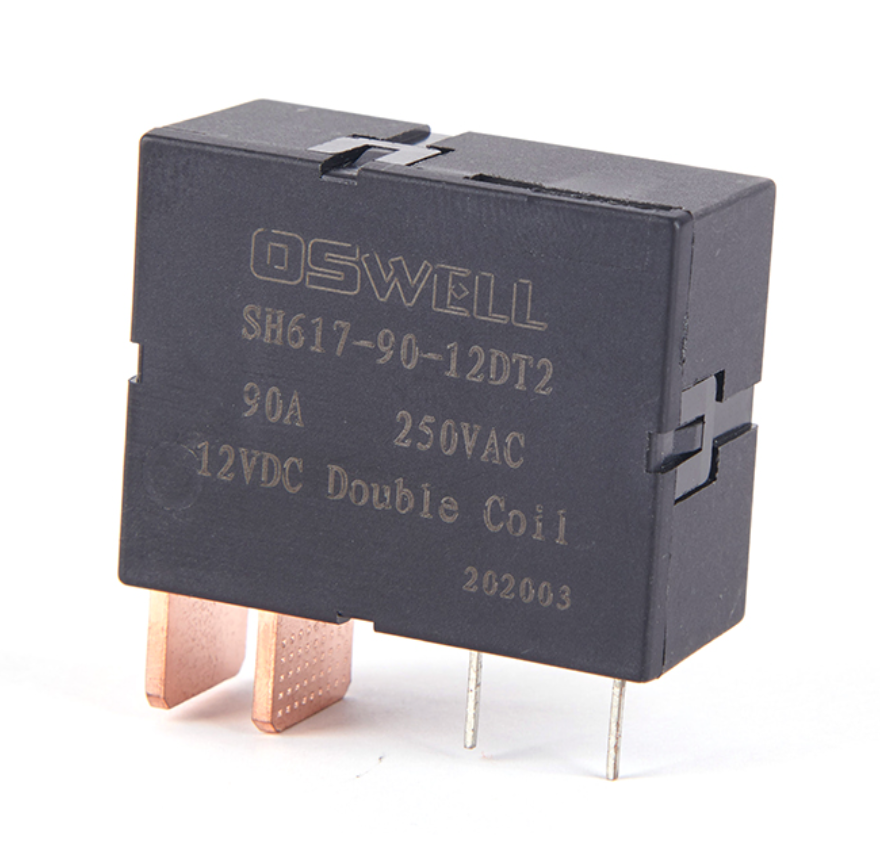
The debate between latching and standard relays in energy meters is decisively tilted towards latching technology in the era of smart, efficient grids. The latching relay's zero-power holding, superior reliability, and inherent fail-safe memory function address the critical needs of modern metering: minimizing system energy loss, ensuring long-term operational integrity, and enabling advanced tariff and load control features. While standard relays have their place in simpler applications, the latching relay, especially when engineered with the precision and quality focus of a supplier like Oswell E-Group, represents the intelligent, future-proof choice for building reliable, efficient, and full-featured energy measurement systems.