Miniature Voltage Transformers: Design and Key Specifications
Miniature Voltage Transformers: Design and Key Specifications
Core Principles and Miniaturization Challenges
Miniature voltage transformers are precision electromagnetic devices engineered to perform a critical scaling function: they safely and accurately step down high primary line voltages to a low, standardized secondary voltage (e.g., 0.333V AC) suitable for direct measurement by sensitive meter chips. The core design challenge lies in achieving this transformation with high accuracy, wide bandwidth, and minimal phase shift, all within an extremely constrained physical volume. The design hinges on optimizing the magnetic circuit. A high-permeability core material, such as oriented silicon steel or advanced nanocrystalline alloys, is selected to maximize magnetic flux for a given size. The primary and secondary windings, often made of high-purity copper wire, are wound with precise turn ratios onto a bobbin with exceptional insulation between layers. Miniaturization demands careful thermal management, as reduced size limits heat dissipation. Therefore, designs must optimize the trade-off between core saturation levels, winding resistance (copper loss), and core losses (hysteresis and eddy current loss) to prevent overheating and ensure long-term stability. The goal is a component that is not just small, but one that delivers metering-grade performance reliably over decades of continuous operation.
Defining Performance: Key Electrical Specifications
Selecting a miniature voltage transformer requires a deep understanding of its key electrical specifications, which directly dictate its suitability and performance in a metering circuit. Rated Primary/Secondary Voltage defines the operating voltage range. Accuracy Class (e.g., Class 0.5, Class 0.2) specifies the maximum permissible ratio and phase error at specified burdens, with lower numbers indicating higher precision, essential for revenue metering. Rated Burden is the maximum apparent power (in VA) the transformer can deliver to the secondary circuit without exceeding its accuracy class; exceeding this burden causes measurement errors. Frequency Range must cover the nominal grid frequency (50/60Hz) and its harmonics for accurate power quality analysis. Linearity ensures accurate transformation across the entire input voltage range, from low loads to potential overvoltages. Insulation Level (e.g., 3kV RMS for 1 minute) and Creepage/ Clearance Distances are critical safety parameters that ensure protection against high-voltage breakdown. Phase Displacement, the angular difference between primary and secondary voltages, must be minimized and stable, as it directly impacts active and reactive power calculation accuracy. These specifications are not independent; they form a tightly coupled set of parameters that define the transformer's metrological integrity.
Applications and Integration in Modern Systems
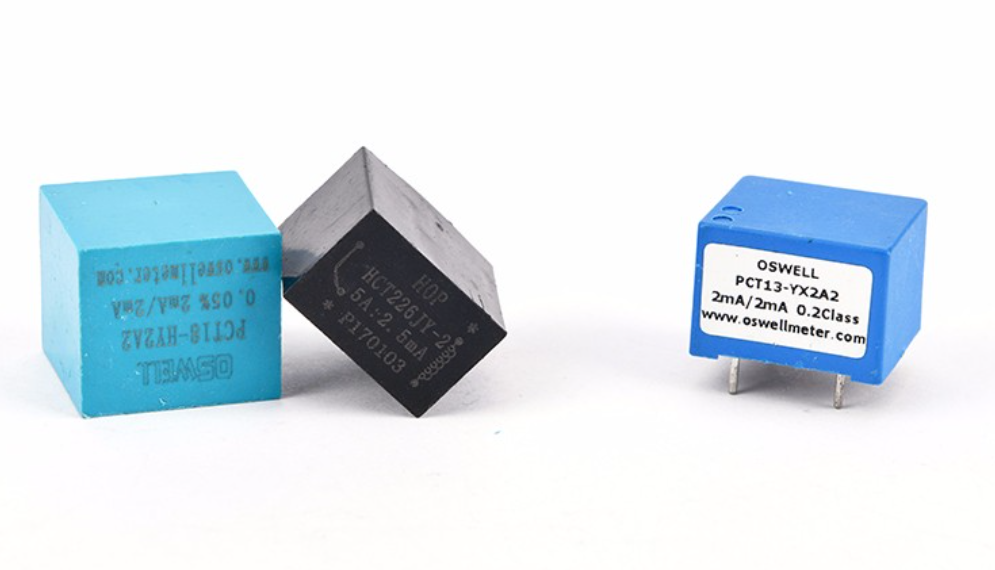
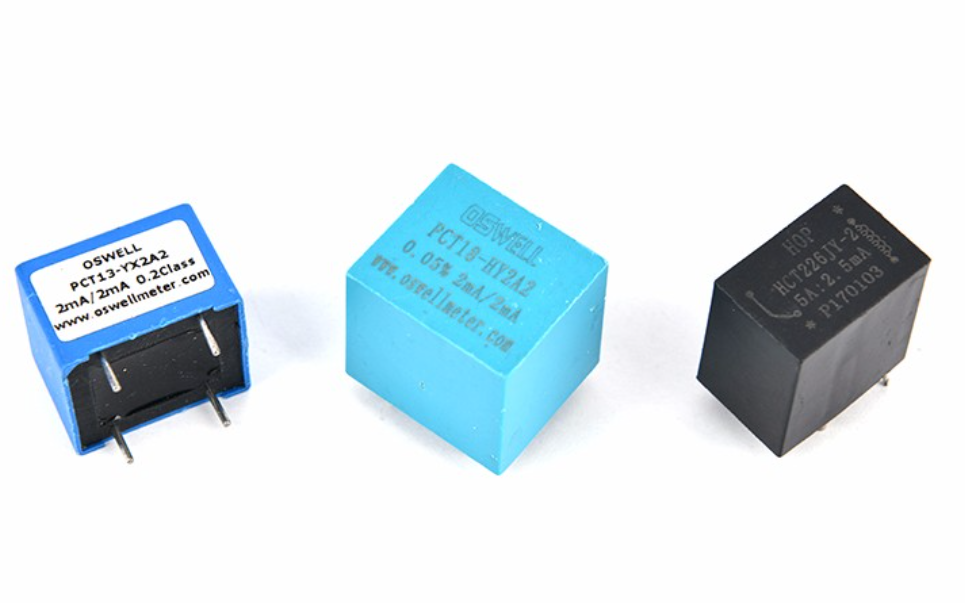
The compact size and reliability of miniature voltage transformers make them indispensable across a wide spectrum of modern electrical systems. Their primary role is in energy metering, where they provide the isolated, scaled voltage signal to the analog-to-digital converter of a meter's chip, enabling precise calculation of kWh, kVArh, and power quality parameters. In power quality monitors and protective relays, they are used for voltage sensing to detect sags, swells, and harmonics. Within industrial automation and process control, they provide safe, galvanically isolated voltage feedback for variable frequency drives and control systems. For renewable energy inverters and battery storage systems, they monitor AC bus voltage for grid synchronization and protection. The miniaturized form factor allows them to be surface-mounted (SMD) or through-hole mounted directly onto printed circuit boards, integrating seamlessly with other metering components like current transformers, shunts, and the main processing IC. This high level of integration enables the development of compact, modular, and cost-effective measurement units for smart grid devices, IoT-enabled energy sensors, and next-generation power management systems, where space is at a premium and performance cannot be compromised.
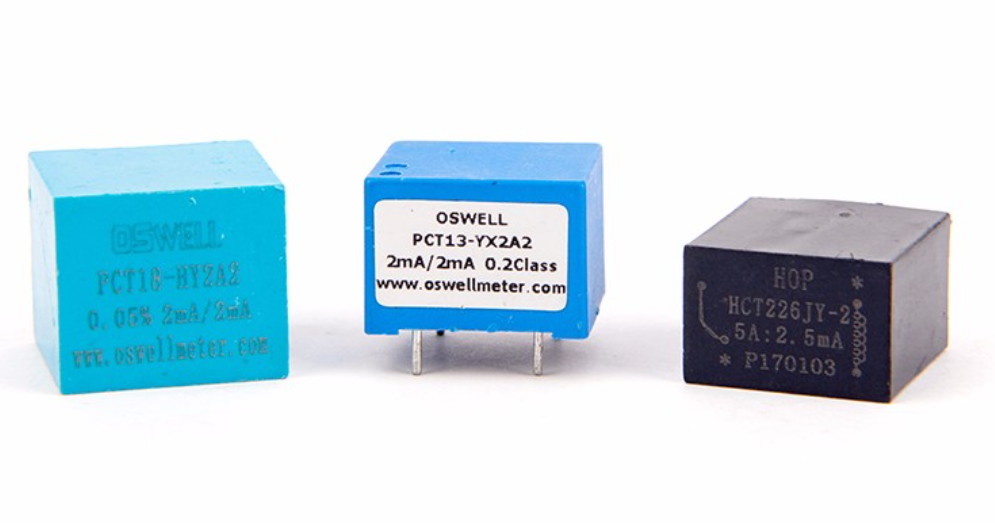
In summary, miniature voltage transformers are sophisticated components that master the complex interplay of electromagnetics, materials science, and thermal design to deliver precise, reliable, and isolated voltage measurement in a minimal footprint. Their performance is rigorously defined by a matrix of key electrical specifications that engineers must match to their application's needs. Far from being a generic commodity, a well-designed miniature voltage transformer is a foundational building block for accuracy in energy metering, system protection, and intelligent power management, enabling the development of the compact, reliable, and data-rich devices that underpin the modern electrical infrastructure.