Rogowski Coils for High-Current Monitoring: Where Flexible Current Sensing Provides the Biggest Advantages
Rogowski Coils for High-Current Monitoring: Where Flexible Current Sensing Provides the Biggest Advantages
High-current electrical systems are becoming more common across renewable energy, industrial automation, power distribution, battery energy storage, and large-scale charging infrastructure. As current levels increase and electrical installations become more compact, engineers need measurement technologies that can provide accurate monitoring without requiring large, heavy magnetic-core components.
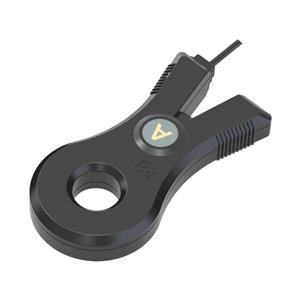
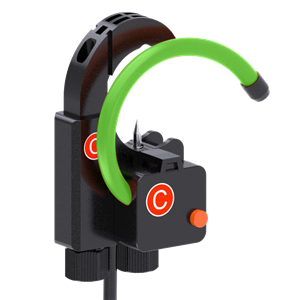
Rogowski coils provide a flexible current sensing solution for AC and rapidly changing current applications. Their lightweight, open-loop structure allows them to be installed around large conductors, busbars, and complex cable arrangements where conventional current transformers may be difficult to integrate.
For power monitoring equipment manufacturers, system integrators, panel builders, and procurement teams, Rogowski coils can offer important advantages in applications where installation flexibility, wide current range, and fast dynamic response are key project requirements.
1. Why Rogowski Coils Are Well Suited for High-Current Monitoring
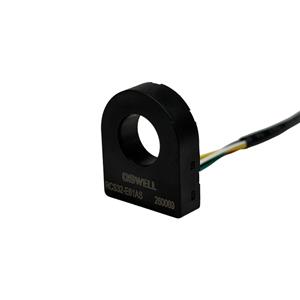
Traditional current transformers use magnetic cores to measure alternating current. They remain highly effective in many power measurement applications, but very large currents or oversized conductors can create challenges related to physical size, weight, saturation, and installation space.
A Rogowski coil uses a flexible winding that is placed around the conductor being measured. Because the coil does not rely on a ferromagnetic core, it can measure large and rapidly changing AC currents without the magnetic saturation limitations associated with conventional core-based transformers.
This makes Rogowski coils especially attractive for applications such as:
Large industrial busbars
High-current distribution panels
Power conversion equipment
Renewable energy installations
Battery energy storage systems
Large motors and industrial drives
Power quality and waveform monitoring
Their flexible structure is particularly useful in retrofit projects. Instead of disconnecting large conductors or rebuilding an electrical panel, the coil can often be opened, wrapped around the existing conductor, and closed in position. This can reduce installation complexity and equipment downtime.
For facilities where electrical conductors are large, closely arranged, or located in difficult-to-access positions, this installation advantage can be as important as the electrical measurement performance itself.
2. Where Flexible Current Sensing Provides the Greatest Practical Value
The biggest advantage of a Rogowski coil is not simply its ability to measure high current. Its flexibility allows engineers to use current monitoring in locations where rigid sensors would be difficult or expensive to install.
Large Busbar Systems:
Industrial switchgear and power distribution equipment often use wide copper busbars carrying significant current. Flexible coils can surround these busbars without requiring oversized rigid CT housings.
Retrofit Energy Monitoring:
Factories and commercial facilities increasingly add energy monitoring systems to existing electrical equipment. Flexible sensors can simplify installation because existing conductors may not need to be disconnected.
Power Electronics and Inverter Systems:
Modern converters and inverters can produce dynamic current waveforms. Rogowski coils provide fast response characteristics that make them suitable for monitoring rapidly changing AC current and transient conditions.
Renewable Energy and Energy Storage:
Solar inverter stations, wind power equipment, and BESS installations may contain high-current connections with limited installation space. Flexible current sensing provides more mechanical freedom when designing monitoring systems.
Power Quality Measurement:
Applications involving harmonics, transient events, and waveform analysis may require measurement devices with wide bandwidth and good dynamic response. Rogowski coil technology can provide useful advantages in these applications.
For procurement teams, however, sensor selection should consider the complete measurement chain. Rogowski coils normally require an integrator or signal-conditioning circuit to convert the coil output into a usable measurement signal. Compatibility between the coil, integrator, meter, and monitoring system should therefore be confirmed during product selection.
3. What OEM Buyers Should Evaluate When Selecting Rogowski Coil Solutions
Rogowski coils are available in different sizes, current ranges, output configurations, and mechanical structures. Selecting the correct solution requires balancing electrical performance with installation requirements.
OEM buyers and system integrators should evaluate:
Required current measurement range
Coil aperture and circumference
Frequency and bandwidth requirements
Accuracy and phase performance
Integrator or signal-conditioning requirements
Operating temperature range
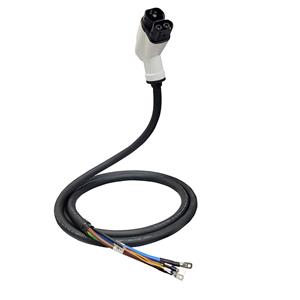
Cable length and connector configuration
Mechanical durability and locking structure
Physical design deserves particular attention. A flexible coil may be installed repeatedly during commissioning or maintenance, so connector reliability, coil flexibility, closure strength, and environmental resistance can influence long-term system performance.
For high-volume OEM projects, production consistency is also critical. Differences between coils can affect calibration and final equipment accuracy. Procurement teams should evaluate the supplier's winding control, testing procedures, traceability, calibration capability, and ability to maintain stable specifications across production batches.
Customization can provide additional value. Different switchgear, inverter, or monitoring equipment designs may require specific coil lengths, cable assemblies, output interfaces, or mounting accessories. Working with a manufacturer that can support application-specific configurations may reduce engineering time and simplify system integration.
As power systems move toward higher capacity and more detailed real-time monitoring, flexible current sensing is likely to become increasingly valuable in applications where conventional CT installation is difficult. Rogowski coils provide manufacturers with another practical option for expanding high-current monitoring without significantly increasing equipment size or installation complexity.
Conclusion
Rogowski coils provide significant advantages in high-current applications where installation flexibility, wide measurement range, and fast dynamic response are important. Their flexible, coreless design makes them especially useful for large busbars, retrofit monitoring projects, power electronics, renewable energy systems, and industrial electrical equipment. For OEM buyers and system integrators, selecting the right Rogowski coil requires evaluating not only current range and accuracy but also bandwidth, signal conditioning, mechanical design, production consistency, and supplier customization capability. A properly selected flexible current sensing solution can simplify installation while providing reliable data for advanced power monitoring systems.