What Reliability Tests Matter Most For Smart Meter Components Before Mass Production
What Reliability Tests Matter Most For Smart Meter Components Before Mass Production
Before a smart meter project moves into mass production, component reliability must be verified under more than normal laboratory conditions. A component that performs well in early samples may still create hidden problems in large-volume manufacturing or long-term field use if its durability, insulation stability, thermal behavior, or consistency have not been tested properly. This guide explains what reliability tests matter most for smart meter components before mass production, and why these tests are essential for reducing field risk, protecting product stability, and improving production confidence.
1. Why Reliability Testing Matters Before Mass Production
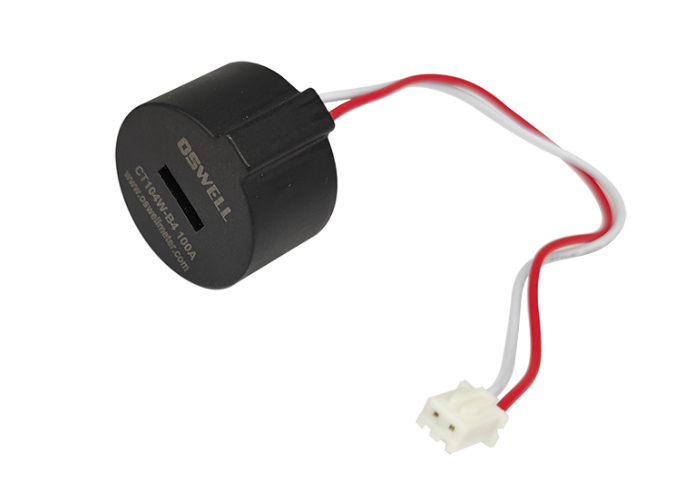
In smart meter projects, reliability testing is not only a technical formality. It is one of the most important steps for confirming whether key components can remain stable through production, installation, and long-term service. Current transformers, latching relays, shunt resistors, miniature voltage transformers, meter cases, and other supporting parts all influence the final reliability of the meter. If any one of these components performs inconsistently, the entire product may be affected.
Many development teams focus first on function and specification matching. That is necessary, but it is not enough. A component can meet the required parameter target in a short sample test and still fail later because of heat stress, insulation aging, dimensional shift, contact wear, sealing weakness, or poor batch consistency. Reliability testing helps reveal these hidden weaknesses before production volume expands and field risk becomes expensive.
Reliability testing also matters because smart meters usually operate for years in practical environments where temperature changes, electrical stress, humidity, dust, and repeated operating cycles are unavoidable. If the component has not been verified under conditions close to real use, the project may enter mass production with unknown long-term risk. This can lead to unstable quality, rising calibration difficulty, warranty pressure, or a damaged reputation after market launch.
The goal of pre-production reliability testing is therefore not just to prove that a component works today. It is to confirm that the component can keep working consistently, safely, and predictably across production batches and over time in the actual application.
2. Which Reliability Tests Matter Most For Smart Meter Components
The first major test group is thermal reliability testing. Smart meter components often work in compact enclosures where heat can accumulate over time. Temperature rise tests, thermal cycling evaluation, and stability checks under different ambient conditions help verify whether the component will drift, deform, or lose performance after repeated heat exposure. This is especially important for current sensing parts, relays, and insulating structures.
The second group is electrical endurance and insulation testing. For components such as current transformers, miniature voltage transformers, relays, and meter housings, electrical reliability is central to safety and long-term stability. Insulation performance, withstand capability, and repeated electrical operation behavior should be checked carefully. In switching components, endurance under repeated actuation is especially valuable because contact wear or unstable switching can become a field reliability risk later.
The third group is environmental testing. Smart meters may be exposed to humidity, dust, temperature change, and long service conditions depending on their installation environment. Humidity resistance, sealing-related evaluation, and general environmental stress checks help show whether components can remain stable outside of a clean laboratory setting. For meter cases and assemblies with covers or sealing interfaces, this becomes particularly important.
The fourth group is mechanical and structural reliability testing. Meter components should remain stable not only electrically but also physically. This includes dimensional stability, repeated assembly behavior, structural fit, and resistance to handling or installation stress. If a case, relay body, or transformer structure shifts too much under stress, it may create hidden production or field problems even when the electrical specification looks acceptable.
Finally, batch consistency testing matters more than many teams expect. Before mass production, it is not enough to test only one or two ideal samples. Teams should compare multiple pieces across repeated tests to confirm that performance remains stable from unit to unit. This helps reveal whether the supplier can truly support large-scale production with reliable quality control.
| Test Category | Why It Matters | Typical Focus |
|---|---|---|
| Thermal Reliability Test | Checks performance stability under heat and temperature variation | Temperature rise, thermal cycling, drift tendency |
| Electrical / Insulation Test | Supports safety and long-term electrical stability | Insulation behavior, electrical stress tolerance, operating stability |
| Endurance Test | Verifies repeated-use reliability over time | Switching cycles, repeated operation, performance retention |
| Environmental Test | Shows how the component behaves in practical service environments | Humidity, sealing resistance, exposure-related stability |
| Mechanical / Structural Test | Confirms assembly durability and physical stability | Dimensional retention, structural fit, installation resistance |
| Batch Consistency Review | Reduces mass-production risk and calibration instability | Multiple-sample comparison, repeatability, process stability |
3. How To Build A More Practical Pre-Production Test Strategy
A strong pre-production reliability plan should begin with the actual application conditions of the smart meter rather than a generic checklist alone. Teams should define the expected installation environment, electrical stress level, switching behavior, enclosure temperature profile, and service-life target. Once those factors are clear, it becomes easier to decide which tests should receive the most attention and which components deserve deeper validation.
It is also important to test components in a way that reflects real system interaction. A current transformer, relay, shunt resistor, or meter case may pass standalone tests and still create problems later when combined inside the full meter architecture. System-level verification helps reveal issues related to heat build-up, layout stress, electrical compatibility, or assembly interaction that isolated component testing may miss.
Another practical step is to compare not only initial performance but also post-test performance. In other words, the question should not only be whether the component survives the test, but whether its key electrical or structural characteristics remain stable after the test. This is often where hidden weaknesses appear, especially in high-volume programs where long-term consistency matters more than short-term survival.
Supplier capability should also be part of the evaluation. A supplier with real testing support, stable process control, and repeatable production quality is much more likely to support smooth mass production than one that provides only a good sample. Before launch, teams should confirm whether the supplier can maintain the same reliability level across volume deliveries, not just in early prototypes.
The best pre-production testing strategy is therefore one that combines thermal, electrical, environmental, mechanical, endurance, and consistency evaluation in a way that reflects the real smart meter application. This approach helps reduce uncertainty before volume production and builds much stronger confidence in final product reliability.
Conclusion
The most important reliability tests for smart meter components before mass production are the ones that verify real long-term stability rather than only initial function. Thermal testing, electrical and insulation checks, endurance evaluation, environmental stress review, structural validation, and batch consistency comparison all play a key role in reducing launch risk. When these tests are selected according to the real application and combined with system-level verification, project teams can move into mass production with stronger confidence, better quality control, and lower field failure risk.
Contact Us
Looking for reliable smart meter components with stable testing and production support? Contact our team to discuss component selection, validation strategy, and supply capability.