What Should Buyers Check Before Ordering A Shunt Resistor
In current sensing, a shunt resistor looks simple, but it strongly influences measurement accuracy, power loss, thermal behavior, calibration effort, and long-term system stability. Texas Instruments notes that shunt selection is always a compromise between measurement accuracy and power dissipation: a larger resistance creates a stronger signal for the sensing amplifier, but it also increases system power loss; a smaller resistance reduces power loss, but makes amplifier offset and other error sources more important.
Check Resistance Value, Current Range, And Power Loss Together
The first thing buyers should check is whether the resistance value really fits the application current range, not just whether the part “can carry current.” A shunt resistor must match continuous current, peak current, fault current, and the full-scale range expected by the current-sense amplifier or ADC. TI’s guidance explains that the shunt value and amplifier gain should be selected together for the target current range and ADC full-scale input, because the resistor is part of the signal chain, not a standalone decision.
Power loss must be checked at the same time. A shunt resistor creates a voltage drop by design, and that voltage drop becomes heat. TI explicitly states that the upper limit of the shunt value should be constrained by the application’s acceptable power loss, while Eaton’s high-current current-sense resistor data shows how wide the practical range can be, with resistance values from 0.025 mΩ to 0.2 mΩ and power ratings up to 40 W in a single family. That is why buyers should not compare resistance values in isolation. The real question is whether the chosen value gives enough measurable signal without adding unacceptable heating and efficiency loss.
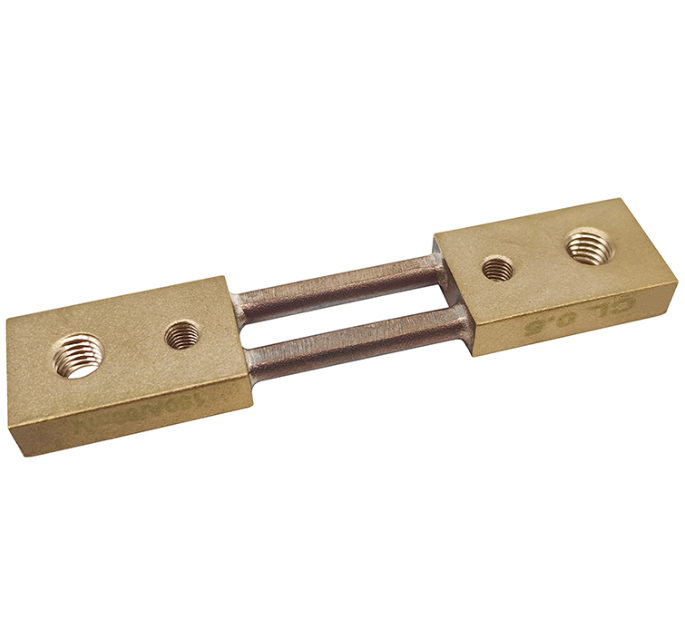
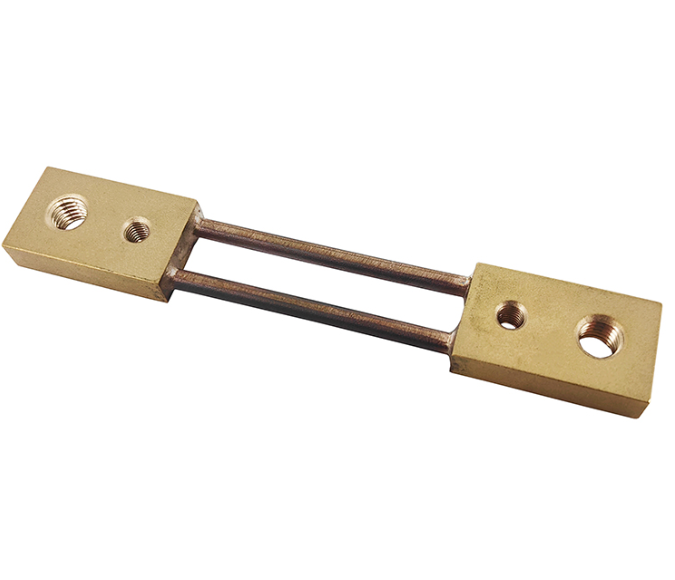
It is also important to check whether the resistor format matches the physical current path. Some projects need compact surface-mount low-ohmic resistors, while others need larger busbar-style or bolt-down shunts with optional measuring pins. Eaton’s CSSA8436 family, for example, offers optional measuring pins and mechanical dimensions intended for high-current mounting, which shows that package style is part of the procurement decision, not just an afterthought.
Check Tolerance, TCR, Kelvin Sensing, And Layout Sensitivity
The second checkpoint is not just initial tolerance, but temperature behavior and connection quality. Initial tolerance affects starting accuracy, but TCR determines how much the value moves as the resistor heats up in real operation. Isabellenhütte’s BSL precision resistor data lists a temperature coefficient below 50 ppm/K, thermal EMF below 0.6 µV/K, and maximum resistance drift below 0.75% after 2,000 hours at maximum temperature. Eaton’s high-current shunt data also shows that TCR varies by value, from ±125 ppm/°C to ±200 ppm/°C. This is why buyers should ask not only “What is the tolerance?” but also “How stable is the resistor when hot?”
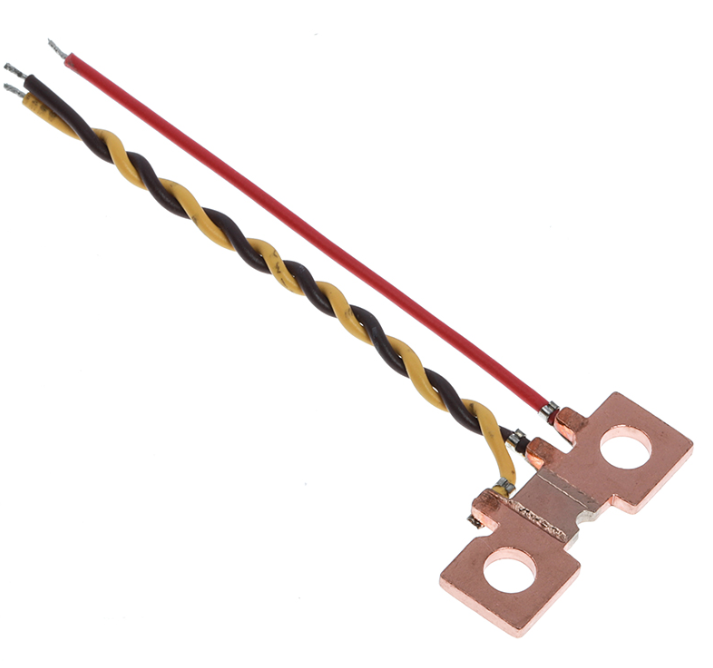
Connection method is equally critical. Vishay states that a Kelvin connection to a four-terminal resistor is essential for precise current sensing because it eliminates errors from lead resistance, contact resistance, and lead TCR. TI’s low-ohmic layout note adds that parasitic resistance from PCB copper, solder, and trace routing can create a significant voltage drop that interferes with the intended shunt measurement, and it calls individual Kelvin sensing lines the best-case layout practice for minimizing this effect. In procurement terms, a low-ohmic shunt resistor is not fully evaluated until the intended sense connection and layout concept are clear.
This matters even more in precision metering and power monitoring. If the measurement path adds parasitic resistance, the signal read by the sensing IC may no longer represent only the resistor element itself. That can reduce accuracy even when the resistor datasheet looks good. Buyers should therefore check whether the design uses true four-terminal sensing, dedicated measuring pins, or a layout that preserves the resistor’s specified performance.
Check Tolerance, TCR, Kelvin Sensing, And Layout Sensitivity
The second checkpoint is not just initial tolerance, but temperature behavior and connection quality. Initial tolerance affects starting accuracy, but TCR determines how much the value moves as the resistor heats up in real operation. Isabellenhütte’s BSL precision resistor data lists a temperature coefficient below 50 ppm/K, thermal EMF below 0.6 µV/K, and maximum resistance drift below 0.75% after 2,000 hours at maximum temperature. Eaton’s high-current shunt data also shows that TCR varies by value, from ±125 ppm/°C to ±200 ppm/°C. This is why buyers should ask not only “What is the tolerance?” but also “How stable is the resistor when hot?”
Connection method is equally critical. Vishay states that a Kelvin connection to a four-terminal resistor is essential for precise current sensing because it eliminates errors from lead resistance, contact resistance, and lead TCR. TI’s low-ohmic layout note adds that parasitic resistance from PCB copper, solder, and trace routing can create a significant voltage drop that interferes with the intended shunt measurement, and it calls individual Kelvin sensing lines the best-case layout practice for minimizing this effect. In procurement terms, a low-ohmic shunt resistor is not fully evaluated until the intended sense connection and layout concept are clear.
This matters even more in precision metering and power monitoring. If the measurement path adds parasitic resistance, the signal read by the sensing IC may no longer represent only the resistor element itself. That can reduce accuracy even when the resistor datasheet looks good. Buyers should therefore check whether the design uses true four-terminal sensing, dedicated measuring pins, or a layout that preserves the resistor’s specified performance.
Before ordering a shunt resistor, buyers should check three things in depth: whether the resistance value matches the real current range and acceptable power loss, whether TCR and Kelvin sensing support accurate measurement under heat and parasitics, and whether power rating, drift, and traceability are strong enough for long-term use. A shunt resistor is not just a resistor. In many systems, it is the foundation of current measurement quality.