What Voltage Ratio Is Right For Your Miniature Voltage Transformer Application
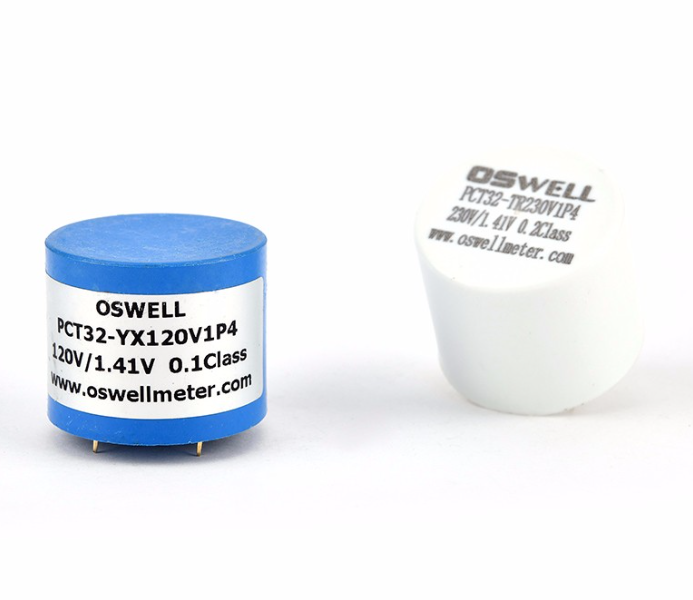
Choosing the right voltage ratio for a miniature voltage transformer is not a small detail. It decides whether the secondary voltage actually fits the meter or control input, whether the reading stays accurate under real burden, and whether the whole system can be configured and commissioned without extra correction work. Janitza’s meter manuals make this very clear: voltage transformer primary and secondary values must be programmed into the device, and wrong voltage-transformer settings can cause displayed voltage to be too large or too small. Schneider Electric’s compact VT documentation also shows that different compact VT models are aimed at different end uses, from indication to circuit-monitor applications, which means ratio selection is part of system matching, not just a parts-choice exercise.
Start With The Real Primary Voltage And The Actual Secondary Input Requirement
The first rule is simple: the right ratio is the one that scales the real primary voltage down to the input level your meter or controller is actually designed to read. Janitza shows that many power meters are configured around explicit primary/secondary VT values, and some devices are factory-set for direct measurement at 400 V/400 V, while also allowing other VT ratios to be programmed per channel. That means buyers should first answer two questions before looking at any catalog ratio: what is the actual system voltage, and what nominal secondary voltage does the target device expect after transformation?
A practical way to think about it is this: if the monitored system is 480 V and the metering or control input is intended to work around 120 V nominal, then a 4:1 style reduction is logically appropriate. RITZ’s VT example sheets show exactly this kind of relationship, listing standard examples such as 120:120, 240:120, 300:120, 480:120, and 600:120. The important point is not the specific brand sheet itself, but the engineering pattern it shows: the correct ratio is chosen so the secondary side lands inside the usable and intended input range of the receiving electronics.
Buyers should also check whether the application is direct measurement or transformer-based measurement. Janitza documents two voltage-measurement connection variants, including direct voltage measurement and measurement via voltage transformers. That matters because sometimes the right answer is not “choose another VT ratio,” but “no VT is required at this voltage level,” while in other systems the VT is necessary to scale and isolate the signal before it reaches the meter or control board.
Check Burden And Accuracy Together, Because Ratio Alone Is Not Enough
A voltage ratio that looks correct can still be the wrong choice if burden and application type do not match. RITZ explains that a VT only maintains its stated accuracy class up to the burden associated with that accuracy rating, and that if the burden rises above that level, the stated accuracy is no longer maintained. It also notes that for many modern low-burden applications, better accuracy can often be achieved with lower full-rated-burden VTs, which are also smaller and more economical. This is especially relevant to miniature voltage transformers, because compact electronic systems often do not need the same burden style as older heavy metering circuits.
Schneider’s compact VT lineup shows the same logic from another angle. Its older 450R model is described as having high accuracy and higher burden capacity for metering and indication, while the compact 460R is aimed at indicating applications and the 470R is optimized for maximum accuracy when used with PowerLogic circuit monitors. In other words, even if two VTs can provide a similar ratio, they may still be intended for different electrical loading and end-use conditions. For buyers, that means the “right ratio” is never just a math exercise. It must be matched to the burden and the type of receiving device.
This is also why accuracy class should not be separated from ratio choice. RITZ notes that VTs used in revenue metering and relay-protection work are commonly supplied in 0.3% or 0.15% classes and are tested at 90%, 100%, and 110% of rated ratio under zero and full burden. That reinforces a practical procurement principle: the best ratio is the one that delivers the required secondary voltage while still preserving the needed accuracy over the actual operating burden, not just at no-load conditions.
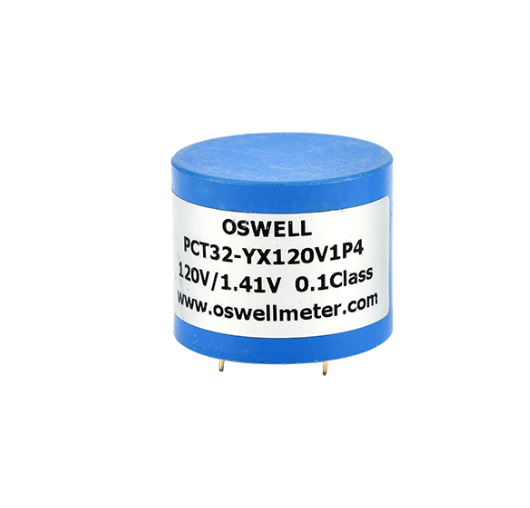
Match The Ratio To Wiring Topology, Per-Phase Configuration, And Future Commissioning
The final step is to make sure the chosen ratio fits the way the whole system is wired and configured. Janitza documents that some meters allow the same VT ratio on all phases, while others allow different VT ratios per input channel. It also shows that meters may support different voltage-connection variants, such as three-phase four-conductor systems or three-phase three-conductor systems using two VTs. That means the “right” ratio can depend not only on nominal voltage, but also on whether the system measures all phases directly, uses three VTs, or uses two VTs in a specific connection method.
Commissioning behavior matters too. Janitza’s manuals explicitly warn that if the programmed VT ratio is incorrect, the displayed voltage will be too large or too small. For procurement, this is important because an apparently small ratio mistake often becomes a commissioning delay, a scaling problem in software, or a false impression that the device or transformer itself is defective. Choosing the right ratio up front reduces not just measurement error, but also installation friction and troubleshooting cost.
Finally, buyers should not ignore voltage class and insulation fit. Even though miniature VTs are smaller devices, the same basic rule still applies: the selected transformer must be appropriate for the primary voltage environment and expected isolation duty. RITZ’s ME-7 example sheet ties ratio selection to a defined voltage class, 60 Hz operation, and 10 kV BIL, which is a reminder that ratio alone never tells the whole story. The right ratio is the one that fits the system voltage, the receiving input, the burden, the wiring scheme, and the insulation context at the same time.
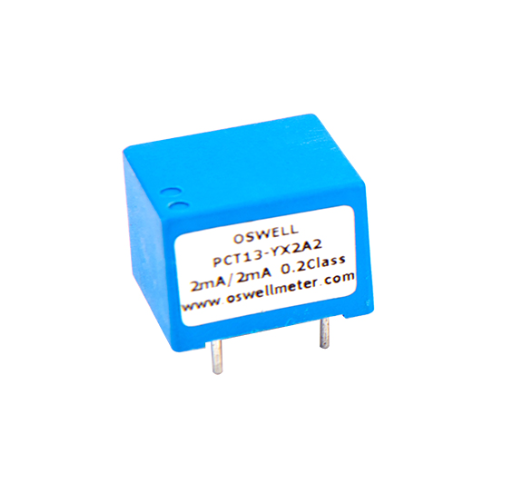
The right voltage ratio for a miniature voltage transformer is the ratio that scales the real primary voltage into the intended input range of the meter or control device, while still maintaining the needed accuracy under the actual burden and wiring scheme. In practice, that means buyers should check five things together: system voltage, target secondary voltage, burden level, device configuration method, and insulation context. When those five line up, ratio selection becomes straightforward. When they do not, even a technically “correct” ratio can become the wrong purchasing decision.