Why Accuracy Class Matters In Split-Core CT Selection
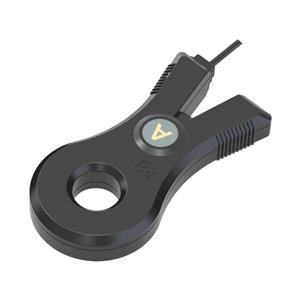
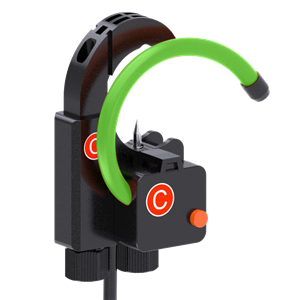
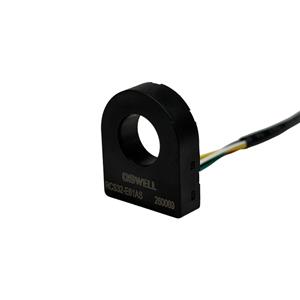
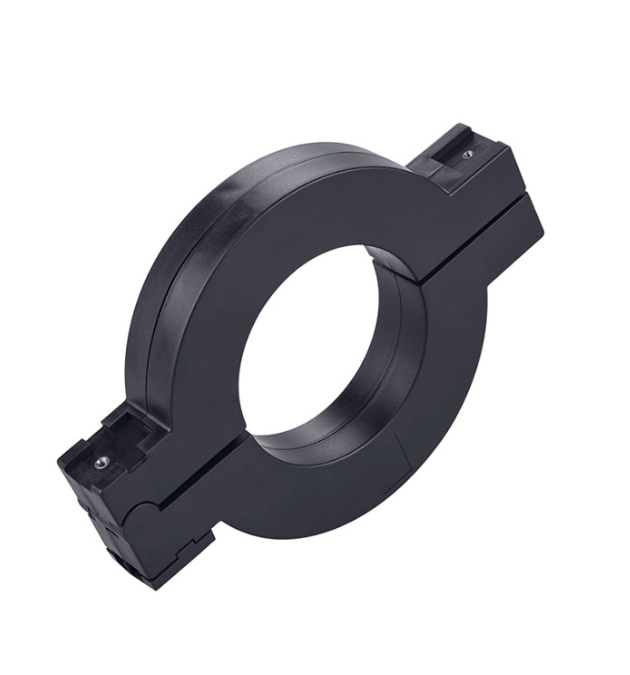
Split-core current transformers are popular because they can be installed around an existing conductor without disconnecting the wire, which makes them especially attractive for retrofit energy monitoring and metering projects. But that installation convenience often hides a critical procurement question: not every split-core CT is built for the same measurement job. On the market, you can find split-core models promoted as IEC Class 0.2 metering devices, revenue-grade 1% products with 333 mV output, and also more basic commercial units rated at ±5% or ±2% depending on ratio and burden. That difference is exactly why accuracy class matters: it tells buyers whether the CT is appropriate for serious measurement, basic monitoring, or only rough load indication.
Accuracy Class Sets The Measurement Ceiling Of The Entire Application
The first reason accuracy class matters is simple: it defines the highest measurement quality the CT can realistically support. A split-core CT marketed as IEC 60044-1 Class 0.2 is being positioned for a very different level of use than a unit listed at ±5% accuracy at 60 Hz. Flex-Core’s 4LSF line is presented as a high-accuracy split-core CT with IEC Class 0.2 performance and 333 mV output, while CR Magnetics’ 613 Series datasheet shows split-core models ranging from ±5% to ±2% accuracy depending on the current ratio. In practical purchasing terms, those are not interchangeable parts just because they share the same “split-core CT” label.
This matters even more when the meter or monitoring device itself has a defined accuracy target. Schneider Electric’s PM2200 series, for example, includes models rated to Class 1 and Class 0.5S. As an engineering inference, if a meter is designed to support Class 0.5S performance, pairing it with a lower-accuracy CT can limit the value of that meter, because the system can only perform as well as its weakest measurement element. For buyers, this means CT accuracy class is not a side detail. It is part of the full metering chain.
Accuracy class also affects project credibility. If the application is only trending load, identifying whether equipment is on or off, or doing rough current visibility, a basic split-core CT may be acceptable. But if the goal is tenant billing, cost allocation, energy optimization, or validation of efficiency improvements, the tolerance for error becomes much tighter. In that kind of application, accuracy class is no longer a convenience specification. It becomes a risk-control decision.
Accuracy Class Is Only Meaningful When Burden, Phase Error, And Installation Are Also Controlled
The second reason accuracy class matters is that CT accuracy is conditional, not absolute. CR Magnetics’ technical note explains that burden and accuracy are interdependent and that, in general, lower burden resistance improves accuracy. Flex-Core’s burden chart makes the same point in practical form: to preserve a CT’s best accuracy, the total burden must stay within the limit specified on the CT sheet, and wire resistance is part of that burden. In other words, buyers are not just purchasing a CT class on paper. They are purchasing that class under specific wiring and loading conditions.
Phase error is another reason the class question cannot be treated casually. Analog Devices notes that correct phase matching is important in energy metering because phase mismatch between channels creates larger errors at low power factor, and its metering documentation adds that CT phase errors in the 0.1° to 0.3° range are not uncommon and often need correction for accurate power calculation. Standard split-core CT datasheets also show that phase error can still be meaningful even when ratio error looks acceptable. So when buyers compare accuracy classes, they should not think only in terms of “percent current error.” They should also ask how the CT behaves in real power and energy measurement.
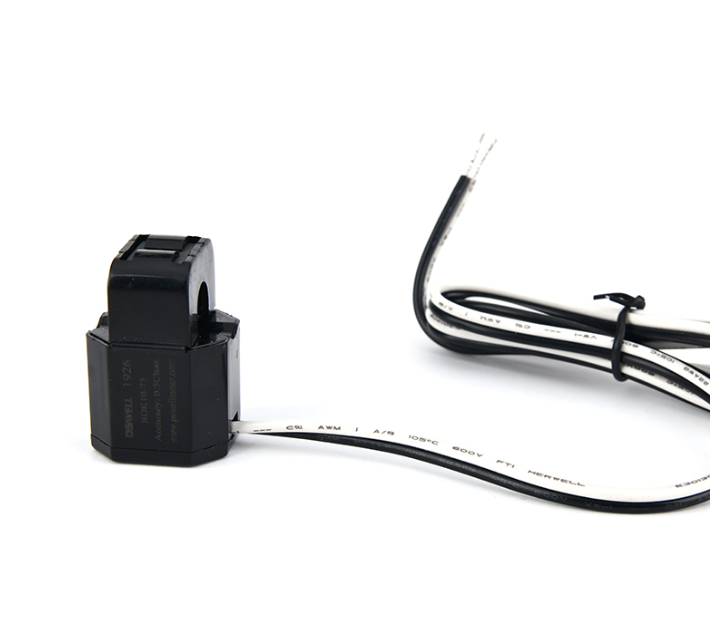
Installation discipline matters as well, especially with split-core products. Banner Engineering states that its CTs should be installed on a single conductor and that the direction arrow must point toward the load. Flex-Core likewise instructs users to follow polarity markings, with the arrow indicating the current-flow direction toward the load. Split-core CTs are convenient because they do not require cable disconnection, but that convenience also means incorrect orientation, wrong conductor placement, or mismatch between the CT output and the meter input can undermine the accuracy class you thought you bought.
The Right Accuracy Class Depends On The Job, The Meter Input, And The Cost Of Being Wrong
The third reason accuracy class matters is that split-core CTs are used in very different system architectures. Eaton’s documentation shows split-core products with both 333 mV and 5 A outputs for electronic metering applications, while Janitza’s UMG 96RM manual states that its current measurement inputs are intended for external ../1 A or ../5 A CTs. Eaton’s branch-circuit monitor documentation, by contrast, explicitly supports 333 mV split-core sensors on specific inputs. This means the “right” CT is not only about class 0.2 versus class 1. It is also about whether the output format, burden concept, and meter input architecture are compatible.
High-current behavior also matters. Socomec’s technical note warns that once the core saturates, the transformer loses linearity and measurement performance becomes erratic. For procurement teams, that is a reminder that accuracy class must still be considered together with current range, window size, and application headroom. A split-core CT that looks accurate near nominal current may still become the wrong choice if it is pushed too close to saturation in the field.
From a buying perspective, accuracy class is really a cost decision in disguise. A lower-priced CT with a looser class may appear attractive during quotation review, but if it creates billing disputes, unreliable energy baselines, repeated troubleshooting, or system recalibration work, the total ownership cost rises quickly. The better question is not “What is the cheapest split-core CT?” It is “What level of accuracy does this application actually require, and what is the cost if the answer is wrong?” That is the question that leads to better procurement decisions.
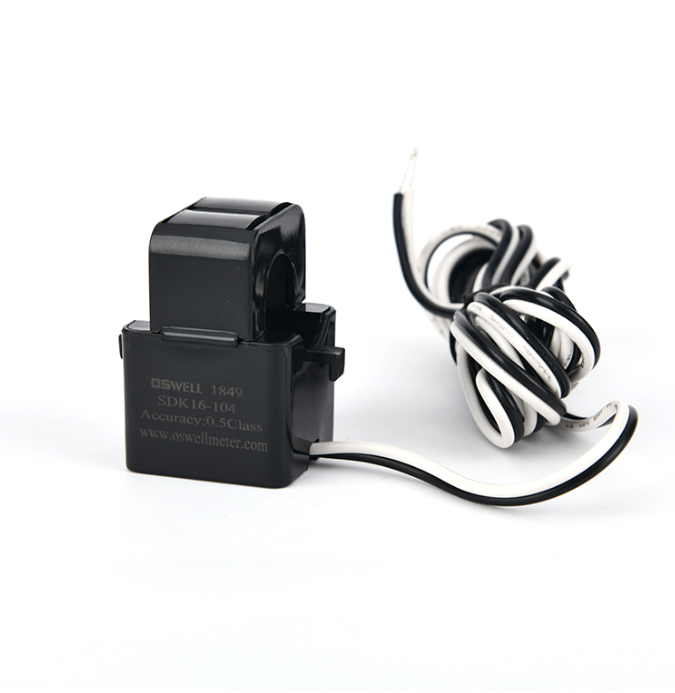
Accuracy class matters in split-core CT selection because it defines measurement potential, but it also reveals something deeper: whether the CT can deliver that performance under the burden, phase, polarity, current range, and meter-input conditions of the real application. A split-core CT is easy to install, but easy installation does not guarantee trustworthy data. Buyers who choose accuracy class based on application risk, system compatibility, and total lifecycle value usually make far better decisions than buyers who compare current ratio and price alone.