Why Residual Current Monitoring Is Becoming More Important in EV Charging and Energy Storage Systems
Why Residual Current Monitoring Is Becoming More Important in EV Charging and Energy Storage Systems
As electric vehicle charging infrastructure and battery energy storage systems continue to expand, electrical safety is becoming a major concern for equipment manufacturers, system integrators, and project developers. These applications combine high power levels, sophisticated power electronics, and long operating hours, creating new requirements for fault detection and electrical protection.
Residual current monitoring provides an important layer of protection by detecting unexpected current leakage between active conductors and earth. In EV charging equipment and energy storage systems, accurate residual current detection can help identify insulation problems, electrical faults, and abnormal operating conditions before they develop into more serious safety risks.
For EV charger manufacturers, BESS suppliers, and electrical component procurement teams, selecting reliable residual current sensing solutions is therefore becoming an increasingly important part of system design and supplier evaluation.
1. Why Residual Current Detection Matters in EV Charging and Battery Storage
EV chargers and battery energy storage systems operate differently from conventional electrical loads. Power electronic converters, inverters, chargers, batteries, and DC circuits can create complex fault conditions that require more advanced monitoring than basic overcurrent protection alone.
Residual current occurs when part of the electrical current flows through an unintended path instead of returning through the expected circuit. This may result from insulation deterioration, damaged cables, moisture, component failure, or other electrical faults.
If leakage current is not detected quickly, it may increase the risk of electric shock, equipment damage, system shutdown, or overheating. Reliable residual current monitoring therefore helps provide additional protection for both equipment and users.
Typical applications include:
AC and DC EV charging stations
DC fast charging equipment
Battery energy storage systems
Power conversion systems
Charging and energy distribution cabinets
Renewable energy storage installations
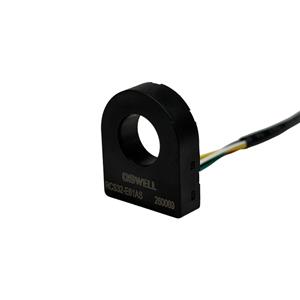
In these applications, residual current sensors continuously monitor the difference between current flowing through conductors. When an abnormal imbalance is detected, the monitoring system can provide a signal to the protection or control unit so appropriate action can be taken.
2. What Procurement Teams Should Consider When Selecting Residual Current Sensors
Residual current sensors used in EV charging and energy storage applications must provide reliable performance under demanding electrical conditions. Buyers should evaluate more than the basic detection range when comparing products and suppliers.
AC and DC Detection Capability:
Modern power electronic systems may generate different types of leakage current. Procurement teams should confirm whether the sensing solution can detect the residual current characteristics required by the specific application.
Measurement Sensitivity:
The sensor must detect small abnormal currents without creating unnecessary false alarms. Stable sensitivity is particularly important for charging equipment that operates for long periods in public or commercial environments.
Response Performance:
Electrical protection depends on timely detection. Sensors should provide consistent response characteristics so the control system can react quickly when abnormal leakage conditions appear.
Temperature and Environmental Stability:
EV charging stations may operate outdoors, while energy storage equipment may experience continuous thermal cycling. Reliable sensors should maintain stable performance across the intended operating environment.
Mechanical Integration:
Aperture size, PCB mounting, terminals, dimensions, output type, and installation method can all affect system integration. For OEM projects, customized structures may reduce redesign work and improve production efficiency.
Supplier capability is equally important. Procurement teams should evaluate manufacturing consistency, testing processes, engineering support, customization capability, and experience with high-volume electrical applications.
3. Residual Current Monitoring as Part of Safer Next-Generation Energy Infrastructure
The importance of residual current monitoring will continue to increase as EV charging and energy storage systems move toward higher power levels and greater deployment scale.
Future charging infrastructure will include more DC fast chargers, fleet charging facilities, commercial charging hubs, and renewable-energy-connected charging stations. At the same time, battery energy storage systems are becoming larger and are increasingly used for grid support, industrial energy management, and solar or wind integration.
These developments create stronger demand for measurement components capable of operating reliably in complex electrical environments.
Residual current monitoring can support:
Early electrical fault detection
Insulation condition monitoring
Charging system safety protection
Energy storage equipment protection
Preventive maintenance strategies
For OEM manufacturers, integrating reliable residual current sensing from the design stage can also simplify system protection architecture and reduce the risk of costly redesigns later in product development.
For procurement teams managing long-term programs, the lowest component price is rarely the only consideration. Detection reliability, batch consistency, technical support, and long-term supply capability can have a greater impact on total project risk.
As electrification continues worldwide, reliable residual current monitoring technology will become an increasingly important part of safer and more dependable EV charging and energy storage infrastructure。
Conclusion
Residual current monitoring is becoming increasingly important as EV charging and battery energy storage systems become more powerful, complex, and widely deployed. Reliable residual current sensors help detect leakage and insulation faults, improve equipment protection, and provide valuable information for safer system operation. For EV charger manufacturers, BESS suppliers, and global procurement teams, selecting residual current sensing components with stable detection performance, strong environmental reliability, suitable integration options, and consistent manufacturing quality can reduce system risk and support the development of safer next-generation energy infrastructure.