Choosing a latching relay for smart meter switching and load control requires more than checking a current rating or basic product size. The right relay should support reliable switching, low power operation, stable thermal behavior, safe structural design, and consistent performance in large-scale production. When contact reliability, coil characteristics, system integration, and supplier consistency are evaluated together, smart meter developers can make a stronger and more practical relay decision. This helps improve load control stability, reduce long-term risk, and support more reliable smart meter performance in real operating conditions.
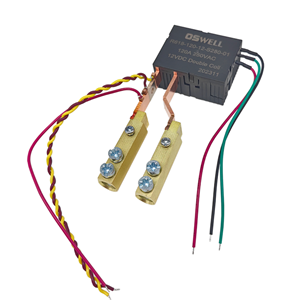
In summary, the latching relay is not merely a switch within a smart energy meter; it is a strategic component that addresses core challenges of power efficiency, long-term reliability, and advanced functionality. By eliminating standby power draw, it unlocks decade-long battery life and enables new, autonomous meter designs. Its inherent thermal and mechanical stability ensures operational integrity over the meter's extended lifespan. Finally, its bistable, pulse-driven nature is the perfect interface for executing remote commands and smart grid functions, from prepayment to demand response. Specifying a high-quality latching relay, therefore, is a fundamental design decision that directly impacts the performance, longevity, and intelligence of the smart metering system.