How To Choose A Latching Relay For Smart Meter Switching And Load Control
How To Choose A Latching Relay For Smart Meter Switching And Load Control
In smart meter applications, the latching relay is a key component for switching and load control. It directly influences power consumption, switching reliability, safety behavior, thermal performance, and long-term system stability. Choosing the right latching relay is not only about current rating. It also requires careful evaluation of contact performance, coil characteristics, mechanical endurance, dimensional fit, and consistency in mass production. This guide explains how to choose a latching relay that fits smart meter switching and load control requirements more effectively.
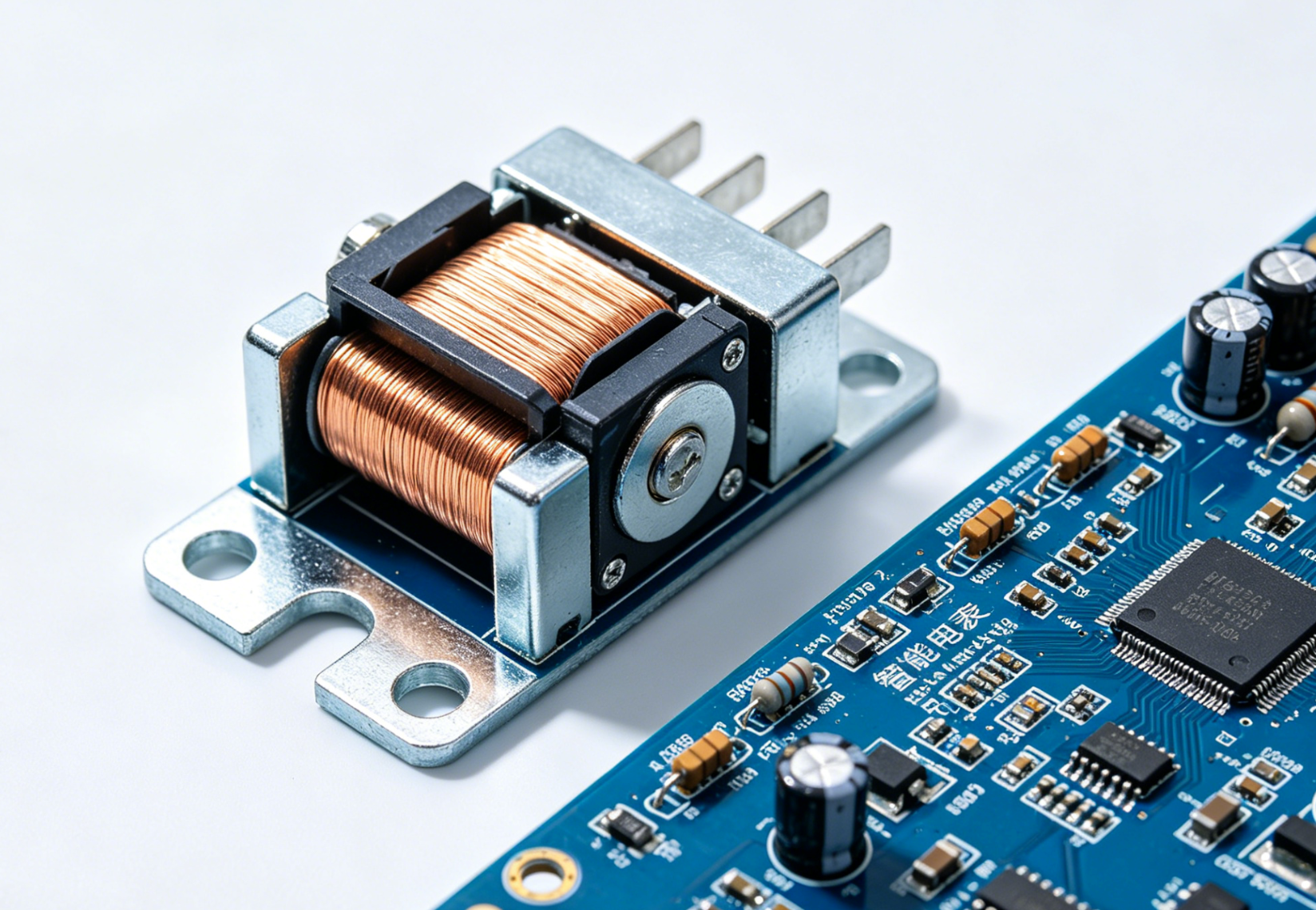
1. Why Latching Relay Selection Matters In Smart Meter Design
A latching relay is widely used in smart meters because it can maintain its switching state without continuous coil power. This makes it especially valuable in energy metering devices where low power consumption is important. However, not every latching relay is equally suitable for smart meter switching and load control. The relay must operate reliably under repeated switching, support stable contact behavior, and match the electrical and mechanical requirements of the full meter design.
In many smart meter systems, the relay is responsible for connecting and disconnecting loads, controlling energy flow, and supporting functions such as remote switching or protection-related actions. If the relay is poorly selected, the meter may face unstable switching, excessive heat generation, contact wear, calibration issues, or reduced long-term reliability. In volume projects, these risks become even more serious because small weaknesses can turn into large-scale field problems.
Another reason relay selection matters is that the smart meter is usually a compact and highly integrated product. The relay must fit within tight design space while still delivering sufficient switching capacity and stable performance. It should also work well with the meter’s CT, shunt, voltage sensing circuit, control board, and housing structure. This means relay selection should always be made as part of the whole meter system rather than as an isolated component choice.
The best latching relay is therefore not simply the one with the highest current rating. It is the one that best supports switching reliability, load control requirements, low standby power consumption, dimensional fit, and long-term operating stability in the actual smart meter application.
2. What Technical Factors Should Be Checked Before Final Selection
The first key factor is switching capacity. Engineers should check whether the relay can handle the expected load current, switching frequency, and electrical stress profile of the smart meter application. A relay that appears suitable at nominal current may still struggle if the real operating condition includes inrush effects, repeated switching cycles, or more demanding load behavior. The selection should therefore be based on actual switching requirements rather than a single headline rating.
The second factor is contact reliability. In smart meter switching and load control, contact behavior affects both safety and long-term performance. Stable contact resistance, predictable switching action, and good endurance are essential. If the contact system is not robust enough, the relay may develop heating issues, inconsistent switching performance, or reduced operational life. For projects expected to run over many years, this is a critical evaluation point.
Coil characteristics should also be reviewed carefully. One of the main advantages of a latching relay is that it does not need continuous power to hold its state, but the coil still needs to switch the relay reliably under practical voltage conditions. Engineers should check whether the relay performs consistently during pulse-driven operation and whether the control method integrates smoothly with the smart meter electronics. Stable coil response improves both system efficiency and switching confidence.
Thermal performance is another major factor. Load control functions can create heat inside a compact meter enclosure, so the relay must be able to operate stably without introducing unacceptable temperature rise or surrounding component stress. In addition, insulation structure, creepage considerations, and overall safety design need to match the target market and application level.
Finally, teams should check dimensional compatibility and production consistency. The relay should fit the meter layout, support efficient assembly, and remain consistent across large production batches. In smart meter projects, stable supplier process capability is just as important as the technical data sheet because mass-production reliability depends on repeatable quality.

| Selection Factor | Why It Matters | What To Check |
|---|---|---|
| Switching Capacity | Determines load control suitability | Rated current, switching condition, application load profile |
| Contact Reliability | Affects heating, endurance, and stable operation | Contact performance, switching consistency, endurance behavior |
| Coil Performance | Supports efficient and reliable actuation | Pulse response, control compatibility, operation stability |
| Thermal Behavior | Protects meter stability in compact enclosure design | Temperature rise, enclosure fit, surrounding component impact |
| Safety Structure | Supports safe switching and insulation design | Insulation concept, creepage support, structural robustness |
| Batch Consistency | Improves calibration and field reliability in volume projects | Supplier process control, dimensional tolerance, inspection stability |
3. How To Make A Better Relay Decision For Smart Meter Switching And Load Control
A practical relay decision starts with the application scenario. Project teams should define whether the relay is mainly used for remote disconnect, periodic switching, load limitation, or other control functions within the smart meter. Once the actual switching duty is clear, it becomes easier to identify the right balance between electrical capacity, low-power operation, and long-term reliability.
It is also useful to validate the relay under system-level conditions. A latching relay does not operate alone. It works together with the meter control circuit, the current measurement path, the enclosure, and the installation environment. Engineers should therefore test the relay in a way that reflects real switching behavior, real control pulses, and realistic thermal conditions. This helps avoid choosing a relay that looks acceptable in isolated testing but performs less consistently in the complete meter design.
Supplier capability should be part of the evaluation as well. In smart meter projects, a relay that performs well in one sample is not enough. The supplier must also provide stable production quality, clear technical communication, and repeatable performance across batch deliveries. This is especially important in high-volume meter programs where switching consistency and field reliability must be controlled over time.
Another useful decision point is system efficiency. Because smart meters benefit from low internal power consumption, the latching relay should support efficient operation without compromising switching confidence. That means engineers should weigh both electrical performance and energy-saving advantage when finalizing the selection.
The best latching relay for smart meter switching and load control is therefore the one that matches the meter’s real duty cycle, fits the design space, supports low-power operation, and delivers reliable batch performance in long-term use. A more application-based selection process leads to better switching stability, lower field risk, and stronger overall meter performance.

Conclusion
Choosing a latching relay for smart meter switching and load control requires more than checking a current rating or basic product size. The right relay should support reliable switching, low power operation, stable thermal behavior, safe structural design, and consistent performance in large-scale production. When contact reliability, coil characteristics, system integration, and supplier consistency are evaluated together, smart meter developers can make a stronger and more practical relay decision. This helps improve load control stability, reduce long-term risk, and support more reliable smart meter performance in real operating conditions.
Contact Us
Looking for the right latching relay for smart meter switching and load control? Contact our team to discuss relay selection, application matching, and stable supply support.