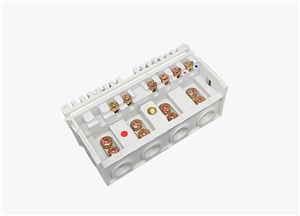
Shenzhen, China – August 23, 2025 – GELAN Electric, a leading innovator in electrical components, today announced the global launch of its 1P&3P Meter Terminal Block, designed to address the growing demand for reliable and scalable energy metering solutions in smart grids and renewable energy systems.
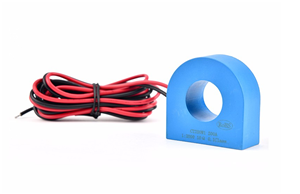
The Secondary Wire Type Current Transformer (CT) is a specialized instrument transformer designed for accurate current measurement and energy metering in electrical systems. By utilizing electromagnetic induction principles, it safely steps down high primary currents to standardized, measurable secondary levels (typically 1A or 5A), enabling precise monitoring, billing, and protection in commercial, industrial, and utility applications. Its robust construction and advanced design ensure reliability in diverse environments, from smart grids to manufacturing facilities.

The AT32F403ARCT7 and AT32F403AVG7T metering chips now power over 2 million advanced electricity meters globally. These 32-bit ARM Cortex-M4F-based controllers achieve 0.2% active energy measurement accuracy through integrated 24-bit Σ-Δ ADCs and hardware computation engines.
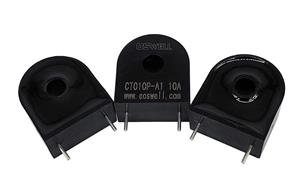
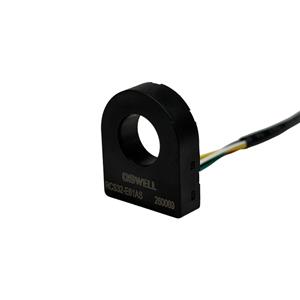
A 10A miniature current transformer (CT) is a compact, precision instrument designed to measure alternating current (AC) in low-voltage electrical systems. Unlike traditional CTs, which are often bulky, this miniaturized version is engineered for applications where space constraints and portability are critical, such as in industrial control panels, renewable energy systems, and consumer electronics.
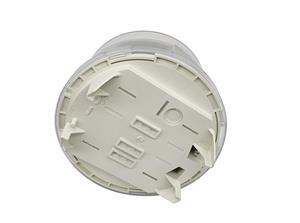
ANSI Meter Case
For 100A,200A ANSI Standard meter,Static energy meter,Active energy meter,Reactive energy meter,Multi-rate meter,Multifunctiong watthour meter,Indoor meter,Outdoor meter.Material:ABS or PC,Fire retardant UL 94-V0
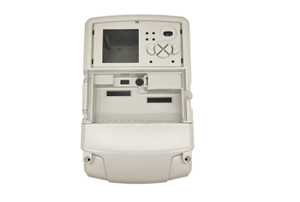
Three-phase four-line modbus concentrator meter case is used to produce an electric energy monitoring terminal with high integration and advanced technology. It adopts GPRS/CDMA/GSM/SMS communication. The finished product is widely used in power load management system, providing reliable technical means for customer service, audit, orderly use of electricity, peak use of electricity, safe use of electricity, and relieve power tension. It is a cost-effective product.
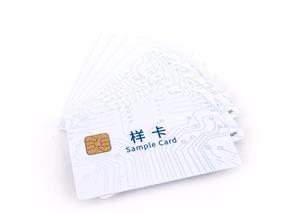
The global IC card metering market is projected to reach $8.7B by 2027, driven by prepaid utility adoption in developing economies and smart city initiatives. Frost & Sullivan's latest analysis reveals 43% year-on-year growth in Asia-Pacific IC card meter deployments, with water/gas metering applications outpacing electricity 3:1.
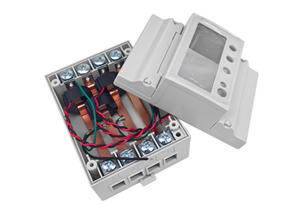
The Compact 60A DIN Rail Meter Case, a highly engineered and efficient solution in the electrical industry, boasts a wide range of applications across various sectors. Designed with modern aesthetics and compact dimensions, this meter case is tailor-made for demanding environments where space is at a premium.
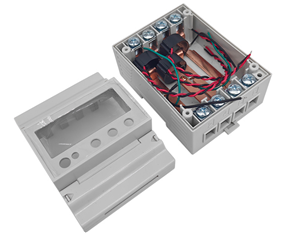
The emergence of the Static Energy Meter (SEM) represents a significant leap in the realm of power measurement technology. This innovative device redefines the way we track and manage electrical consumption, particularly in industries where efficiency is paramount.
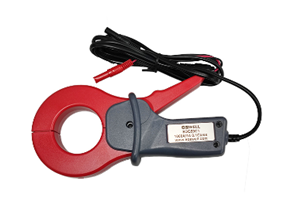
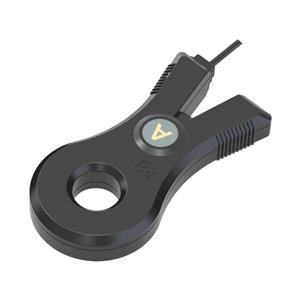
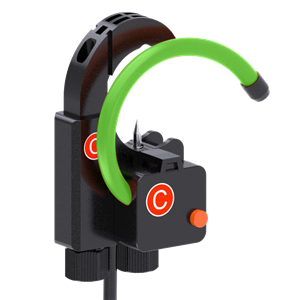
1A current clamp meter
The 1A current clamp meter, also known as the 1A clamp-on ammeter, is a versatile and invaluable tool used for a variety of electrical applications. This instrument is specifically designed to measure low currents in electrical circuits with precision and accuracy. The 1A current clamp meter offers several specific uses in different electrical and electronic applications.