Selecting a latching relay that reduces smart meter failure risk requires more than checking a nominal current rating or product size. The right relay should provide stable contact performance, reliable actuation, sufficient switching margin, controlled thermal behavior, strong mechanical consistency, and dependable safety structure. When these factors are evaluated together under real application conditions, project teams can make stronger relay decisions, reduce hidden failure risk, and improve long-term smart meter reliability.
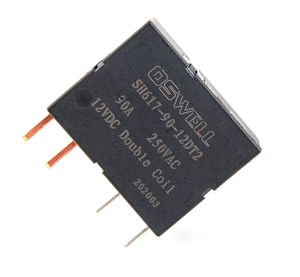
The debate between latching and standard relays in energy meters is decisively tilted towards latching technology in the era of smart, efficient grids. The latching relay's zero-power holding, superior reliability, and inherent fail-safe memory function address the critical needs of modern metering: minimizing system energy loss, ensuring long-term operational integrity, and enabling advanced tariff and load control features. While standard relays have their place in simpler applications, the latching relay, especially when engineered with the precision and quality focus of a supplier like Oswell E-Group, represents the intelligent, future-proof choice for building reliable, efficient, and full-featured energy measurement systems.