How To Check If A Smart Meter Component Is Really Ready For Mass Production
How To Check If A Smart Meter Component Is Really Ready For Mass Production
In smart meter OEM projects, a component is not truly ready for mass production simply because it passed one sample test or looked correct in a prototype. Real mass production readiness means the part can maintain stable electrical performance, dimensional consistency, structural fit, and repeatable quality across multiple units and future batches. If these points are not confirmed before production starts, the project may face repeated sample changes, approval delays, incoming inspection problems, calibration instability, or batch variation after launch. This guide explains how to check whether a smart meter component is really ready for mass production and what buyers and engineers should confirm before moving forward.
1. Why A Good Sample Does Not Always Mean Production Readiness
In many smart meter projects, the first approved sample gives the team confidence that the part is ready. But a good sample and a production-ready component are not the same thing. A sample may perform well because it was carefully selected, tested under limited conditions, or reviewed before the real layout and production path were fully confirmed. Once the project moves toward pilot or batch production, hidden issues can begin to appear.
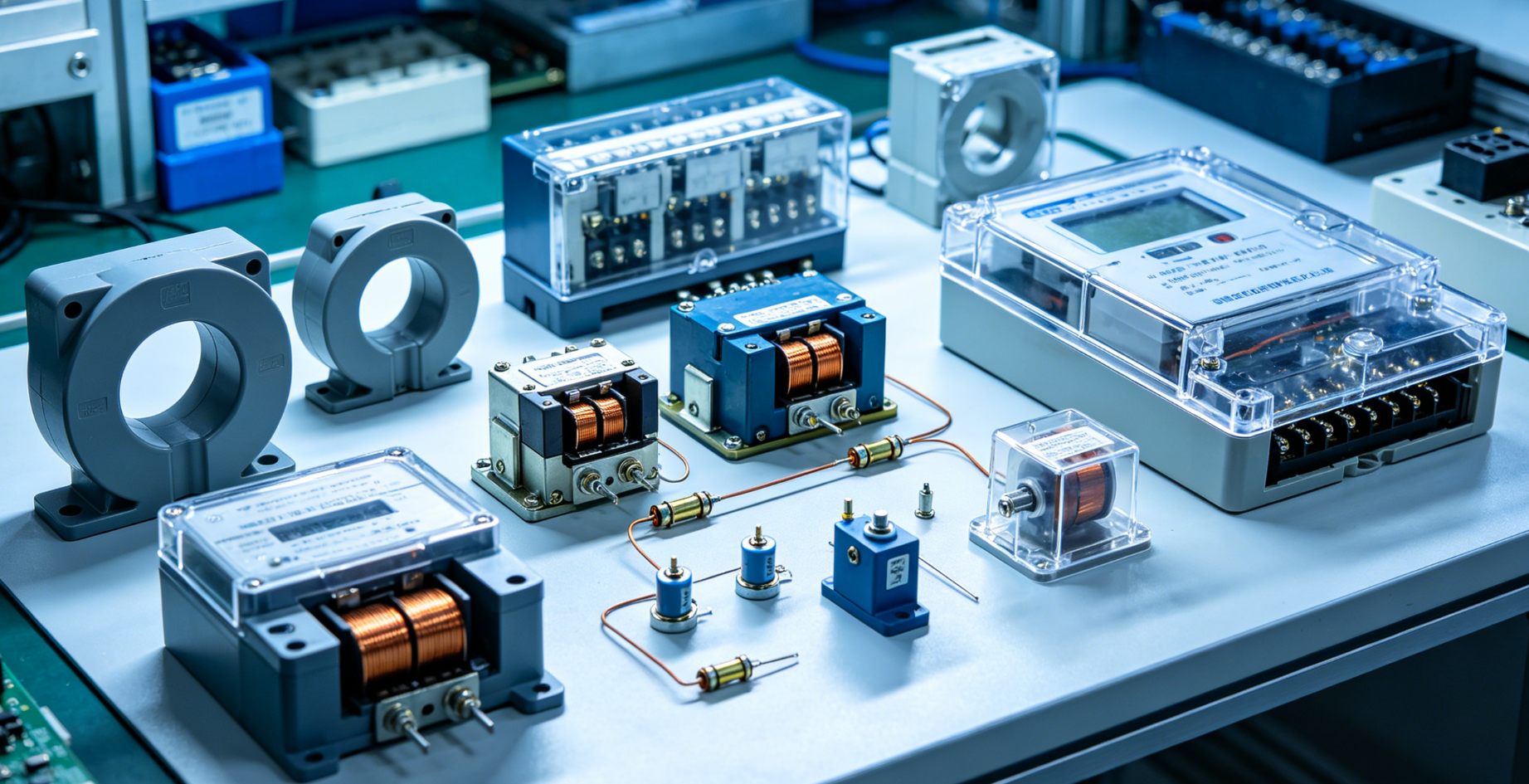
A current transformer may look stable in a sample test and still cause problems later if the real burden condition, low-current behavior, or mounting fit is not fully matched. A latching relay may switch correctly in early testing but still require more confirmation for repeated use, pulse response, and thermal behavior. A shunt resistor may pass initial checks and still create thermal or layout pressure in the final product. A miniature voltage transformer or meter case may also pass early review and later become a source of delay if dimensional fit or batch consistency is weaker than expected.
This is why smart meter teams should treat production readiness as a separate decision from sample approval. The real question is not only whether the part works once, but whether it can keep working in the same way across multiple units, within the real meter structure, and through future OEM supply stages.
A component is only truly production-ready when technical fit, structural fit, and supply consistency are all clear enough for the next stage.
2. What Buyers And Engineers Should Check Before Calling A Part Production-Ready
The first thing to check is whether the part truly matches the real application. Buyers should confirm the meter type, rated current or voltage range, mounting method, PCB layout condition, and project structure. A component that is only generally suitable should not yet be treated as mass-production-ready.
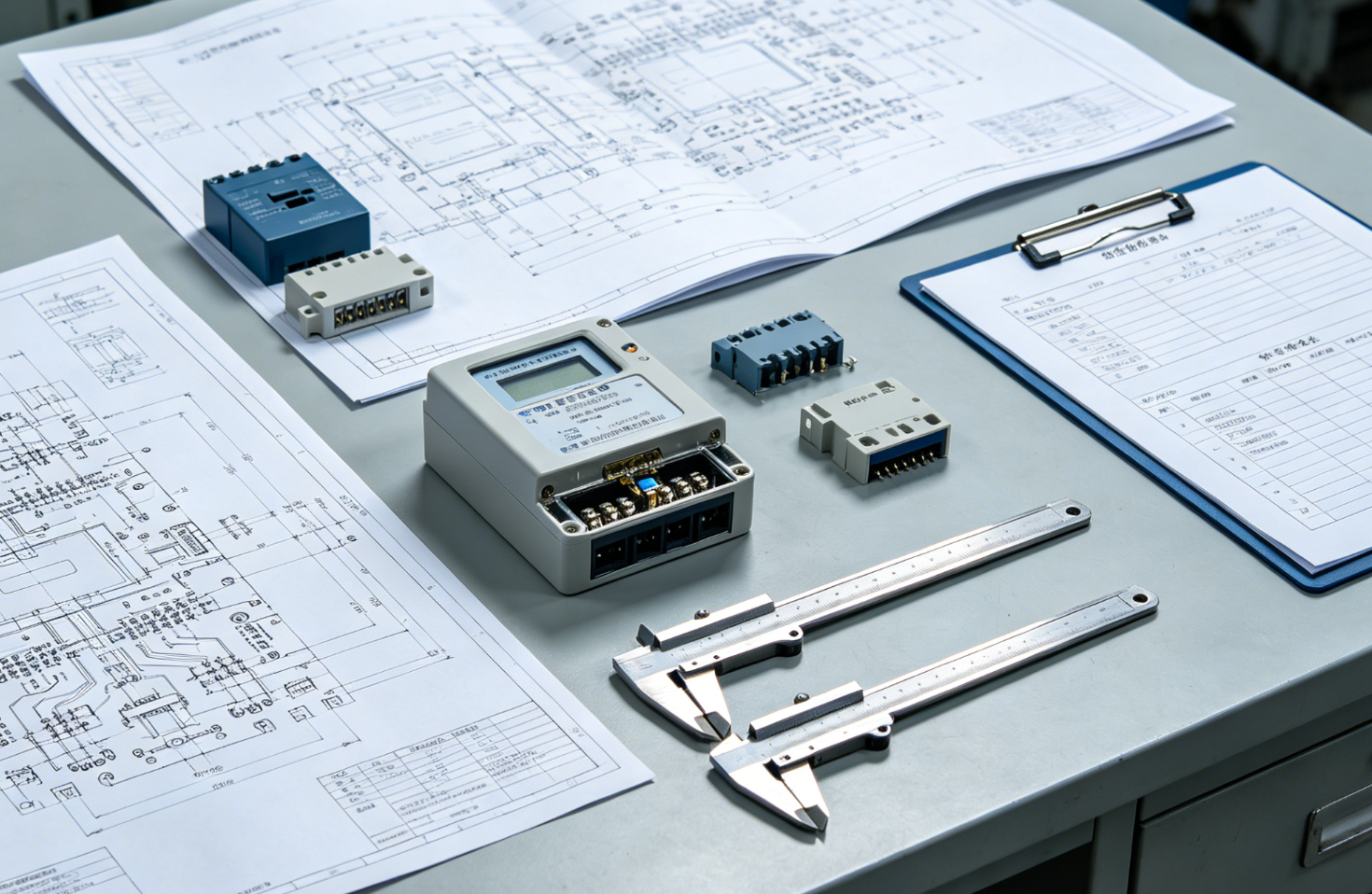
The second point is whether the part has been reviewed in the real meter system instead of only as a standalone sample. A current transformer, relay, shunt resistor, miniature voltage transformer, or case may all perform differently once they interact with the actual PCB, housing, terminal area, current path, thermal environment, and assembly process. System-level fit is one of the most practical checks before production release.
The third point is repeatability. A production-ready part should not only work once. It should behave consistently across multiple pieces. If the performance changes too much from unit to unit, the project may later face calibration instability, dimensional rejection, or repeated inspection problems. This is one of the clearest signs that a component is not yet ready for batch use.
The fourth point is process relevance. Buyers should confirm whether the approved sample is actually based on the real production path. A temporary prototype, hand-adjusted sample, or loosely controlled early version may help engineering discussion, but it should not automatically be treated as the same thing as future batch supply.
The fifth point is stability under practical conditions. If the component still needs more checking for temperature rise, repeated switching, dimensional tolerance, insulation confidence, or long-term structure stability, it is usually too early to treat it as mass-production-ready. A stronger readiness decision comes from confirming how the part behaves under conditions closer to real use.
Finally, buyers should confirm whether the supplier can keep the same quality path later. A component is only ready for production when the supplier can support it not only now, but also in future pilot and volume stages with stable quality and clear follow-up support.
| Readiness Check | Why It Matters | What Buyers Should Confirm |
|---|---|---|
| Real Application Match | Prevents moving forward with a part that is only generally suitable | Meter type, current/voltage range, mounting fit, design condition |
| System-Level Fit | Reduces hidden issues after integration into the real product | PCB layout, housing interaction, terminal area, assembly path |
| Repeatability | Shows whether the part can stay stable across multiple units | Multi-piece consistency, unit-to-unit stability, dimensional repeatability |
| Production Relevance | Prevents confusion between a prototype and a batch-ready part | Standard model, prototype status, future batch path, real process fit |
| Practical Stability | Helps reveal issues before pilot or volume stage | Thermal behavior, switching stability, insulation confidence, tolerance margin |
| Supplier Continuity | Reduces the chance of later OEM supply instability | Future batch support, consistency path, follow-up response, supply stability |
3. How Buyers Can Judge Production Readiness More Safely
The most practical way is to separate sample approval from mass production approval. A part may pass a first sample review and still need more confirmation before it is safe for pilot or volume use. Treating these as different milestones helps the team avoid one of the most common sourcing mistakes in smart meter OEM projects.
It is also useful to review the component with the actual project information already in place. Buyers should compare the part against the real meter type, PCB layout, case structure, approval target, and future quantity plan. This makes the production-readiness decision much more accurate than relying on one isolated test or one good-looking sample.
Buyers should also ask suppliers direct readiness questions. For example, is the approved sample based on the real production path, can the same quality be maintained in future batches, and what part of the project still needs confirmation before volume supply begins? A stronger supplier should be able to answer these clearly.
Another useful principle is to compare the cost of a delay now versus the cost of a delay later. A more careful readiness review may slow one approval step slightly, but it usually saves more time overall by reducing repeated sampling, pilot-stage surprises, and batch instability later.
The best readiness decision is the one that helps the project enter mass production with fewer hidden questions still unresolved.
Conclusion
To check whether a smart meter component is really ready for mass production, buyers and engineers should look beyond a single sample result and confirm real application fit, system-level compatibility, repeatability, process relevance, practical stability, and future supplier continuity. When these points are reviewed together, the project becomes much less likely to face hidden delays or instability after the production schedule has already started.
Contact Us
Looking for reliable smart meter components for your OEM project? Contact our team to discuss drawings, samples, technical requirements, and quotation details.