Why DC Immunity Matters When Selecting A Current Transformer For Smart Meters
Why DC Immunity Matters When Selecting A Current Transformer For Smart Meters
In smart meter applications, selecting a current transformer is not only about ratio, size, or installation method. DC immunity can be a critical factor when the meter operates in environments where DC components may affect magnetic behavior and measurement stability. A current transformer with proper DC immunity helps reduce error risk, supports more stable metering performance, and improves system reliability in demanding real-world conditions. This guide explains why DC immunity matters and how it should be evaluated when choosing a CT for smart meters.
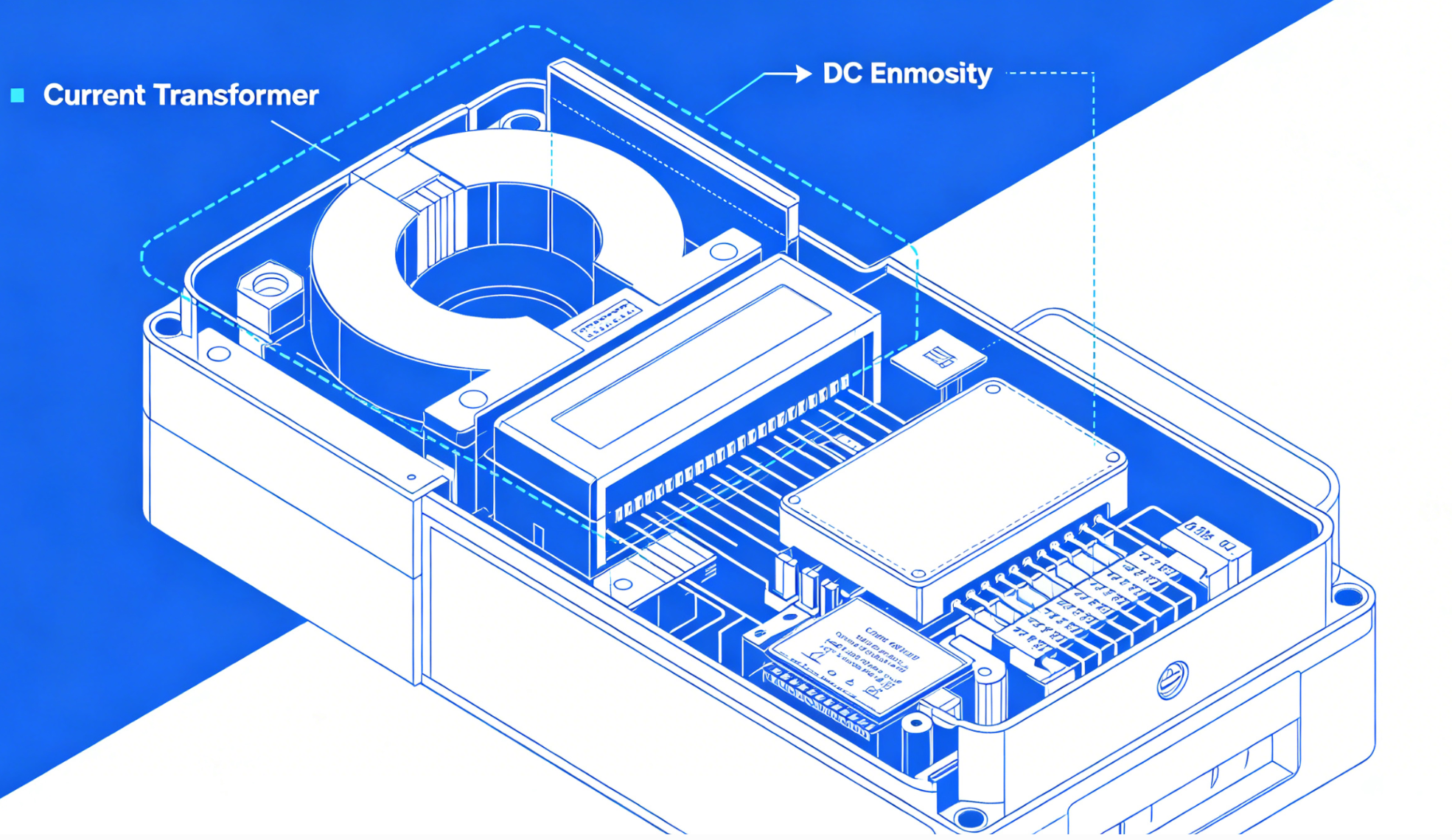
1. What DC Immunity Means In Smart Meter CT Applications
In a conventional current transformer, the magnetic core is designed to respond to alternating current conditions in a stable and predictable way. However, in some metering environments, unwanted DC components can appear in the current path or magnetic system. When this happens, the CT core may be pushed away from its ideal operating condition, which can affect linearity, increase measurement deviation, and reduce stability across the working range.
DC immunity refers to the ability of the current transformer to maintain acceptable metering performance even when DC influence exists in the application. This does not mean the CT becomes a DC sensor in the traditional sense. Instead, it means the CT is designed to resist the negative impact that DC-related magnetic bias may have on AC measurement behavior. In smart meters, this can be especially important because stable energy measurement depends on predictable CT performance under practical operating conditions rather than only under ideal laboratory scenarios.
As smart power systems become more complex, the electrical environment around the meter can also become more demanding. Loads with electronic switching behavior, power conversion elements, or non-ideal waveform conditions may create challenges that a standard CT is not optimized to handle. In such cases, a CT with DC immunity can offer stronger resistance to magnetic disturbance and help the smart meter preserve more reliable output behavior.
For developers and procurement teams, this means DC immunity should not be seen as an optional marketing term. It should be understood as a practical design characteristic that may directly influence whether the meter continues to perform accurately and consistently when the application moves from the test bench into real operating conditions.
2. How DC Immunity Affects Smart Meter Accuracy And Stability
When a CT is exposed to DC influence without sufficient immunity, one of the first risks is accuracy drift. The current transformer may still function, but its behavior can become less stable across the measurement range. This can create inconsistencies at low current points, distort expected ratio performance, or make the meter harder to calibrate reliably during production. In a smart meter project, such issues do not always appear immediately, but they may show up later as performance deviation, inconsistent batch results, or field complaints.
Another important issue is long-term stability. Smart meters are expected to operate for years, often in installations where electrical conditions are not perfectly clean or predictable. If the CT is sensitive to DC-related magnetic bias, long-term metering consistency can be harder to maintain. A design with better DC immunity can help reduce this risk and support more stable system behavior over time.
DC immunity also matters from a system integration perspective. The current transformer does not work alone. It interacts with the meter’s voltage sensing design, metering IC, PCB layout, calibration process, and enclosure structure. If the CT is vulnerable to DC effects, it can create additional burden on the rest of the system. Engineers may need more calibration effort, tighter design compensation, or stricter production control to maintain the required performance level.
In contrast, a CT designed with stronger DC immunity gives the overall smart meter platform more tolerance. It helps protect measurement reliability when field conditions are not ideal and reduces the chance that magnetic bias will undermine the final meter result. For this reason, DC immunity should be viewed as part of practical system robustness, not just a standalone component feature.

| Selection Point | CT Without Strong DC Immunity | CT With Strong DC Immunity |
|---|---|---|
| Metering Stability | More sensitive to magnetic disturbance | Better resistance to DC-related bias influence |
| Calibration Behavior | May require tighter compensation | Supports more predictable calibration performance |
| Field Reliability | Higher risk in demanding operating conditions | Improved tolerance in practical meter environments |
| Application Fit | Better for simpler or less demanding conditions | Better for smart metering designs needing stronger robustness |
| Long-Term Consistency | May be more vulnerable to hidden measurement drift | Helps support more stable long-term performance |
3. How To Evaluate DC Immunity When Selecting A CT
The first step is to understand the real operating environment of the smart meter. If the application is likely to face waveform complexity, demanding installation conditions, or long-term exposure to non-ideal electrical behavior, DC immunity becomes much more relevant. Engineers should not assume that all current transformers will respond equally well in these environments. The application itself should define whether this feature is essential.
The second step is to ask for practical validation data rather than relying only on a basic product description. A serious CT selection process should include sample testing, consistency checks, and performance review under conditions close to the intended smart meter use case. This is particularly important in volume projects, where one sample result is not enough. Teams should evaluate how stable the CT remains across multiple pieces, different temperatures, and repeated testing conditions.
It is also useful to review the supplier’s manufacturing capability and product positioning. If the supplier has dedicated CT production experience and already offers current transformers specifically described for DC immunity and metering applications, that generally indicates a more focused product path. For smart meter developers, this can reduce the risk of forcing a general-purpose CT into a demanding metering design where it may not perform as expected.
Finally, DC immunity should be balanced with other CT selection criteria such as ratio suitability, dimensional fit, insulation reliability, mounting method, and batch consistency. A good smart meter design does not choose one feature in isolation. It chooses the CT that best supports the full metering objective. In many modern projects, DC immunity is part of that larger definition of a reliable and future-ready metering component.
The best choice is therefore not simply a CT that works under standard conditions, but a CT that continues to support stable smart meter performance when real operating conditions become more demanding. That is exactly why DC immunity matters during selection.

Conclusion
DC immunity matters in smart meter current transformer selection because it helps protect measurement accuracy, system stability, and long-term reliability under real operating conditions. In applications where DC-related magnetic bias may affect CT behavior, choosing a design with better immunity can reduce hidden metering risk and support more consistent performance from calibration to field use. For modern smart meter projects, DC immunity is not just an added feature. It is an important part of choosing a CT that can perform reliably in practical, demanding environments.
Contact Us
Looking for the right current transformer for demanding smart meter applications? Contact our team to discuss DC immunity, metering performance, and project matching.