How To Reduce Procurement Risk When Buying Smart Meter Components From China
How To Reduce Procurement Risk When Buying Smart Meter Components From China
Buying smart meter components from China can be highly efficient and cost-effective, but procurement risk increases quickly when buyers focus only on price or one sample result. In OEM and project-based sourcing, the real risk usually comes from mismatch between the component and the actual meter design, unclear RFQ information, inconsistent sample quality, weak process control, or poor communication during the approval stage. This guide explains how buyers can reduce procurement risk when sourcing smart meter components from China and how to make stronger decisions before sample approval and mass production.

1. Why Procurement Risk Happens In Smart Meter Component Sourcing
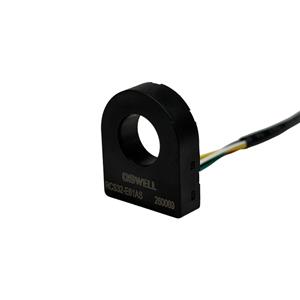
In smart meter projects, component procurement is rarely risky because the supplier is in China alone. The bigger problem is usually that the part is not fully matched to the real application. A current transformer may have the right nominal current but the wrong burden fit. A latching relay may look strong on paper but may not suit the real switching condition. A shunt resistor may seem economical but create extra thermal pressure. A miniature voltage transformer or meter case may also cause layout, insulation, or production problems if technical details are confirmed too late.
Another source of risk is incomplete RFQ information. When buyers ask only for “best price” without drawings, PCB layout, dimensional limits, target current range, or project stage, the supplier can only make assumptions. Those assumptions often lead to rough quotations, unsuitable samples, repeated revision, and slower approval cycles. What looks like a purchasing issue is often actually an information issue.
Sample approval is another critical point. A component that works in one prototype is not automatically ready for OEM supply. If buyers do not confirm electrical behavior, dimensional fit, insulation confidence, and future batch consistency before approval, the project may later face calibration instability, assembly variation, or field reliability problems. These risks become more expensive once the project moves closer to tooling or production launch.
Reducing procurement risk therefore means controlling more than price. It means controlling technical fit, communication quality, supplier capability, and production readiness together.
2. What Buyers Should Verify Before Choosing A Supplier
The first thing buyers should verify is product fit. The supplier should not only have a similar product category, but should be able to support the real smart meter design. Buyers should confirm whether the supplier understands meter-related applications, whether the proposed part matches the rated current or voltage condition, whether the mounting method is correct, and whether the structure fits the actual PCB and enclosure design.
The second point is sample quality and sample realism. Buyers should check whether the sample is only a trial piece or whether it represents a production-ready version. A good supplier should be able to explain how the sample relates to future mass production and whether the same magnetic behavior, dimensional control, switching consistency, insulation structure, or molding precision can be maintained in later batches.
The third point is communication and technical response quality. In lower-risk sourcing, a supplier should respond clearly to drawings, dimensions, mounting questions, and application details rather than only sending a general quotation sheet. Good communication helps buyers identify risk earlier, especially in OEM projects where standard parts are often adjusted to fit a real design.
The fourth point is process and quality control capability. Buyers should understand whether the supplier has basic testing ability, incoming material control, repeatable inspection standards, and stable production management. In smart meter components, this matters because even small variation in a CT, relay, shunt, transformer, or case can later affect calibration, assembly, and final meter consistency.
The fifth point is project-stage support. A reliable supplier should support not only quotation, but also sample discussion, drawing review, dimensional confirmation, and batch planning. Procurement risk becomes much lower when the supplier can work with the buyer through the full approval path instead of only at the commercial inquiry stage.

| Risk Area | Why It Creates Problems | What Buyers Should Confirm |
|---|---|---|
| Product Match | Wrong fit leads to redesign or unstable meter performance | Real application, current/voltage range, mounting type, dimensional fit |
| RFQ Clarity | Incomplete information causes wrong quoting and wrong sampling | Drawings, PCB layout, quantity, project stage, technical target |
| Sample Reliability | A good prototype alone does not guarantee good batch supply | Electrical fit, dimensions, insulation, real production readiness |
| Supplier Process Control | Weak control increases batch inconsistency risk | Inspection method, material control, repeatability, quality support |
| Communication Efficiency | Poor technical response slows project approval | Response to technical questions, drawing feedback, engineering clarity |
| Mass Production Readiness | Late production issues often appear after sample approval | Batch consistency, lead time logic, OEM support, delivery planning |

3. How Buyers Can Build A Lower-Risk Purchasing Process
The most practical way is to prepare the real project information before sending the RFQ. Buyers should provide the component category, application type, rated current or voltage range, mounting method, dimensional limits, target quantity, and project stage. This helps the supplier quote and recommend more accurately, which immediately reduces early procurement risk.
It is also important to review the sample together with the real smart meter design, not only as a standalone part. When buyers compare the sample with the actual PCB layout, enclosure condition, installation method, and expected operating environment, they are much more likely to catch hidden problems before approval.
Buyers should also separate the project into stages: quotation review, sample review, technical confirmation, and batch preparation. This makes communication with the supplier more structured and reduces the chance that a sample is approved too early or that commercial expectations are confused with production readiness.
Another practical principle is to compare total project risk, not only first price. A supplier with clearer engineering communication, better sample consistency, and stronger process control may create much lower overall procurement risk than one that offers a lower first quotation but weak support.
In smart meter sourcing, lower risk usually comes from better preparation, better confirmation, and better supplier matching. That is what leads to more stable OEM execution in the long run.

Conclusion
Reducing procurement risk when buying smart meter components from China requires more than checking price and delivery time. Buyers should confirm product fit, RFQ clarity, sample reliability, supplier process control, communication quality, and future batch readiness before moving forward. When these points are managed together, sourcing becomes more efficient, quotations become more accurate, and OEM smart meter projects become much easier to control.
Contact Us
Looking for reliable smart meter components for your OEM project? Contact our team to discuss drawings, samples, technical requirements, and quotation details.