AC And DC Charging Metering Components For Business Model Selection
Pedestal DC Fast Charger Or AC Charger: Which One Fits Your Business Model Better?
Choosing between a pedestal DC fast charger and a pedestal AC charger is not only a technical decision. It is a business-model decision. The right choice depends on how long vehicles stay on site, how quickly you want parking spaces to turn over, what type of users you serve, how visible the charging service should be, and how the charging station fits your long-term revenue strategy. A charger that works well for office staff or destination parking may be completely wrong for public fast-charging or fleet operation. This guide explains how to choose between pedestal DC fast chargers and pedestal AC chargers so buyers can match the hardware to the real business model behind the site.
1. Why Charger Type Should Follow Business Logic, Not Only Power Preference
In many EV charging projects, buyers begin by asking whether they should choose AC or DC, and then immediately focus on power level. But the more important question is this: how does the site make value from charging? Some sites need long-stay destination charging. Some need quicker turnover and public service. Some use charging as a tenant amenity, while others treat it as a revenue-generating operating asset. These models require different charging strategies.
A pedestal AC charger is usually a better match when vehicles stay parked for a meaningful period and charging is part of a convenience-based service. A pedestal DC fast charger is usually the better match when drivers expect shorter charging time, faster turnover, and a more visible commercial charging offer. The hardware choice should therefore follow parking behavior, customer expectation, and charging-site economics.
Your brochure already reflects this difference. It shows 7–22kW AC pedestal-compatible solutions for longer-stay and broad commercial use, while 30/40kW DC and 240kW pedestal DC solutions are positioned for stronger public, commercial, and fleet-related demand.
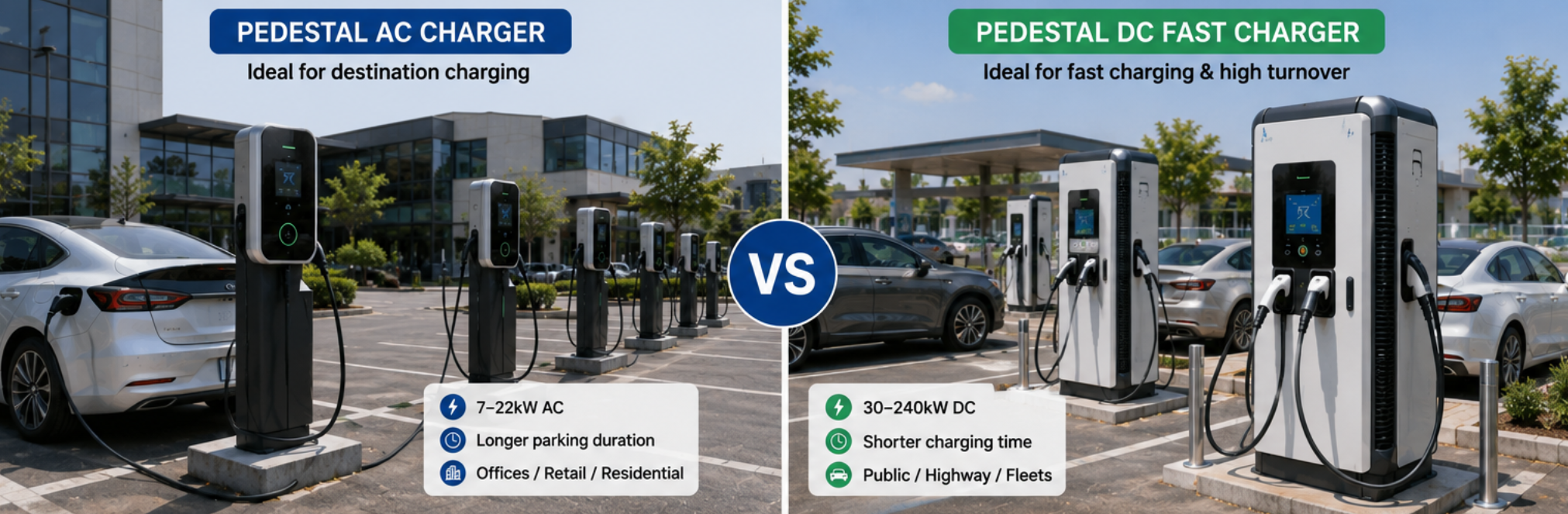
| Business Factor | Pedestal AC Charger | Pedestal DC Fast Charger |
|---|---|---|
| Typical Charging Logic | Longer-stay destination charging | Faster turnover and stronger public charging service |
| Best User Pattern | Office staff, tenants, shoppers, long-stay visitors | Public drivers, fleets, roadside or high-demand users |
| Parking Stay Duration | Usually longer | Usually shorter or more time-sensitive |
| Commercial Use Style | Amenity-driven or destination-based charging | Service-driven, turnover-driven, or fleet-oriented charging |
| Typical Site Fit | Office parks, residential-commercial lots, retail parking | Public fast-charging sites, transport projects, fleet depots |
2. When A Pedestal AC Charger Usually Fits The Business Model Better
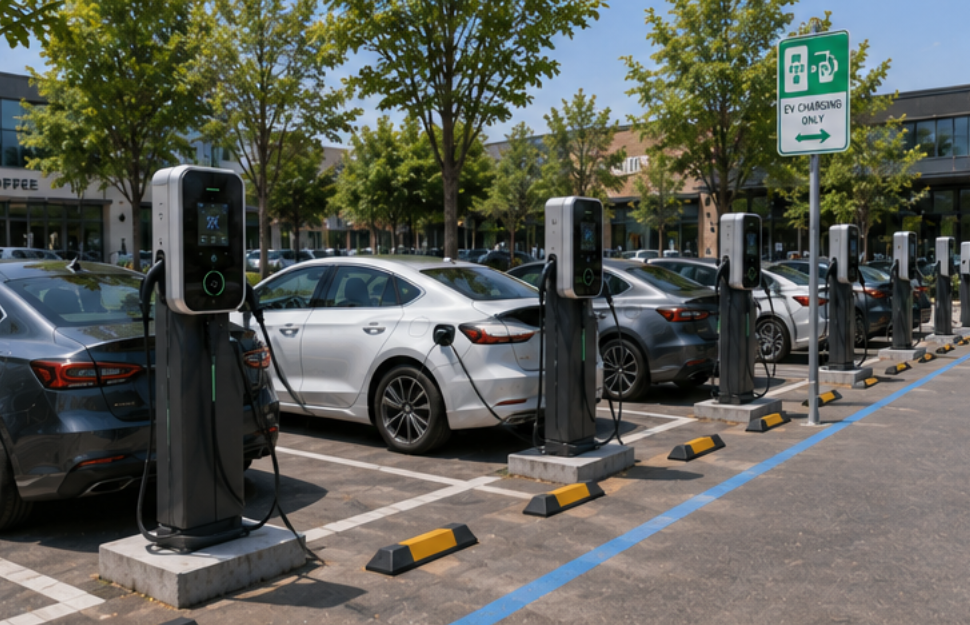
A pedestal AC charger usually fits better when charging is part of a destination-based business model. This means drivers are already expected to stay on site for a while, so the charger does not need to deliver the fastest possible energy transfer. Office staff parking for several hours, shoppers staying through a visit, hotel guests, mixed-use properties, and public institutions are all typical examples.
In this kind of model, charging works as a convenience feature, a tenant amenity, or a value-added site service. The charger helps improve property attractiveness and user satisfaction rather than focusing only on rapid turnover. This makes pedestal AC charging especially attractive for commercial real estate and organized parking projects where visibility, smart access, and consistent everyday use matter.
The brochure supports this direction. The 7–22kW AC charging station is shown for household, commercial real estates, public organizations, and intelligent transportation, and it includes smart features such as RFID, Plug & Play, BLE, WiFi, 4G, and OCPP 1.6J. That makes it a strong fit for managed, destination-style commercial charging.
In general, if your site benefits more from steady charging over time than from very fast turnover, pedestal AC is usually the more natural business-model fit.
3. When A Pedestal DC Fast Charger Usually Fits The Business Model Better
A pedestal DC fast charger usually fits better when the site needs faster charging turnover, stronger public charging capability, or more intensive charger utilization. This is common in public charging hubs, roadside or transport-related sites, commercial fast-charging projects, and fleet operations where vehicles do not stay parked for long and charging time has a more direct business impact.
In this model, charging is often a more active service rather than a passive amenity. The site may depend on quick user turnover, visible charging availability, stronger power delivery, and a more direct commercial relationship between charger use and business value. This is why pedestal DC fast chargers are often preferred in projects where charging speed is closely connected to revenue, throughput, or operational efficiency.
Your brochure reflects this clearly. The 30/40kW DC charging station includes RFID, payment, WiFi, 4G, and app control, while the 240kW pedestal DC charging station supports APP remote billing, payment, intelligent control, Ethernet, 4G, RFID / VIN code, and applications such as fleets, commercial real estates, public organizations, and intelligent transportation.
In practical terms, if the business model depends on faster charging service, stronger turnover, or public fast-charging demand, pedestal DC is usually the better fit.
4. How To Decide Which One Fits Your Site Better
The first question buyers should ask is how long vehicles usually stay. If users remain parked for hours, pedestal AC is often sufficient and more practical. If users expect to charge and leave more quickly, or if faster turnover is part of the site strategy, pedestal DC becomes much more attractive.
The second question is what type of charging value the site is trying to create. If charging is an amenity that supports the property or tenant experience, pedestal AC is often the better match. If charging itself is part of the core service model, especially in public or fleet-oriented sites, pedestal DC is usually stronger.
The third question is how smart the charging operation needs to be. Both AC and DC products in the brochure include smart-management features, but the stronger DC solutions show more emphasis on billing, app-based control, and faster-service operation. Buyers should therefore confirm not only power level but also how they want the charging business to be managed after installation.
The best charger is not simply the more powerful one. It is the one whose charging speed, user pattern, and management features fit the actual business model of the site.
Conclusion
Pedestal AC chargers usually fit better when the business model is based on destination charging, longer parking duration, and property-value support. Pedestal DC fast chargers usually fit better when the business model depends on faster turnover, more visible charging service, public access, or fleet efficiency. The right choice comes from matching the charger to how your site really earns value from charging, not just from choosing a higher or lower power class.
Contact Us
Looking for the right pedestal EV charging solution for your site? Contact our team to discuss AC or DC charging, site layout, connector type, and business requirements.
AC And DC Charging Metering Components For Business Model Selection Component Selection Notes
This article is aligned with the actual EOSWELL product range. For metering, EV charging, utility monitoring and industrial power projects, buyers usually need reliable current transformers, miniature voltage transformers, latching relays, shunt resistors, sensors and stamping parts rather than only a general system description. The important question is how these components support accurate measurement, safe switching and stable project operation.
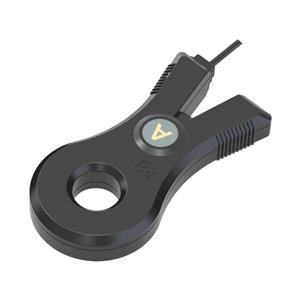
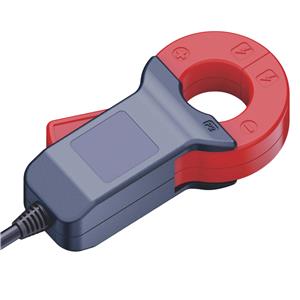
The first product route should be reviewed through current transformers, latching relays, shunt resistors, battery shunt resistors, power system sensors, metering component product range. These pages connect the article to real product categories and help a visitor move from a search question to a practical inquiry path on the same site.
Procurement Details Buyers Should Confirm
- Confirm current range, voltage range, accuracy class, insulation level, temperature rise, mounting method and wiring layout.
- For charging or metering projects, define whether the design needs CT metering, DC immunity, latching relay switching, shunt measurement or power system sensing.
- Ask for drawings, sample approval, test reports, reliability data, production photos and packaging details before bulk order.
- Clarify whether the component will be used in single phase meters, three phase meters, charging equipment, protection systems or industrial monitoring devices.
- Review certification, test conditions, lead time, repeat order stability and engineering communication before choosing a supplier.
Internal Product Route For Better Evaluation
Additional review should continue with miniature voltage transformers, split core CT, connect and stamping parts, test laboratory, transformer production, CT production. Factory and test pages matter because metering components need repeatable production, controlled winding, stable contact performance, reliable shunt resistance and documented testing. Buyers comparing suppliers should not rely on a short article only.
For project confidence, relay production, application cases, company capability provide cases, company background and inquiry support. These internal links keep authority within the same website and give Google a clearer relationship between component articles and product pages.
Quality Review Before Order Confirmation
Before order confirmation, the buyer should check drawings, tolerance, material, rated current, rated voltage, relay coil voltage, contact resistance, burden, accuracy class, insulation test, temperature rise, life cycle requirements and packaging method. For EV charging and energy metering projects, component reliability directly affects safety, billing accuracy and maintenance cost.
| Check Item | Buyer Value |
|---|---|
| Accuracy and rating | Supports reliable metering, sensing and protection performance. |
| Production and test record | Improves repeat order stability and supplier accountability. |
| Application fit | Prevents using a general component in a demanding project condition. |
Search And Inquiry Value
The page now answers product specific questions and links them to real current transformer, voltage transformer, relay, shunt and test capability pages. This makes the article more useful for search visitors and helps turn technical traffic into qualified inquiries.