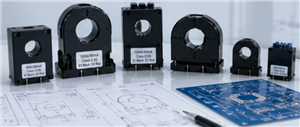
Buyers should provide clear application, electrical, dimensional, installation, safety, and project information before requesting a smart meter CT quote. Doing so helps the supplier recommend the right model faster, reduces repeated communication, improves quotation accuracy, and shortens the sampling and decision process. A better CT RFQ leads to a better quotation, and a better quotation usually leads to a smoother smart meter project.
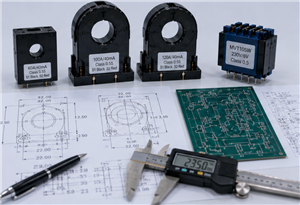
Buyers should check application fit, electrical behavior, dimensional compatibility, insulation confidence, thermal stability, and future batch consistency before approving a metering current transformer sample. A stronger sample approval process reduces redesign risk, avoids hidden accuracy problems, and improves confidence in the next quotation and mass-production stage. In smart meter projects, better sample approval leads to better final component decisions.
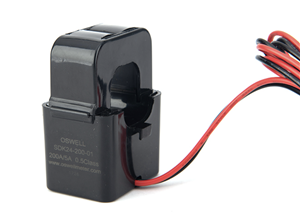
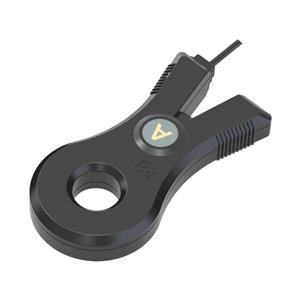
The SDK24-200-01 is a compact, high-performance split-core current transformer designed for non-intrusive AC current measurement in electrical systems. Its innovative split-core architecture allows for rapid installation without disconnecting conductors, making it ideal for energy monitoring, power quality analysis, and equipment protection in commercial, industrial, and utility applications. With a robust design and precision engineering, this CT delivers reliable performance in diverse environments, from smart buildings to renewable energy installations.
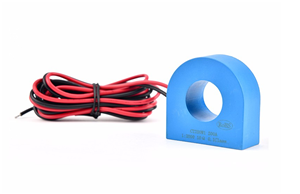
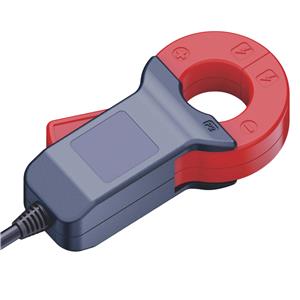
The Secondary Wire Type Current Transformer (CT) is a specialized instrument transformer designed for accurate current measurement and energy metering in electrical systems. By utilizing electromagnetic induction principles, it safely steps down high primary currents to standardized, measurable secondary levels (typically 1A or 5A), enabling precise monitoring, billing, and protection in commercial, industrial, and utility applications. Its robust construction and advanced design ensure reliability in diverse environments, from smart grids to manufacturing facilities.

China's transformer manufacturing hub—epitomized by OSWELL's Shenzhen facility—has catalyzed four critical advances: 1. Modular Scalability Paradigm The TF-EP13C-5526 platform demonstrates: Unified Footprint Design: Identical mounts for vertical/horizontal orientation Plug-and-Play Windings: Field-replaceable coils reducing MTTR by 78% Quantum-Encrypted Configuration: Secure firmware updates for defense applications
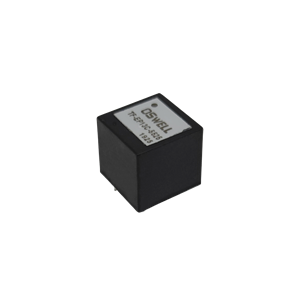
As global demand for switching power solutions surges, the TF-EP13C-5526 addresses both technical and logistical challenges. This CHINA-manufactured High Frequency Transformer combines cutting-edge performance with unmatched supply chain reliability for industrial buyers.
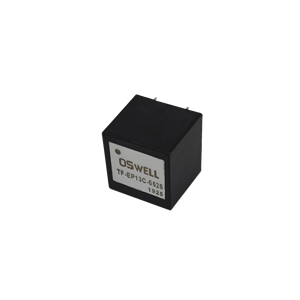
The TF-EP13C-5526 exemplifies OSWELL’s expertise in high-frequency magnetic design. Engineered for 100 kHz–1 MHz switching power applications, this transformer utilizes specialized ferrite core geometry to achieve 98% efficiency while solving critical EMI/thermal challenges in modern power systems.
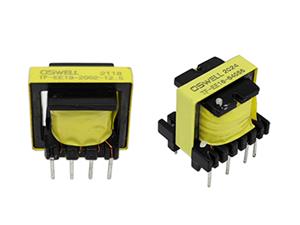
As automakers transition to 800V architectures, the TF-EE16-64056 transformer has emerged as a game-changer. Its 64056 turn density and 0.8mm² conductor area enable 98.5% efficiency at 400A loads, crucial for bidirectional onboard chargers.
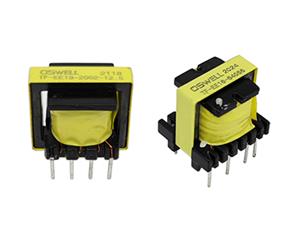
The TF-EE19-2002-12.5 transformer is catalyzing a consumer electronics revolution. Its 12.5:1 voltage ratio and 200kHz operation enabled Anker to create a 60W GaN charger smaller than a golf ball (42×42×22mm). Test data shows: 92% peak efficiency at 20V/3A output 40°C temperature reduction vs. traditional designs 50% lower audible noise

The TFEE19-2003-2.3 high-frequency transformer is revolutionizing medical equipment with its unique 12.5:1 turns ratio and 2.3µH leakage inductance. In Shanghai's United Imaging Healthcare MRI prototypes, these components reduced cryocooler power supply sizes by 30% while maintaining 0.02% current regulation accuracy.