How To Choose A Current Transformer For Smart Meter Projects Without Causing
How To Choose A Current Transformer For Smart Meter Projects Without Causing Accuracy Problems
In smart meter projects, choosing the right current transformer is not only about current rating. A CT that looks acceptable in an early sample can still create accuracy problems later if its ratio behavior, burden matching, linearity, mounting method, thermal stability, or batch consistency does not match the real meter design. This guide explains how to choose a current transformer for smart meter projects in a way that helps reduce calibration difficulty, avoids hidden measurement errors, and supports stable long-term metering performance.
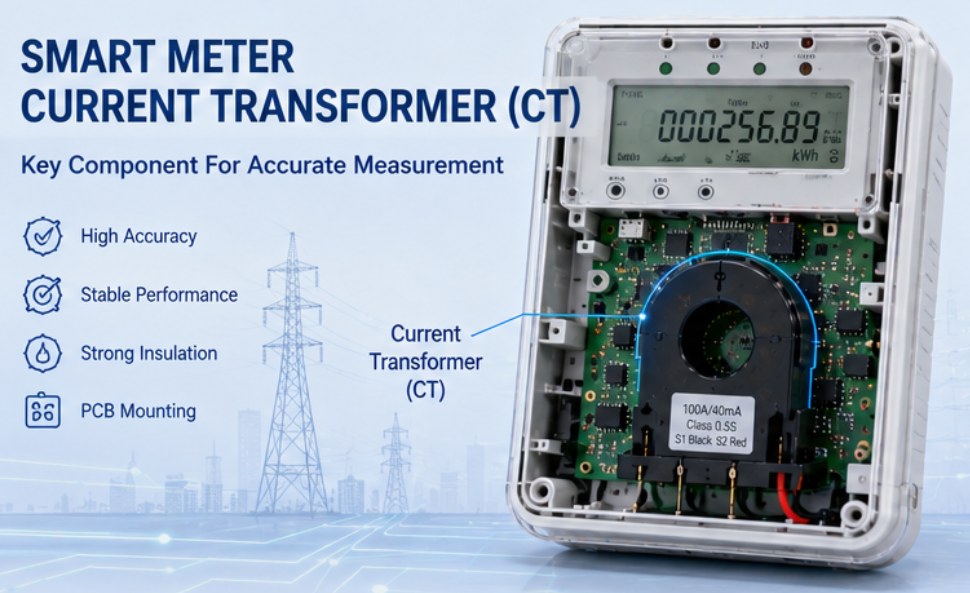
1. Why Wrong CT Selection Causes Accuracy Problems
In a smart meter, the current transformer is part of the core measurement path. It converts the primary current into a secondary signal that the meter circuit can process. If that conversion is not stable, the final meter may show deviation at low current points, inconsistent performance across the working range, more difficult calibration, or larger variation between production batches.
One common mistake is choosing a CT only by nominal current. In real smart meter applications, the CT must perform not just at one rated point, but across low current, normal operating current, and sometimes higher load conditions. Another common problem is selecting a CT without checking whether the burden condition of the actual meter circuit matches the CT design. Even a technically good CT can produce unstable results if the real application is not matched properly.
Accuracy problems can also come from poor dimensional fit or weak production consistency. If the CT mounting structure does not match the PCB layout, bottom case, or conductor path well, assembly variation may increase. If the supplier cannot keep magnetic core quality, winding stability, and final inspection consistent across batches, the meter may become harder to calibrate and less stable in mass production.
For this reason, the right CT is not simply the one that “works.” It is the one that keeps measurement behavior stable from sample evaluation to full production and real field use.
2. What Buyers And Engineers Should Check Before Choosing A CT
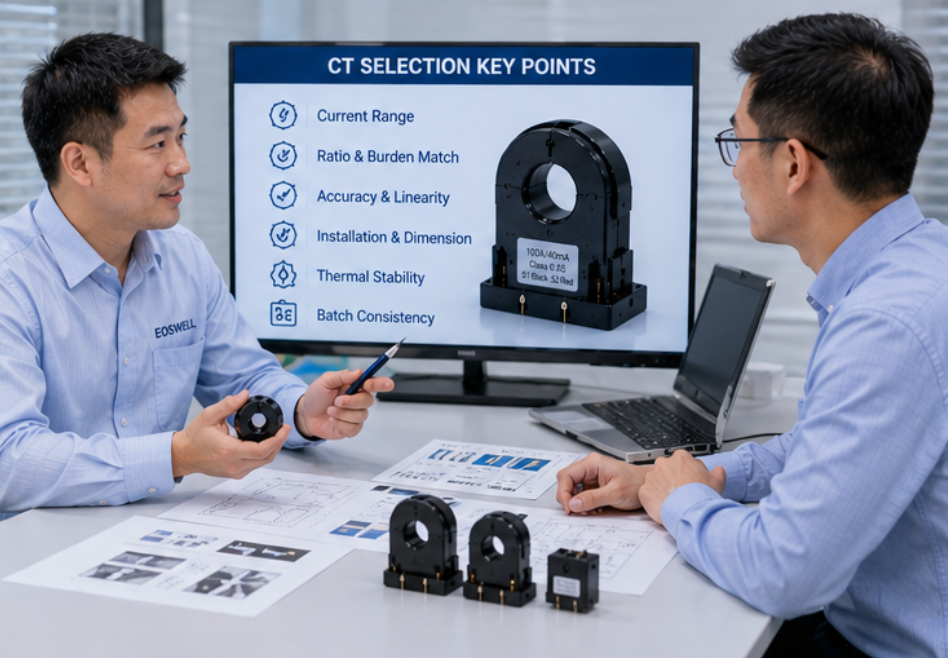
The first thing to check is the actual application range. Buyers should confirm the rated current, expected operating range, meter type, and whether the project has special expectations for low-current accuracy or long-term stability. This helps prevent the common problem of selecting a CT that is technically acceptable in theory but weak in the real metering range.
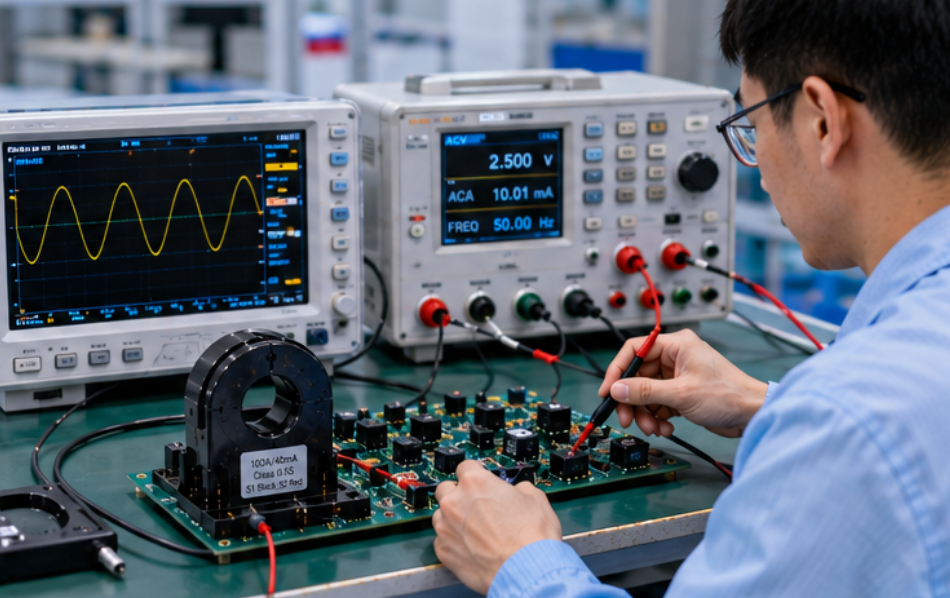
The second thing to check is ratio and burden matching. The CT should be reviewed together with the metering IC input, sampling path, and related circuit conditions. If the burden does not match the real design, the output may shift from what the data sheet suggests. That is one of the most common hidden causes of measurement instability in smart meter projects.
The third point is linearity and repeatability. A CT should not only perform acceptably at one test point. It should behave in a more predictable way across the practical working range. Good repeatability also matters, because smart meter production depends on stable unit-to-unit performance, not just on one strong prototype.
The fourth point is thermal and insulation stability. Smart meters often work for years in variable environments. A CT that becomes sensitive to temperature change or lacks sufficient insulation confidence may gradually create drift risk, safety concern, or performance instability. For this reason, buyers should review not just size and ratio, but also operating robustness.
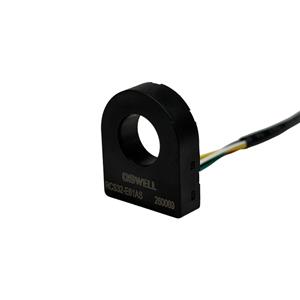
The fifth point is mechanical fit and production capability. PCB mounting, bottom-case mounting, pin style, hole spacing, height limit, and assembly space should all be checked early. At the same time, the supplier should be able to maintain stable core material control, winding quality, dimensional precision, and inspection repeatability in mass production.
| Check Item | Why It Matters | What To Confirm |
|---|---|---|
| Meter Type And Use Scenario | Defines the right CT structure and recommendation path | Smart meter type, single-phase or multi-phase, installation concept |
| Rated Current And Working Range | Prevents mismatch between model and real use condition | Nominal current, low-current needs, full operating range |
| Ratio And Burden Match | Reduces hidden output deviation in the real circuit | CT ratio, metering IC input, burden condition, circuit compatibility |
| Linearity And Repeatability | Supports stable calibration and mass-production control | Output consistency across range, unit-to-unit stability |
| Mounting And Dimension | Prevents layout and assembly mismatch | PCB mounting, bottom-case fixing, pin style, height, hole spacing |
| Insulation And Thermal Stability | Helps avoid drift and long-term reliability problems | Insulation strength, temperature range, long-term stability need |
| Supplier Batch Consistency | Improves production repeatability and final meter accuracy | Core control, winding quality, inspection stability, batch repeatability |
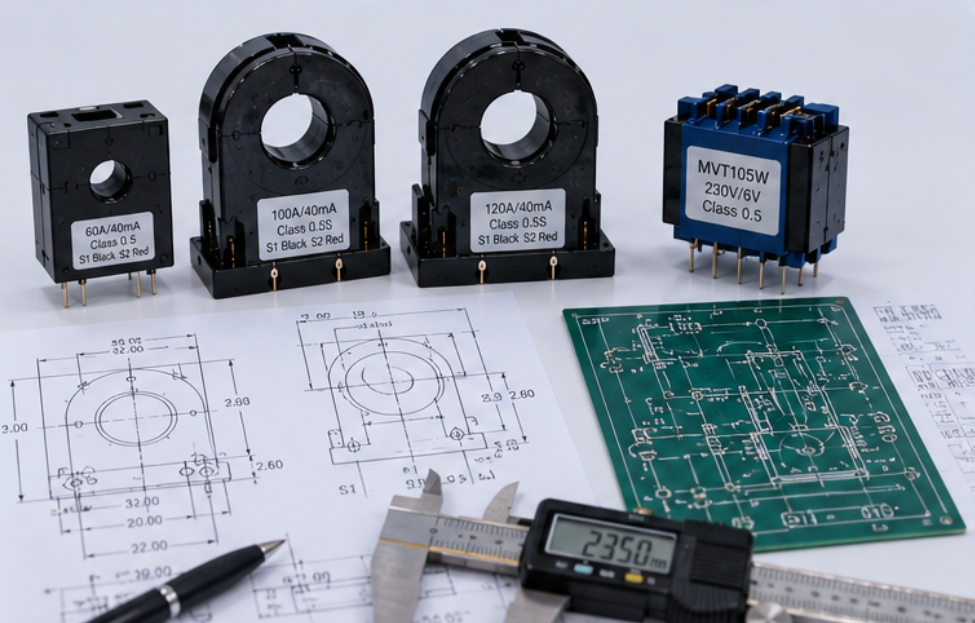
3. How To Make Better CT Decisions Faster
The best way to speed up the project without causing later problems is to define the design condition clearly before requesting samples or quotations. Buyers and engineers should send the current range, mounting method, size limits, and any known performance expectations early. This helps the supplier recommend a more suitable CT instead of sending a generic model that still needs repeated revision.
It is also useful to test the CT under conditions that are close to the final smart meter design. Reviewing the component together with the actual PCB layout, burden condition, calibration logic, and expected temperature environment can reveal hidden issues before they become production problems. This type of system-level review is far more useful than judging the CT by one isolated data point.
Buyers should also evaluate the supplier, not only the part number. A supplier that can provide stable manufacturing control, practical engineering support, and repeatable batch quality will usually help reduce accuracy problems much more effectively than a supplier who only provides a low initial price.
Another useful principle is to avoid choosing only by one attractive feature. A CT with the right current label but weak burden matching may still create errors. A CT with a strong sample result but poor batch consistency may still increase calibration cost. The better choice usually comes from balancing electrical performance, structural fit, and production reliability together.
The right CT is the one that supports stable smart meter accuracy from prototype to volume production to real field use. Choosing with that goal in mind is the most practical way to avoid later accuracy problems.
Conclusion
Choosing a current transformer for smart meter projects without causing accuracy problems requires more than checking rated current or one good sample result. The right CT should match the real operating range, burden condition, linearity target, mounting structure, insulation needs, and supplier batch consistency requirements of the project. When these points are reviewed together, buyers and engineers can reduce calibration trouble, avoid hidden measurement errors, and support more reliable long-term smart meter performance.
Contact Us
Looking for the right current transformer for your smart meter project? Contact our team to discuss your application, sample requirements, and quotation details.