How To Compare Smart Meter Component Suppliers Without Hidden Risk
How To Compare Smart Meter Component Suppliers Without Hidden Risk
In smart meter sourcing, supplier comparison is not only about price, lead time, or whether a sample can be sent quickly. Hidden risk usually appears later, when the component does not fully match the real application, when batch quality cannot match the approved sample, or when technical communication becomes too weak to support project progress. This guide explains how to compare smart meter component suppliers without hidden risk and how buyers can make stronger decisions before samples, quotations, and OEM cooperation move forward.
1. Why Hidden Risk Often Appears After The Supplier Has Already Been Chosen
In many smart meter projects, supplier comparison begins with a simple quotation review. Buyers compare sample price, unit price, and delivery speed, then quickly move toward sample approval. This may seem efficient, but it often creates hidden risk because a supplier can look strong at the quotation stage and still become weak later in technical confirmation, sample consistency, or batch production support.
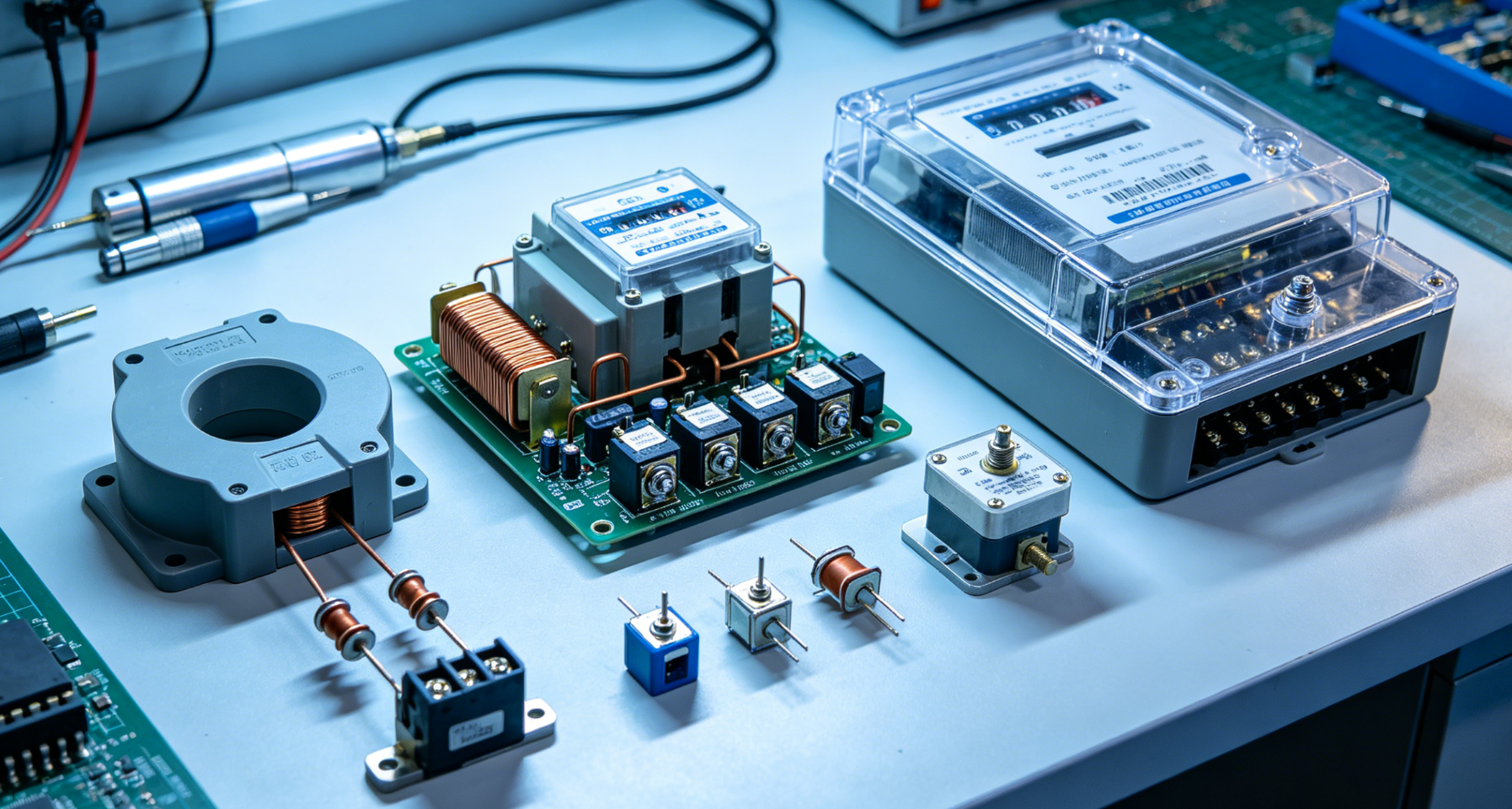
Hidden risk usually comes from mismatch between the supplier’s product and the real smart meter design. A current transformer may have the right current label but the wrong burden fit or mounting structure. A latching relay may show a good sample but not be suitable for the real switching condition. A shunt resistor may look cost-effective but create thermal difficulty later. A miniature voltage transformer or meter case may also cause layout or structural issues if the supplier does not understand the real project condition clearly enough.
Another reason hidden risk appears is that some suppliers perform well in commercial response but not in engineering support. They may answer fast, but if they cannot review drawings clearly, confirm sample relevance, or explain whether the approved sample can be maintained in batch production, the project may later face rework, delayed approval, or unstable mass production.
For this reason, comparing suppliers without hidden risk means comparing more than price. It means comparing technical fit, communication quality, sample realism, process capability, and future batch readiness together.
2. What Buyers Should Compare Before Choosing A Supplier
The first thing to compare is application understanding. A stronger supplier should understand how the component is used in a smart meter rather than only knowing the product category. Buyers should compare whether the supplier can respond clearly to project type, rated current or voltage range, mounting method, PCB layout limitations, and expected operating conditions. This is the foundation of lower-risk supplier selection.
The second point is sample realism. Buyers should compare whether the supplier is offering a sample that is close to the real production direction or only a convenient reference sample. A lower-risk supplier should be able to explain whether the sample is based on a standard production model, whether it reflects the real OEM path, and whether it can be maintained consistently later in batch supply.
The third point is technical communication quality. Buyers should not only compare how fast suppliers reply, but also how clearly they answer engineering questions. A better supplier can usually discuss dimensions, PCB fit, burden or switching conditions, insulation expectations, and sample limitations with more clarity. This reduces misunderstanding before the project moves to approval or payment.
The fourth point is process and quality consistency. In smart meter components, sample quality alone is not enough. Buyers should compare whether the supplier can explain incoming material control, testing support, inspection logic, and repeatable production control. A supplier with stronger process discipline usually creates much lower hidden risk during OEM cooperation.
The fifth point is project-stage support. Buyers should compare whether the supplier can support quotation review, sample confirmation, drawing feedback, approval follow-up, and later batch planning in a structured way. This type of support often matters more in real projects than a small difference in first sample price.
| Comparison Area | Why It Matters | What Buyers Should Compare |
|---|---|---|
| Application Understanding | Prevents product mismatch at the beginning | Project type, current or voltage range, mounting fit, design condition |
| Sample Realism | Avoids approving a sample that does not reflect real batch supply | Standard model, custom prototype, production relevance, future path |
| Technical Communication | Reduces misunderstanding and repeated rework | Drawing review, technical clarity, response quality, engineering support |
| Process / Quality Control | Improves consistency from sample stage to OEM supply | Inspection logic, repeatability, material control, testing support |
| Project-Stage Support | Helps the project move forward more smoothly | Quotation support, sample review, approval follow-up, batch planning |
| Future Batch Readiness | Reduces hidden OEM risk after supplier selection | Consistency path, lead time logic, production stability, long-term fit |
3. How Buyers Can Build A Safer Supplier Comparison Process
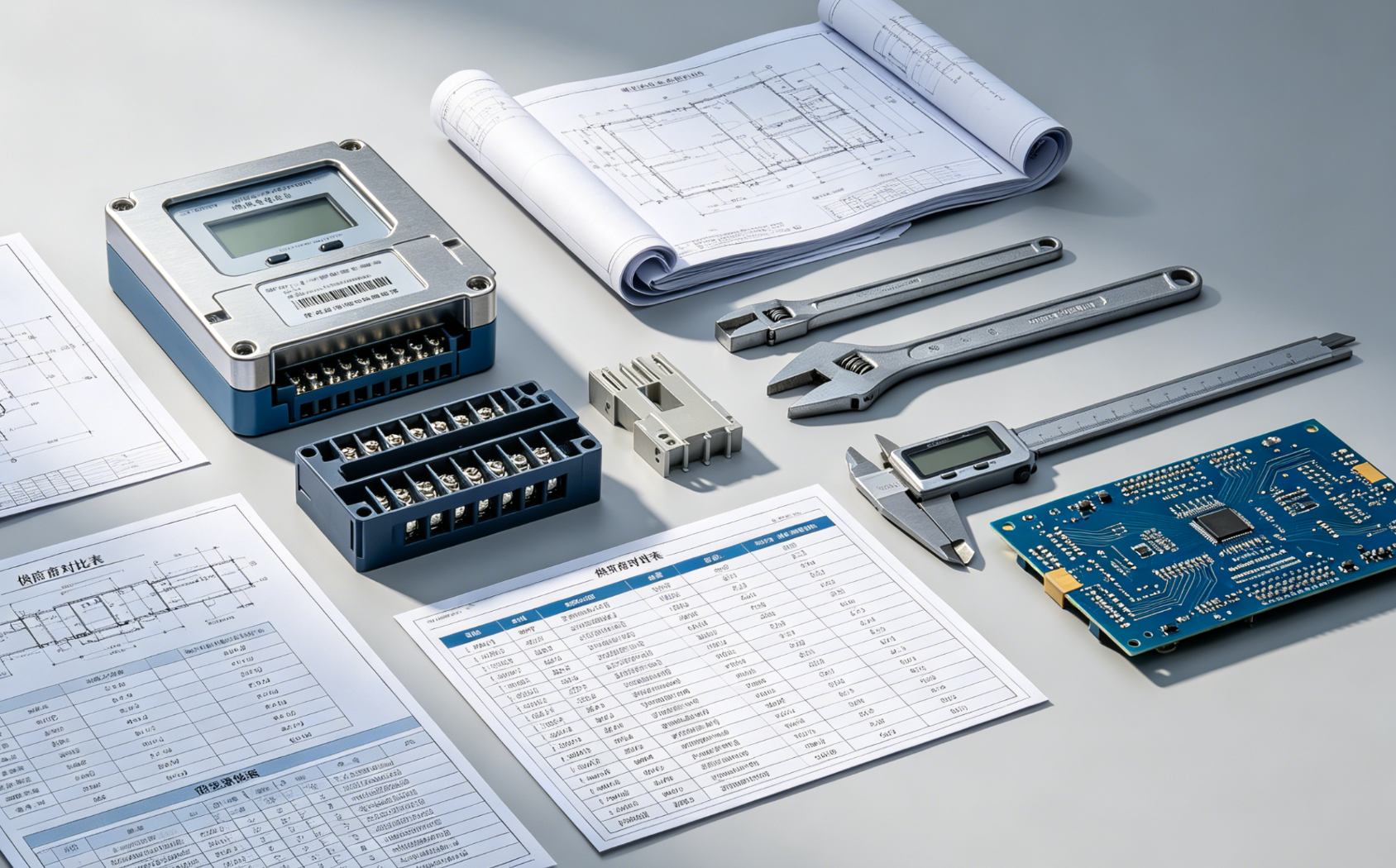
The most practical way is to compare suppliers with the real project information already prepared. Buyers should organize the meter type, component category, rated current or voltage range, PCB limitations, structure requirements, sample purpose, and expected project stage before starting supplier comparison. This makes the comparison much more meaningful and reduces the risk of selecting a supplier based on incomplete assumptions.
It is also useful to evaluate suppliers by stages: quotation response, technical clarification, sample relevance, and batch readiness. This staged comparison helps reveal whether a supplier is only strong in commercial response or actually strong through the whole OEM path. In smart meter sourcing, this difference matters a lot.
Buyers should also compare total project risk, not only first price or first sample speed. A supplier with a slightly higher first quotation may still be the better partner if they provide clearer engineering support, stronger consistency, and fewer delays later. In many smart meter projects, that creates lower total cost and lower hidden risk.
Another useful principle is to separate “easy to quote” from “safe to source.” Some suppliers are easy to contact, fast to quote, and quick to send samples. But lower-risk sourcing usually comes from suppliers who can also support confirmation, sample explanation, approval logic, and future batch quality in a stable way.
The best supplier comparison process is the one that helps buyers avoid surprise problems after the supplier has already been chosen.
Conclusion
Comparing smart meter component suppliers without hidden risk requires more than checking sample price and response speed. Buyers should compare application understanding, sample realism, technical communication, quality control, project-stage support, and future batch readiness together. When these points are reviewed in a structured way, supplier selection becomes safer, more practical, and much more supportive of successful OEM cooperation.
Contact Us
Looking for reliable smart meter components for your OEM project? Contact our team to discuss drawings, samples, technical requirements, and quotation details.