What Smart Meter Buyers Should Confirm Before Paying For Samples
What Smart Meter Buyers Should Confirm Before Paying For Samples
Paying for samples is an important step in any smart meter sourcing project, but it should not happen too early or without clear confirmation. A sample payment is not just a purchasing action. It usually starts the real technical validation stage, influences quotation direction, and affects how quickly the project can move toward approval and mass production. If buyers confirm the wrong details or skip important checks before payment, they may later face repeated sample changes, quotation revision, approval delays, or unsuitable parts that do not match the final meter design. This guide explains what smart meter buyers should confirm before paying for samples and how to reduce unnecessary risk at the beginning of the project.
1. Why Sample Payment Should Never Be Treated As A Simple Purchasing Step
In smart meter projects, many buyers focus first on sample price and delivery time. These points matter, but they are not the only things that should be confirmed before payment. A sample is usually the first physical step where the project begins to move from discussion into real validation. If the buyer pays before confirming the application requirement, the mounting structure, the actual current or voltage condition, and the intended project stage, the sample may arrive quickly but still fail to support the real project decision.
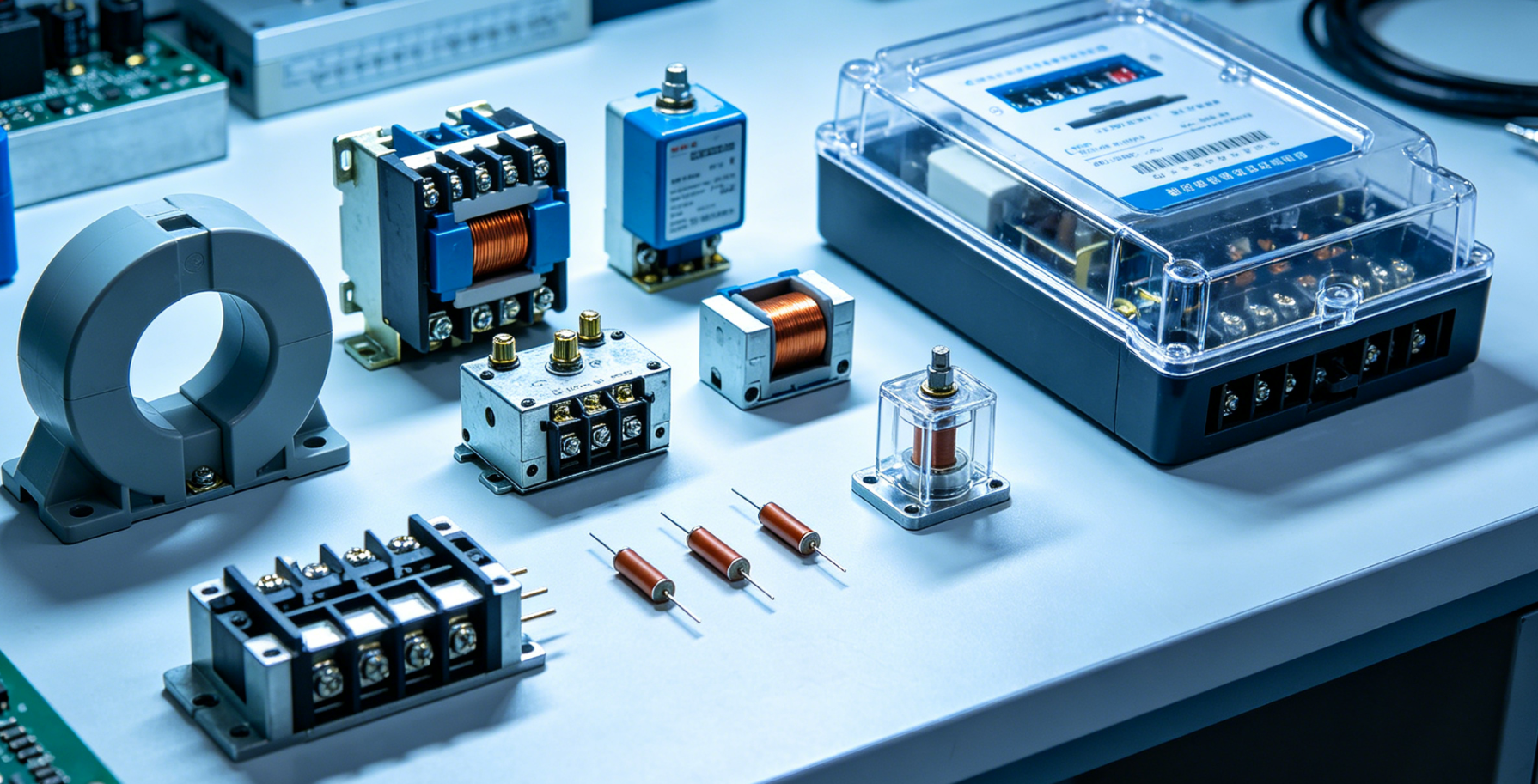
This is especially important because smart meter components are not always interchangeable. A current transformer, latching relay, shunt resistor, miniature voltage transformer, or meter case may look similar across suppliers, but the actual fit can still be very different. A part that seems acceptable in a general description may still create trouble later if its dimensions, structure, or electrical behavior do not match the real meter design.
Sample payment also creates expectations on both sides. Buyers expect the sample to be useful for evaluation, while suppliers expect that the project information is already clear enough to recommend the right part. If the project details are still uncertain, the first paid sample may become only a trial step rather than a real approval step. That often leads to more cost, more delay, and more repeated communication later.
For this reason, buyers should confirm more than price before paying. The stronger the confirmation before sample payment, the lower the risk afterward.
2. What Buyers Should Confirm Before Releasing Sample Payment
The first thing to confirm is the real application condition. Buyers should clearly define whether the part is for a single-phase smart meter, prepaid meter, ANSI meter project, energy monitor, or another related design. If the supplier is choosing a sample based only on a broad product category, the sample may not represent the right solution for the actual project.
The second point is whether the technical requirement is already clear enough. Buyers should confirm the key input information such as rated current or voltage range, mounting method, dimensional limits, PCB layout condition, and any known performance expectations. Even if all details are not fully frozen yet, the supplier should at least know enough to send a sample that is useful for project evaluation rather than just for general reference.
The third point is the purpose of the sample. Buyers should confirm whether the sample is for basic technical review, dimensional confirmation, laboratory testing, customer presentation, or preparation for pilot approval. A sample for simple comparison is different from a sample intended to move the project toward OEM qualification. This should be stated before payment so that both sides have the same expectation.
The fourth point is whether the quoted sample is a realistic production path. Buyers should ask whether the sample is based on a standard production model, a temporary prototype, or a customized structure that may still require changes later. A sample is much more valuable when it is already close to the real production direction.
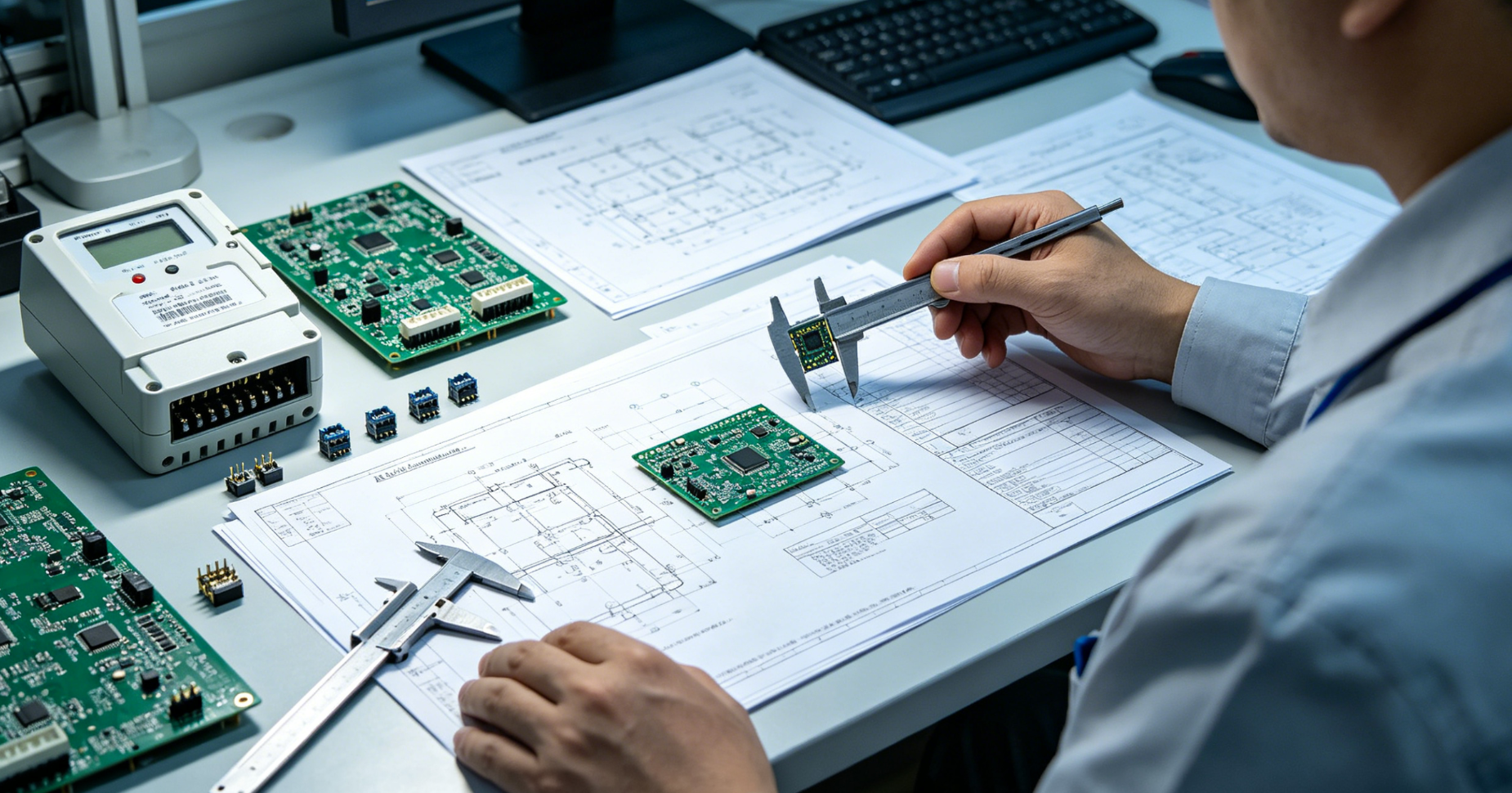
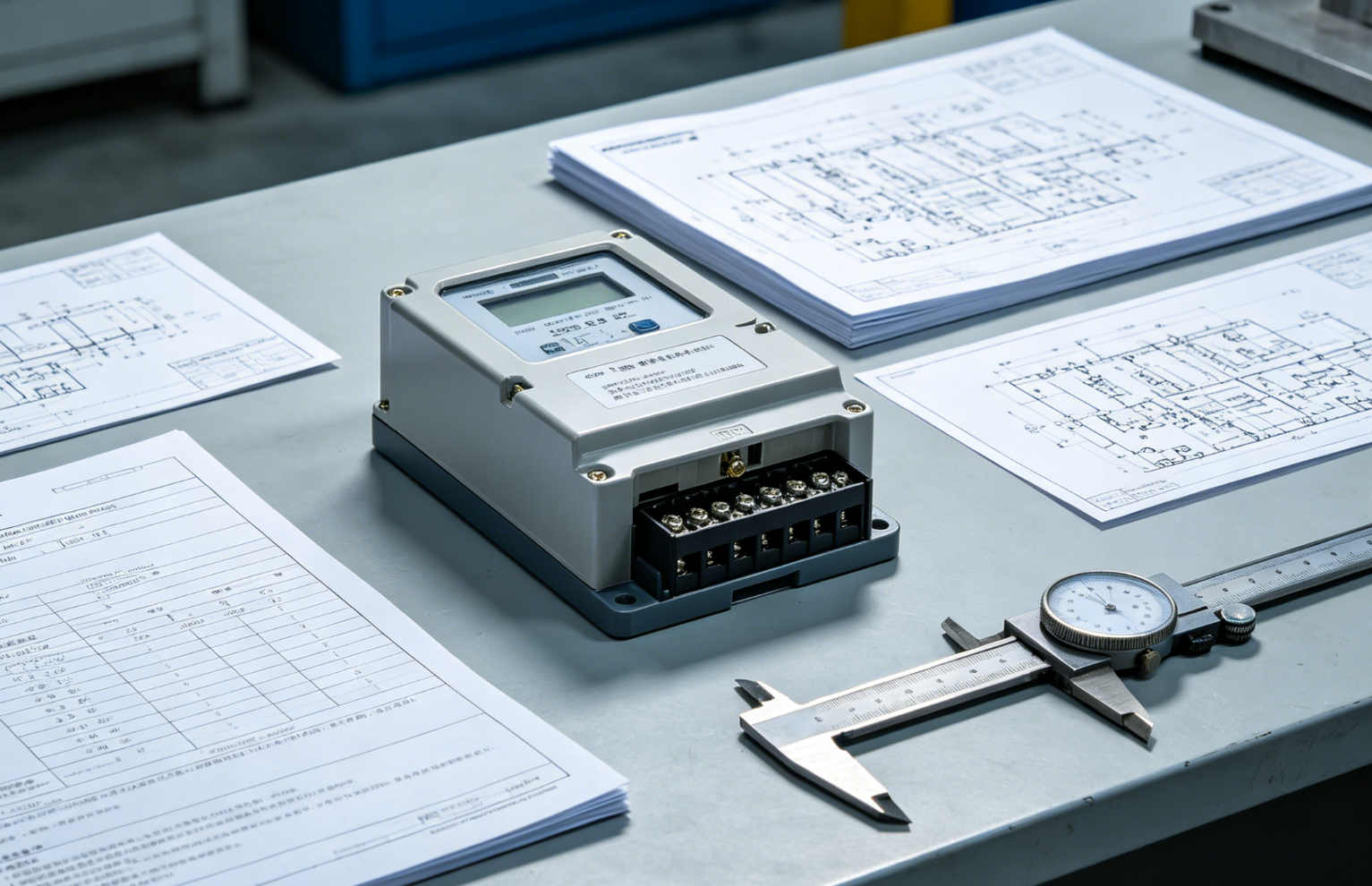
The fifth point is dimensional and structural fit. Before payment, buyers should confirm whether drawings, photos, PCB layouts, or case dimensions have already been reviewed. This helps avoid the common problem of paying for a sample that is technically similar but mechanically unusable in the real product.
Finally, buyers should confirm communication and follow-up support. A useful sample process should include more than shipment. The supplier should be able to answer technical questions, explain the sample structure, and support the next step after evaluation. This becomes even more important in OEM smart meter projects.
| Buyer Confirmation Point | Why It Matters | What To Confirm |
|---|---|---|
| Real Application Type | Prevents ordering a sample that fits only in general terms | Meter type, project platform, application use case |
| Technical Requirement Clarity | Helps the supplier choose a meaningful sample path | Current or voltage range, dimensions, mounting, layout condition |
| Sample Purpose | Aligns expectations between buyer and supplier | Basic review, lab test, dimensional check, OEM qualification path |
| Production Relevance | Avoids paying for a sample that is far from the final supply path | Standard model, custom prototype, future batch direction |
| Dimensional / Structural Fit | Reduces the risk of unusable samples | PCB layout, case space, mounting direction, pin or terminal fit |
| Supplier Follow-Up Support | Improves the value of sample evaluation after payment | Technical feedback, document support, next-step communication |
3. How Buyers Can Make Better Sample Payment Decisions
The most practical approach is to prepare the project information before discussing sample payment. Buyers should organize the real meter type, main dimensions, layout limits, rated operating range, and the purpose of the sample. When this information is shared early, the supplier is much more likely to recommend a sample that supports real project progress instead of only a basic comparison.
It is also useful to treat sample payment as part of a structured approval flow. A stronger process usually includes quotation review, drawing review, sample confirmation, evaluation planning, and then future batch discussion. This helps avoid the common problem where the sample arrives before the buyer has even decided what should be checked.
Buyers should also think beyond the first sample cost. A cheaper sample that does not match the real design or cannot support future OEM supply usually creates more total cost later. In many smart meter projects, the better decision is not the lowest sample payment, but the sample that gives the clearest technical direction with the lowest later risk.
Another useful principle is to confirm whether the supplier can support the project after the sample arrives. In lower-risk sourcing, sample payment should lead into real evaluation, technical response, and production readiness discussion. That is what makes the paid sample valuable.
The best sample payment decision is the one that helps the project move forward with fewer surprises in quotation, layout verification, approval, and future OEM cooperation.
Conclusion
Before paying for smart meter samples, buyers should confirm the real application, the technical requirement, the purpose of the sample, the dimensional fit, the production relevance, and the supplier’s follow-up support. A stronger confirmation process makes sample payment much more useful, reduces repeated changes, and gives the project a clearer path toward approval and future OEM supply.
Contact Us
Looking for reliable smart meter components for your OEM project? Contact our team to discuss drawings, samples, technical requirements, and quotation details.