How To Select A Latching Relay For Smart Meter Load Control And Remote Disconnect
How To Select A Latching Relay For Smart Meter Load Control And Remote Disconnect
In smart meter applications, the latching relay is one of the most important components behind load control and remote disconnect functions. A well-selected relay helps the meter switch more reliably, reduces standby power consumption, improves long-term stability, and lowers the risk of field failure. A poor relay choice, however, can create hidden problems such as unstable switching, contact wear, excessive temperature rise, inconsistent actuation, and batch variation during production. This guide explains how to select a latching relay for smart meter load control and remote disconnect without creating unnecessary technical or project risk.
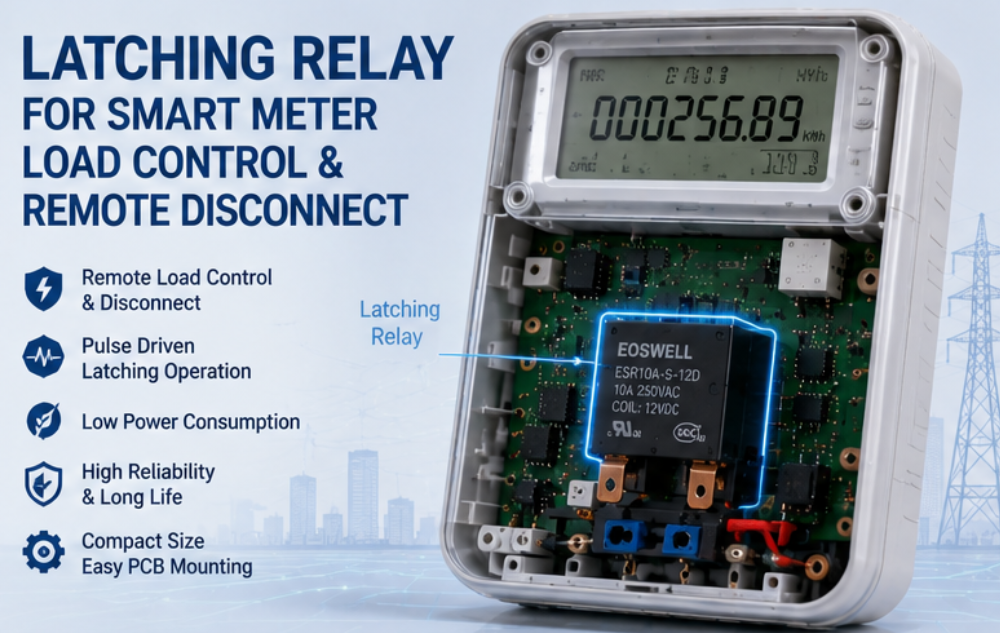
1. Why Relay Selection Matters In Smart Meter Load Control
In a smart meter, the latching relay is responsible for one of the most sensitive actions in the entire product: switching the load on and off when the control system sends a command. This function may be linked to prepaid management, load limitation, remote disconnect, or utility control logic. Because the relay directly influences whether the switching action is completed safely and reliably, it should be treated as a core functional component rather than a simple accessory.
One reason latching relays are widely used in smart meters is that they do not require continuous coil power to maintain their state. This helps reduce internal power consumption and makes them especially suitable for intelligent metering devices. But that advantage alone is not enough. The relay must also remain stable under repeated operation, electrical stress, and long service periods. If it cannot, the smart meter may face switching failure, contact degradation, thermal stress, or inconsistent behavior between units.
A common mistake is choosing a relay only by nominal current or one simple product rating. In real projects, the load profile, switching frequency, control pulse condition, enclosure temperature, safety structure, and production requirements all influence whether a relay is truly suitable. A relay that appears acceptable in a sample may still become a risk in mass production or field use if these points are not checked carefully.
For this reason, the right relay is not simply the one that can switch once in a lab test. It is the one that can support stable and repeatable load control over the full life of the smart meter project.
2. What Buyers And Engineers Should Check Before Selecting The Relay
The first thing to check is the real switching requirement. Buyers should confirm whether the relay will be used for remote disconnect only, repeated load control, prepaid switching, or other utility logic. The actual load condition matters much more than a simple rated current label. A relay may appear suitable on paper and still be too close to its weak point if the real switching environment is more demanding.
The second point is contact reliability. Because the relay directly carries the switching function, stable contact behavior is critical. Buyers should evaluate whether the relay can maintain predictable switching performance and whether its design is suitable for long-term repeated use. If contact behavior is weak, the risk of unstable operation or early wear increases significantly.
The third point is pulse actuation performance. A latching relay depends on pulse-driven operation, so the relay should respond reliably to the control signal within the real smart meter system. If actuation is inconsistent, the meter may face incomplete switching or uncertain state control. That kind of problem may not always be obvious in an early sample, which is why it must be checked carefully.
Thermal behavior is another key factor. Smart meters are compact, and the relay operates near current sensing parts, metering circuits, and other temperature-sensitive components. If the relay generates too much heat or behaves poorly under temperature stress, it can affect both itself and the surrounding system. Good thermal stability helps reduce long-term reliability risk.
Mechanical fit and safety structure should also be checked. The relay must fit the PCB layout, housing space, terminal arrangement, and insulation concept of the smart meter. If the dimensional fit is poor, assembly variation and structural stress may increase. If the safety structure is weak, the product may face higher long-term risk even if the relay can switch normally in the short term.
Finally, buyers should review whether the relay sample represents true batch capability. A good relay sample is valuable only if the supplier can maintain the same switching, dimensional, and inspection stability in mass production.
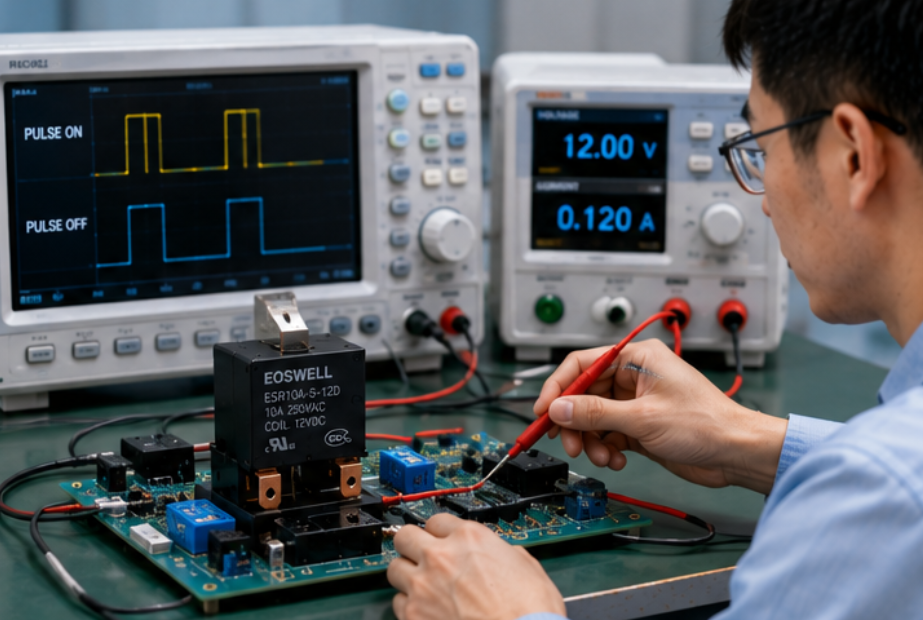
| Check Item | Why It Matters | What To Confirm |
|---|---|---|
| Load Control Scenario | Defines the real relay duty instead of only a simple rating comparison | Remote disconnect, prepaid control, repeated switching, utility logic |
| Switching Capacity | Prevents overload-related instability and premature wear | Real load condition, switching margin, application stress |
| Contact Reliability | Supports stable long-term switching performance | Contact behavior, endurance, consistency after repeated operation |
| Pulse Actuation Stability | Helps prevent incomplete or unstable switching action | Control pulse response, actuation consistency, real-circuit fit |
| Thermal Performance | Reduces heat-related reliability risk inside compact meters | Temperature rise, enclosure effect, long-term stability tendency |
| Dimensional / Safety Fit | Prevents assembly mismatch and structural risk | PCB layout, mounting size, insulation concept, structural confidence |
| Batch Readiness | Avoids sample-to-production mismatch | Process control, inspection repeatability, production consistency |
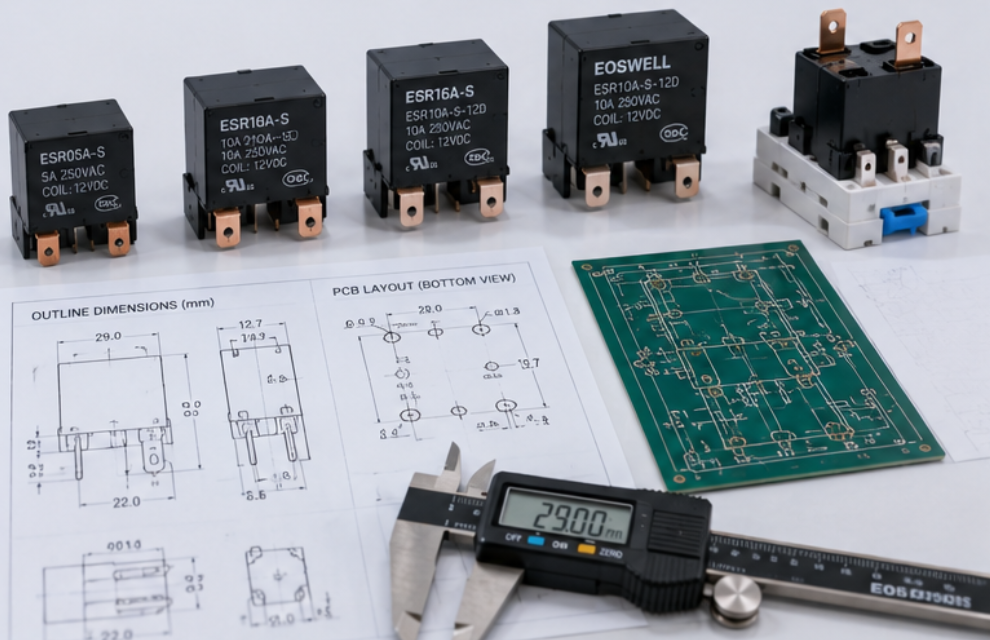
3. How To Make Better Relay Decisions Earlier In The Project
The most practical approach is to define the smart meter control scenario clearly before requesting samples or quotations. Buyers and engineers should provide the load type, switching purpose, expected duty, PCB limitations, and any known safety or temperature requirements. This helps the supplier recommend a relay that is closer to the real project instead of only sending a generic high-current model.
It is also useful to test the relay under conditions that are close to the final smart meter design. Reviewing the relay together with the actual control board, pulse logic, thermal environment, and enclosure layout can reveal hidden risks before they become production problems. System-level testing is much more valuable than judging the relay only by its catalog rating.
Buyers should also evaluate the supplier, not only the part number. A supplier that can provide stable manufacturing control, practical engineering communication, and repeatable batch quality will usually help reduce field failure risk much more effectively than a supplier who only offers a low first quotation.
Another useful principle is to avoid choosing only by one attractive feature. A relay with a strong nominal rating but weak pulse actuation stability may still create trouble. A relay with a good sample but poor batch consistency may still increase future risk. Better decisions usually come from balancing switching reliability, structural fit, and production stability together.
The right relay is the one that helps the smart meter complete load control and remote disconnect functions more reliably from sample stage to mass production to field use.
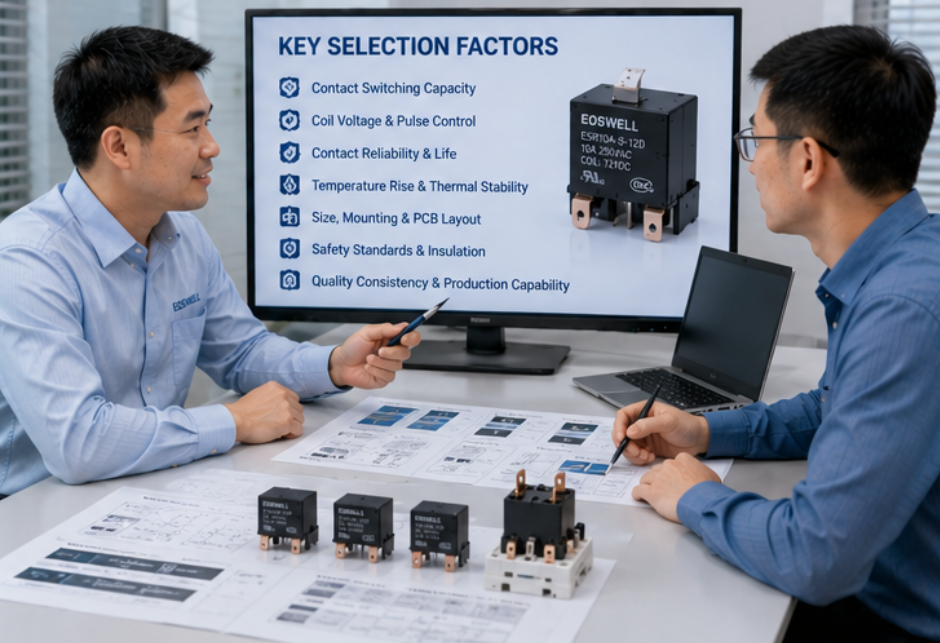
Conclusion
Selecting a latching relay for smart meter load control and remote disconnect requires more than checking a nominal current rating or one good sample result. The right relay should match the real load control duty, support stable contact behavior, respond reliably to pulse actuation, fit the PCB and enclosure design, and remain consistent in future batch production. When these points are reviewed together, buyers and engineers can reduce switching risk and support more reliable smart meter performance over the full project life cycle.
Contact Us
Looking for the right latching relay for your smart meter project? Contact our team to discuss your application, sample requirements, and quotation details.