What Affects The Price Of Smart Meter Components In OEM Projects
What Affects The Price Of Smart Meter Components In OEM Projects
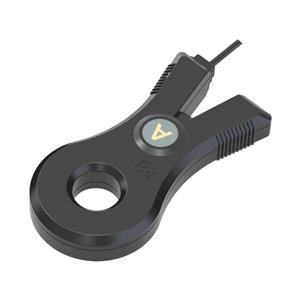
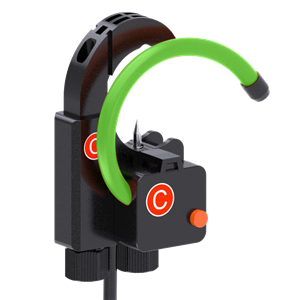
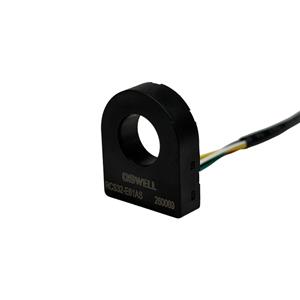
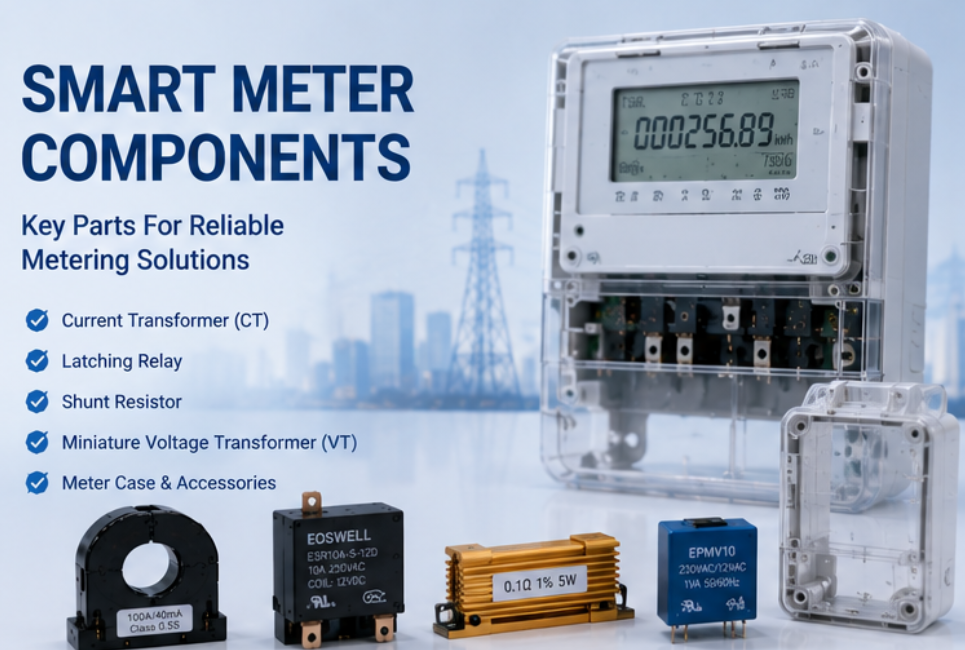
In OEM smart meter projects, component pricing is never decided by one factor alone. Even when buyers are sourcing the same category of part, such as a current transformer, latching relay, shunt resistor, miniature voltage transformer, or meter case, the final quotation can vary greatly depending on design complexity, electrical requirement, dimensional fit, tooling needs, testing level, order quantity, and production consistency expectations. This guide explains what really affects the price of smart meter components in OEM projects and how buyers can prepare better RFQs to get faster and more accurate quotations.
1. Why OEM Component Pricing Is Not As Simple As A Unit Price Comparison
In OEM projects, buyers often expect a direct unit price very early in the conversation. However, smart meter component pricing is closely linked to the real project condition. A supplier can only provide a truly useful quotation when the electrical requirement, meter structure, installation concept, dimensional limits, and target quantity are reasonably clear. Without that information, the quoted price is often only a rough commercial reference and may change once technical details are confirmed.
Another reason pricing varies is that components in smart meter projects are not always standard shelf items. A current transformer may need a different ratio, pin arrangement, or mounting structure. A latching relay may require a specific switching capability, coil control condition, or layout fit. A shunt resistor may need different resistance or thermal behavior. A meter case may involve dimensional adjustments or tooling changes. In these situations, the quotation reflects not only the part itself, but also the engineering effort and production preparation behind it.
Buyers also need to understand that lower component price does not always mean lower project cost. A cheaper part that creates more calibration trouble, assembly difficulty, or batch inconsistency can raise the real cost of the smart meter project later. This is why experienced OEM buyers look at pricing together with application fit and production stability rather than comparing numbers alone.
In short, the real question is not only “What is the price?” but “What is driving the price, and does that price match the real project requirement?”
2. What Factors Usually Affect The Quotation Most
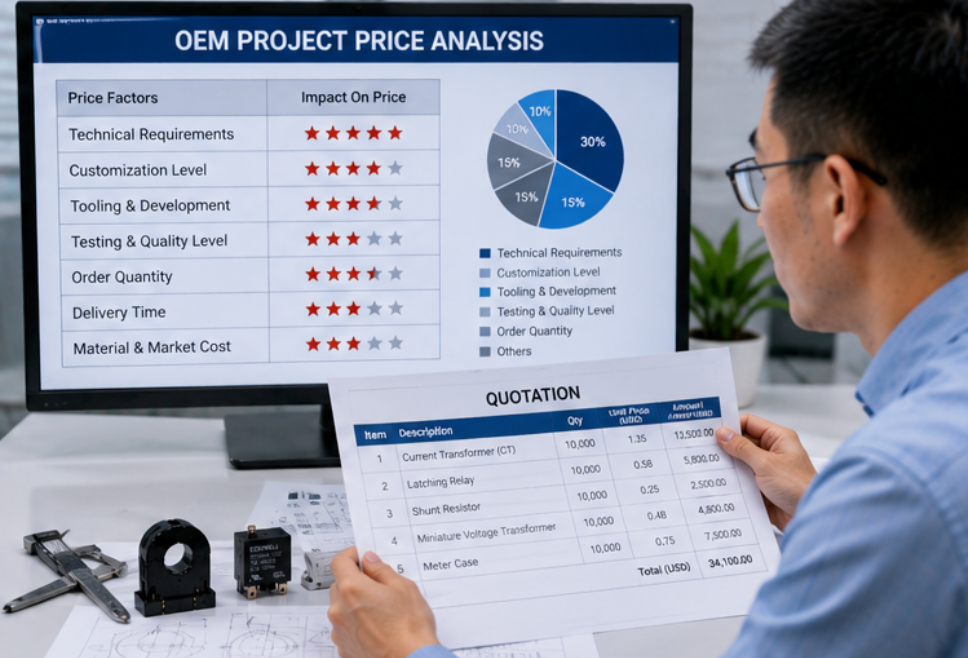
The first major factor is technical requirement. In smart meter components, price often changes when the electrical or structural requirement changes. For example, a current transformer with tighter application expectations, a relay with stronger switching requirements, or a miniature voltage transformer with more specific output behavior will usually be quoted differently from a more standard version. The more precise the requirement, the more accurately the supplier can price it.
The second major factor is customization level. If the project can use an existing standard model, the quotation process is usually faster and more stable. If the buyer needs a special pin style, different dimensions, modified mounting structure, custom ratio, customized case, or other project-specific changes, the price may increase because additional engineering evaluation, production adjustment, or tooling support may be required.
The third factor is tooling and development impact. This is especially relevant for meter cases, some CT structures, and other parts with physical design dependency. If a new mold, structure change, or custom production path is required, the quotation may include more than the normal unit cost. Even when the final production price becomes more competitive at volume, the early project stage can still carry additional setup cost.
The fourth factor is testing and quality expectation. In OEM smart meter projects, some buyers only need a commercial sample and basic technical confirmation, while others require deeper validation, stricter inspection, more stable consistency support, or more complete documentation. Higher quality assurance and tighter production discipline often influence the price because they require stronger control throughout the supply process.
The fifth factor is order quantity and project stage. Prototype quantity, pilot run quantity, and future batch quantity can lead to different pricing logic. A supplier may quote differently for a small evaluation order than for an annual OEM demand. If buyers clearly explain whether the request is for testing, sampling, or volume cooperation, the quotation becomes much more meaningful.
Finally, communication quality also affects pricing speed and accuracy. A buyer who provides drawings, PCB layout, meter structure details, electrical targets, and quantity expectations usually receives a more practical quotation than a buyer who only asks for “best price” without enough project information.
| Price Factor | Why It Changes The Quote | Typical Example |
|---|---|---|
| Technical Requirement | Different performance targets lead to different solution paths | CT ratio, burden, relay switching level, insulation target |
| Customization Level | Special design changes increase engineering and production effort | Custom size, pin style, mounting method, structure adjustment |
| Tooling / Development Impact | Some OEM parts need extra setup cost before mass production | New mold, modified case, custom structure path |
| Testing / Quality Requirement | Higher control expectations usually require stronger process support | Consistency support, inspection level, validation requirement |
| Quantity / Project Stage | Prototype, pilot, and volume orders have different pricing logic | Sample order, pilot run, annual OEM demand |
| RFQ Clarity | Clear information leads to faster and more accurate quoting | Drawings, PCB photos, meter layout, current range, schedule |
3. How Buyers Can Get Better OEM Quotations Faster
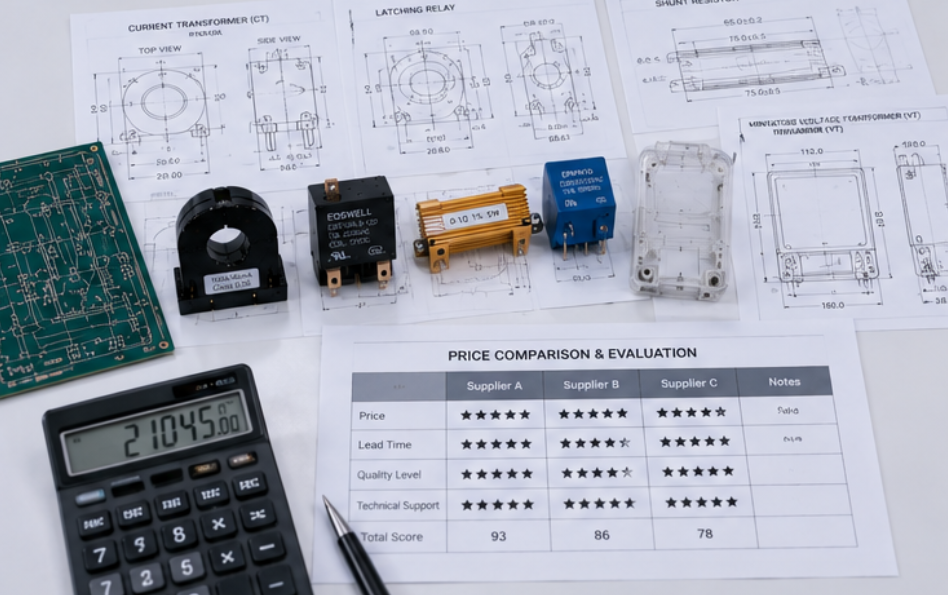
The most useful way to get a better OEM quotation is to provide project information in a structured way. Buyers should send the application type, rated current or voltage range, target meter design, mounting method, available space, drawings, sample demand, and expected order quantity. This allows the supplier to judge whether a standard part is suitable or whether customization is needed.
It is also important to separate confirmed requirements from flexible requirements. For example, if the rated current and PCB position are fixed but the final case size is still open for discussion, that can be stated clearly. This helps the supplier prepare a quotation that is practical without making unnecessary assumptions. It also shortens the time needed for back-and-forth clarification.
Buyers should also explain whether the quotation is for sample evaluation, pilot production, or confirmed OEM cooperation. A supplier may quote differently depending on whether the project is still at the test stage or already moving toward volume production. Clear project-stage information helps both sides make better decisions earlier.
Another practical point is to evaluate quotation value, not only quotation price. A slightly higher quoted part may still be the better OEM choice if it provides stronger consistency, fewer design revisions, and lower future production risk. In smart meter projects, total project cost is often more important than the first unit price.
A better RFQ usually leads to a better quotation, and a better quotation usually leads to a smoother OEM project. That is the most practical way to control both cost and risk.

Conclusion
The price of smart meter components in OEM projects is affected by more than the component category alone. Technical requirement, customization level, tooling impact, testing expectation, order quantity, and RFQ clarity all influence the final quotation. When buyers understand these pricing drivers and provide clearer project information, they can receive faster, more accurate quotes and make better purchasing decisions with lower future project risk.
Contact Us
Looking for reliable smart meter components for your OEM project? Contact our team to discuss your drawings, technical requirements, sample demand, and quotation details.