What Buyers Should Confirm Before Ordering A Pedestal EV Charging Station
What Buyers Should Confirm Before Ordering A Pedestal EV Charging Station
Ordering a pedestal EV charging station is not only about choosing a power level or connector standard. For commercial and public charging projects, buyers should confirm the real site layout, charging demand, installation conditions, user type, software functions, and future expansion plan before placing the order. If these points are not confirmed early, the project may later face installation changes, slower site progress, poor charging experience, or unnecessary cost. This guide explains what buyers should confirm before ordering a pedestal EV charging station and how to make a safer, more practical project decision.
1. Why Ordering A Pedestal EV Charger Requires More Than A Basic Product Comparison
In many EV charging projects, buyers start by comparing charger power, connector type, and quotation. These are important, but they are not enough for a safe ordering decision. A pedestal EV charging station becomes part of the parking design, the user experience, the electrical plan, and the future charging strategy of the site. If the project only compares hardware labels, the final installation may still fail to match the real commercial need.
This is especially true in commercial real estate, public parking, office parks, retail sites, and fleet projects. In these environments, the charger must fit vehicle flow, parking layout, outdoor conditions, charging duration, access control, billing logic, and future expansion. A charger that looks correct in a catalog may still be the wrong choice if the project has not clearly defined these site conditions before ordering.
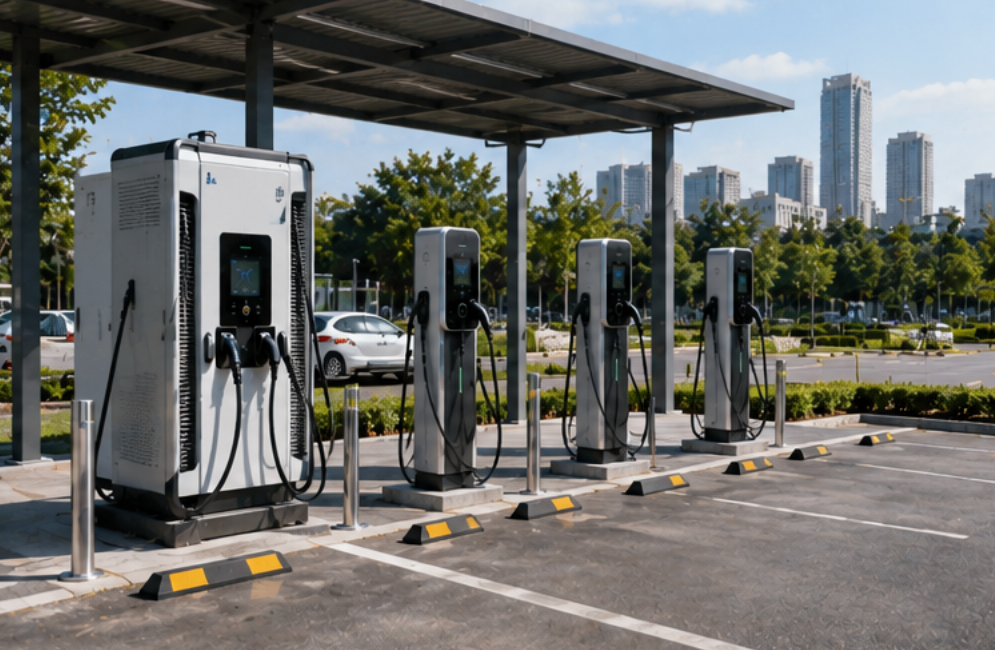
Your brochure already shows that pedestal charging solutions cover very different power classes and use scenarios, from 7–22kW AC charging for everyday commercial destinations to 30/40kW DC charging and 240kW pedestal DC charging for stronger public and fleet-oriented demand. That means the order decision should match the actual site role, not just the charger category.
The best ordering decision is the one that fits the real site operation from the beginning instead of creating avoidable changes later.
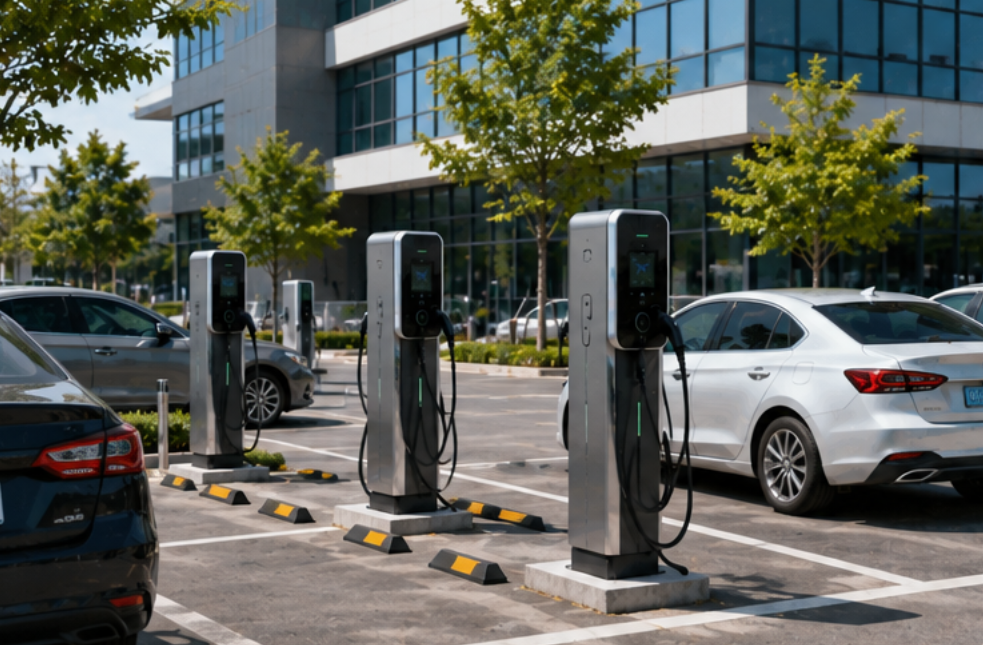
| Confirmation Item | Why It Matters | Typical Question To Confirm |
|---|---|---|
| Power Level | Affects charging speed, cost, and site suitability | Do users stay for hours, or do they need faster turnover? |
| Site Layout | Determines whether pedestal placement is practical | Where should chargers be placed in relation to parking bays? |
| User Type | Changes charging behavior and feature needs | Are the users visitors, office staff, public drivers, or fleets? |
| Connector Standard | Must match target vehicles and market needs | Does the project need Type 2, CCS2, CCS1, or GBT? |
| Smart Functions | Affects operation, access control, and billing | Does the site need RFID, app control, OCPP, WiFi, or 4G? |
| Expansion Plan | Helps avoid ordering a solution that becomes limited too quickly | Will the site add more chargers in the next phase? |
2. What Buyers Should Confirm About The Site Before Ordering
The first thing buyers should confirm is the real use scenario of the site. A pedestal charger for an office park is not chosen the same way as a charger for a retail center, a public charging lot, or a fleet depot. Buyers should define whether the project is destination charging, turnover-based charging, or fast public charging before selecting the charger.
The second point is parking layout. Pedestal chargers are often chosen because they can be positioned where vehicles actually need them, but that advantage only matters when the site plan is already clear. Buyers should confirm parking-bay arrangement, traffic direction, charger visibility, and whether the charger should serve one bay, two bays, or a central parking island.
The third point is the electrical and installation environment. Buyers should confirm the available power condition, installation space, outdoor exposure, and whether the charger will be used in a parking lot, roadside commercial site, garage entrance area, or transportation-related project. The brochure shows IP54 protection and broad operating features across the charging station range, which is useful, but the site should still be defined clearly before ordering.
In short, the buyer should first understand the site as a charging environment, not just as a place to put a charger.
3. What Buyers Should Confirm About The Charger Configuration
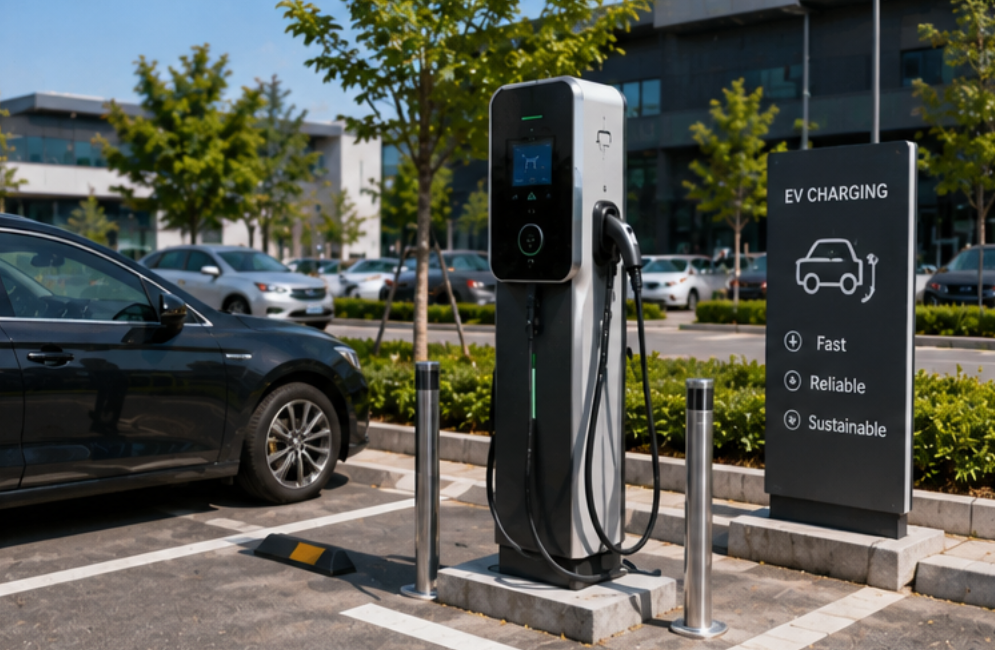
Buyers should confirm the right power level first. Lower-power pedestal chargers are usually better for long-stay parking and everyday commercial charging, while DC pedestal chargers are more suitable when the project needs faster charging and stronger commercial service. The brochure clearly shows the range from 7–22kW AC to 30/40kW DC and 240kW pedestal DC charging.
The next point is connector and market compatibility. Buyers should confirm whether the project is serving North America, Europe, China, or another target market, and match the charger to the expected connector standard accordingly. Wrong connector planning can slow down or limit the whole project even if the charger power is correct.
Buyers should also confirm what smart functions are actually required. Some projects only need basic charging. Others require RFID, OCPP, WiFi, 4G, remote management, app control, or payment support. These features directly affect daily operation and should be decided before ordering, not after installation planning has already started.
Finally, buyers should confirm whether customization is needed, such as logo, nameplate, cable options, interface preferences, or user-manual branding. These points are easier to handle before ordering than after the hardware path has already been fixed.
4. What Buyers Should Confirm For Long-Term Project Success
Buyers should confirm not only what the site needs today, but also what it may need later. A charging project that starts with several parking bays may expand in the future. A site serving office staff today may later serve more public visitors. A fleet site may add more vehicles over time. Ordering the right pedestal charger means planning for this future direction, not only the first installation stage.
It is also important to confirm who will manage the chargers after installation. Property developers, operators, parking managers, and fleet users may have different expectations around access control, payment, remote monitoring, and user support. The charger should match that operating model from the beginning.
Another practical point is supplier support. Buyers should confirm whether the supplier can support connector selection, mounting advice, communication features, and future project customization instead of only providing a standard quotation. The order becomes much safer when the supplier is aligned with the real project path.
The best pedestal charging station order is the one that fits the site now, supports the site later, and avoids unnecessary redesign after installation planning has already started.
Conclusion
Before ordering a pedestal EV charging station, buyers should confirm the site type, parking layout, charging duration, power level, connector standard, smart functions, installation environment, and future expansion plan. When these points are checked early enough, the project is much more likely to choose the right charger the first time and move forward with fewer changes later.
Contact Us
Looking for the right pedestal EV charging solution for your site? Contact our team to discuss charging power, connector type, mounting layout, and project requirements.