Why Pedestal EV Chargers Are Better For Public Parking And Outdoor Charging Areas
Why Pedestal EV Chargers Are Better For Public Parking And Outdoor Charging Areas
In public parking projects and outdoor charging areas, charger placement matters just as much as charging power. A charger that works well on paper may still create user inconvenience, poor visibility, awkward cable reach, or limited expansion if the installation form does not match the real site. That is why pedestal EV chargers are often the better choice for public and outdoor applications. They are easier to position where drivers actually need them, easier to integrate into open parking layouts, and easier to scale across public charging projects. This guide explains why pedestal EV chargers are better for public parking and outdoor charging areas and what site advantages make them the stronger long-term solution.
1. Why Public Parking And Outdoor Charging Need A Different Installation Logic
Public parking and outdoor charging areas are very different from private garage charging. In these projects, the charger does not serve only one predictable user or one fixed parking habit. It needs to work for different drivers, different vehicle positions, changing traffic flow, and a site environment that often includes weather exposure, public access, and future expansion pressure. Because of this, installation flexibility becomes one of the most important project factors.
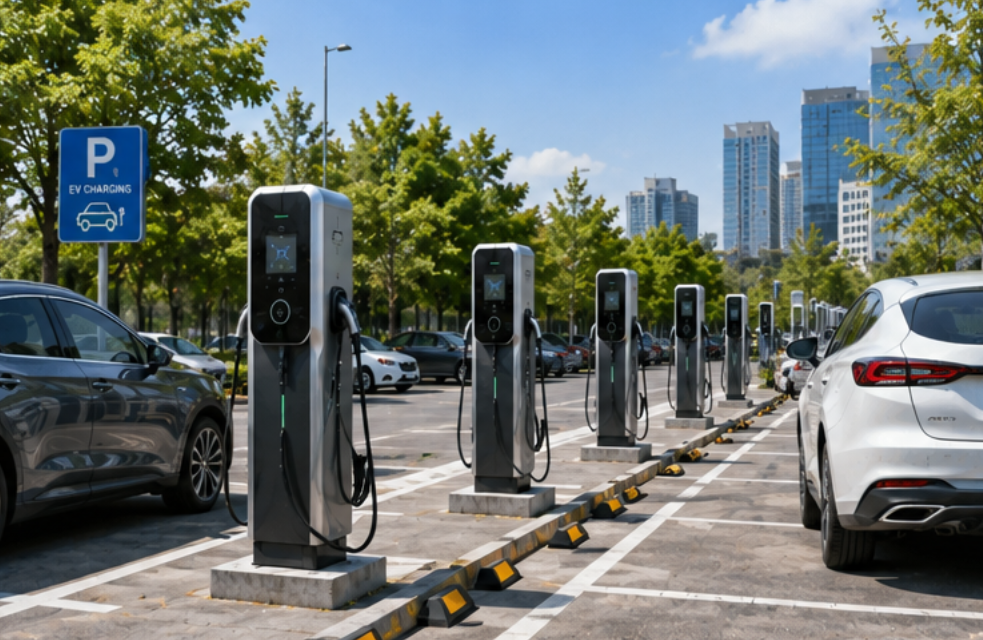
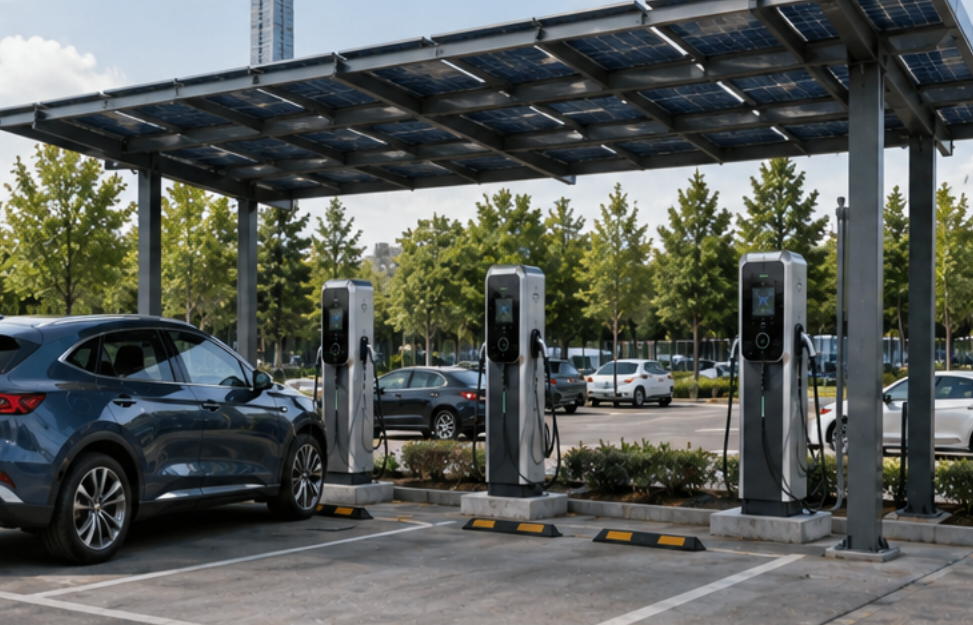
A pedestal charger is usually better in this kind of environment because it can be positioned according to the parking layout instead of depending on the nearest building wall. In many outdoor and public sites, the best location for the charger is in the parking area itself, on an island, between bays, or along a central vehicle path. This allows the charger to serve the site more naturally and more visibly.
Public charging projects also need stronger charger visibility. Drivers should be able to identify the charging points easily, enter the space smoothly, and use the charger without confusion. A pedestal charger stands out more clearly in open space and helps the site look intentionally designed for EV use rather than temporarily adapted.
In short, pedestal chargers match the open and shared nature of public charging much better than solutions that depend on wall availability.
| Outdoor / Public Need | Why Pedestal Chargers Work Better | Typical Site Example |
|---|---|---|
| Flexible Placement | Can be installed where vehicles actually park and move | Public parking lots, curbside charging, open commercial parking |
| High Visibility | Makes chargers easier for drivers to find in open areas | Municipal parking, transport hubs, public institutions |
| Outdoor Suitability | Better matches open-air site planning and charger access | Roadside sites, commercial plazas, public charging zones |
| Expansion Potential | Easier to add more chargers across parking areas later | City parking projects, fleet yards, phased EV rollouts |
| User Convenience | Supports easier vehicle access and more natural cable reach | Mixed-use parking, commercial real estate, public lots |
2. Why Pedestal Chargers Perform Better In Public Parking Projects
In public parking projects, the charger should serve the parking area rather than the building wall. This is the biggest reason pedestal chargers are often better. Public sites usually have open parking rows, islands, or roadside spaces where a wall-mounted product would either be too far from the vehicle or too limited by the surrounding structure. A pedestal charger avoids that problem by allowing the project to place the charger exactly where it should be used.
Pedestal chargers also help create a more visible charging service. In public parking, drivers often need to see the charger before they enter the bay. A freestanding charger is easier to notice and easier to associate with a dedicated EV charging area. This is especially helpful in public institutions, transport-related projects, outdoor commercial lots, and city charging sites where first-time users may be unfamiliar with the location.
Another advantage is project flexibility. Public charging areas often grow over time. A city project may begin with several spaces and later expand. A commercial outdoor lot may add more charging after EV traffic increases. Pedestal chargers make that scaling easier because they can follow the parking plan instead of depending on limited wall positions.
For many public parking projects, pedestal chargers are not just easier to install. They are easier to operate as a visible and expandable public service.
3. Why Pedestal Chargers Are A Better Fit For Outdoor Charging Areas
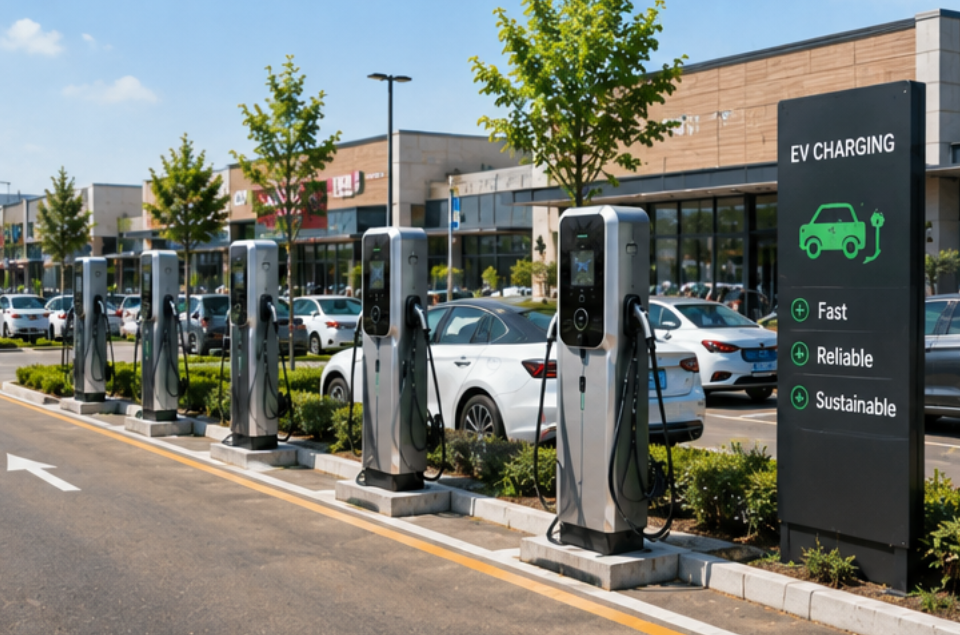
Outdoor charging areas need chargers that work with open exposure, user access, and commercial-grade management. The brochure highlights that the charging station range includes outdoor-focused design features such as IP54 protection, dustproof and waterproof performance, and smart functions like RFID, Plug & Play, BLE, WiFi, 4G, app control, and OCPP support. These features are especially valuable in outdoor sites where the charger is not hidden inside a private garage but is part of a public-facing operating environment.
Pedestal chargers also create a cleaner outdoor user experience. Because they are installed as independent charging points, drivers can access them more naturally from the parking position. This improves cable handling and makes the charger feel like a planned outdoor facility instead of an add-on attached wherever a wall happened to exist.
For higher-power outdoor charging, pedestal form becomes even more logical. The brochure shows a 240kW DC charging station as a pedestal type and positions it for applications such as fleets, public organizations, intelligent transportation, and commercial real estate. That is exactly the kind of environment where a freestanding outdoor charger usually makes more practical sense than a wall-dependent installation.
In outdoor areas, the charger should behave like part of the site infrastructure, and pedestal chargers usually achieve that better.
4. What Public-Site Buyers Should Think About Before Choosing
Buyers should first confirm how the vehicles will actually use the site. If the parking spaces are open, spread out, or centered around islands or public traffic flow, pedestal chargers are usually the better choice. If the site is large and meant to expand, pedestal chargers usually provide a more scalable long-term layout.
Buyers should also consider whether the charging area needs to be easy to identify and easy to manage. In public-facing environments, charger visibility and user guidance matter. Pedestal chargers help define the charging zone more clearly, which improves usability and strengthens the public charging experience.
Another practical point is future project growth. If the site will later add more chargers, more parking bays, or higher power levels, pedestal installation usually provides a stronger long-term path. This is one reason more commercial and public charging projects now prefer pedestal EV chargers from the beginning.
The best public charging solution is not only the one that charges vehicles today, but the one that still works well as the site expands and user demand grows.
Conclusion
Pedestal EV chargers are better for public parking and outdoor charging areas because they match the open layout, public visibility, user convenience, and future expansion needs of these projects. They work especially well where chargers must be placed according to the parking environment rather than building walls. For public and outdoor charging infrastructure, pedestal installation is often the more practical and scalable long-term choice.
Contact Us
Looking for the right EV charging solution for public parking or outdoor charging areas? Contact our team to discuss charging power, pedestal installation, site layout, and project requirements.