Why Some Smart Meter Components Fail Early And How To Choose Better Ones
Why Some Smart Meter Components Fail Early And How To Choose Better Ones
In smart meter projects, early component failure usually does not come from one obvious defect alone. More often, it is caused by poor matching between the component and the real application environment. A part may look acceptable in a sample test and still fail early because of thermal stress, unstable electrical behavior, weak insulation structure, dimensional inconsistency, repeated switching wear, or poor batch quality. This guide explains why some smart meter components fail early and how engineers, buyers, and project teams can choose better parts before those problems become expensive in production or field use.
1. Why Some Smart Meter Components Fail Earlier Than Expected
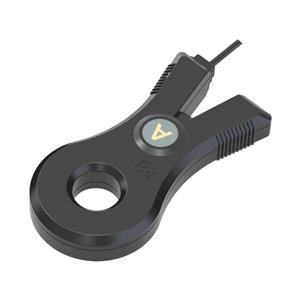
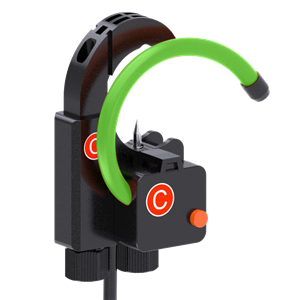
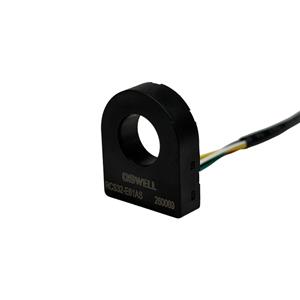
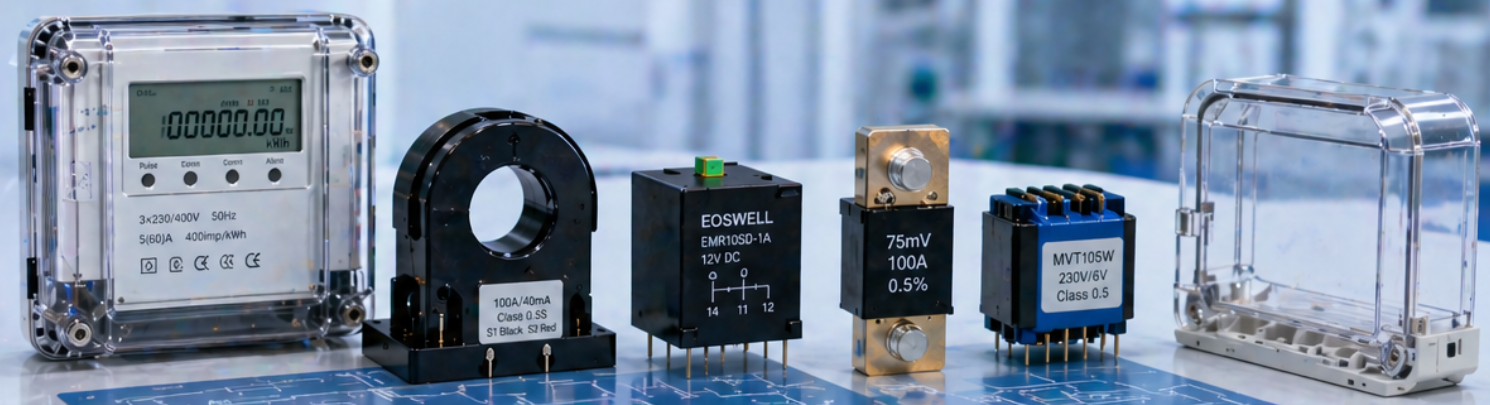
In many cases, early failure starts with a selection decision that looked reasonable at the beginning but did not fully reflect the real smart meter application. A current transformer may be chosen mainly by nominal current without enough attention to burden matching, linearity, or temperature stability. A latching relay may be selected by rating only, while contact behavior, actuation stability, and repeated switching conditions are not reviewed deeply enough. A shunt resistor may appear economical, but if thermal influence is underestimated, long-term performance can suffer. A miniature voltage transformer or meter case may also create hidden risk when insulation, layout fit, or production consistency are not well controlled.
Another common reason is that components are often evaluated in isolation instead of in the complete smart meter system. A part may pass an individual test and still create problems later once it interacts with the PCB layout, enclosure temperature, signal path, sealing structure, terminal design, or surrounding components. This is especially important in smart meters because the product is compact and highly integrated. Small weaknesses can become larger reliability problems after assembly and long-term operation.
Early failure also happens when batch consistency is not taken seriously enough. A supplier may provide a strong prototype sample, but if the manufacturing process cannot keep winding quality, dimensional control, material consistency, or contact performance stable across production, the final meter can show increasing variation or premature field issues. This kind of problem often appears only after production begins, which makes it more expensive to correct.
In short, early failure is usually not just a product problem. It is often a component selection and validation problem. Better choices at the beginning can remove a large part of that risk.
2. What Buyers And Engineers Should Check To Avoid Weak Components
The first thing to check is electrical stability. For current sensing and metering parts, this means whether the component behaves predictably across the actual working range rather than only at one test point. For relays, it means stable switching and actuation behavior under realistic use conditions. Electrical stability is one of the clearest indicators of whether a component can support long-term smart meter performance.
The second thing to check is thermal performance. Smart meters are compact, and heat can affect both accuracy and service life. A component that introduces too much temperature rise or becomes unstable under temperature change may fail earlier even if its basic rating looks sufficient. Engineers and buyers should therefore consider not only nominal specification, but also how the component behaves after thermal stress and in the final enclosure condition.
The third thing to check is insulation and structural reliability. Current transformers, miniature voltage transformers, relays, and housings all need to support the safety concept of the smart meter. If insulation stability or structural robustness is weak, the part may become a long-term reliability risk even if it functions normally at the beginning.
Another major point is dimensional fit and assembly compatibility. A part that is too sensitive to tolerance variation, mounting stress, or layout mismatch can increase assembly difficulty and create hidden mechanical weakness. This is especially relevant for meter cases, relays, CTs, and transformer parts that must fit consistently into a highly integrated structure.
Environmental and durability suitability should also be reviewed before final selection. If the smart meter will face humidity, dust, temperature change, repeated switching, or long service periods, the chosen component should be able to handle those conditions with sufficient margin. Practical durability often separates better components from merely acceptable ones.
Finally, supplier process capability matters just as much as the part itself. A good smart meter component should be supported by stable production control, repeatable inspection, and batch-to-batch consistency. This is often where better suppliers stand out from weaker ones.

| Check Area | Why Weak Parts Fail Early | What Better Parts Should Offer |
|---|---|---|
| Electrical Stability | Output or switching behavior becomes less predictable in real use | Stable performance across the real operating range |
| Thermal Performance | Heat stress creates drift, wear, or shortened service life | Controlled temperature rise and stronger thermal stability |
| Insulation / Structural Reliability | Weak safety margin or structural design causes long-term risk | Reliable insulation and stronger mechanical confidence |
| Dimensional / Assembly Fit | Tolerance or layout mismatch creates assembly stress and variation | Repeatable fit and smoother production integration |
| Environmental / Durability Suitability | Real operating conditions exceed the part’s practical capability | Better resistance to humidity, temperature cycling, and repeated use |
| Batch Consistency | Production variation creates hidden field and calibration risk | Stable process control and repeatable quality across batches |
3. How To Choose Better Smart Meter Components More Practically
A better selection process starts with the actual smart meter application rather than with a catalog comparison only. Project teams should define the electrical load condition, expected temperature environment, installation structure, service-life target, and production requirements first. Once these conditions are clear, it becomes easier to see which component is genuinely better suited to the product and which one only appears attractive in a basic specification sheet.
It is also important to evaluate parts at the system level. A current transformer, relay, shunt resistor, miniature voltage transformer, or meter case may all perform acceptably on their own and still create problems when combined in the full smart meter design. System-level validation helps reveal issues related to heat buildup, burden mismatch, actuation control, enclosure interaction, assembly stress, and long-term stability before production begins.
Another practical step is to check post-stress performance, not just initial function. In other words, do not ask only whether the component survives the test. Ask whether its important electrical or structural behavior remains stable afterward. Better components usually show stronger retention of performance after thermal, electrical, or repeated-use evaluation.
Supplier capability should be part of the final decision as well. A stronger supplier can usually provide better test support, more stable production control, and more repeatable delivery quality. In smart meter projects, that makes a real difference because the product depends on long-term consistency, not just early sample success.
The best smart meter components are therefore not simply the ones with the most attractive rating or the lowest price. They are the ones that remain stable, consistent, and well matched to the real application from design validation through mass production and field use.

Conclusion
Some smart meter components fail early because they were not evaluated deeply enough against the real application, production conditions, or long-term operating environment. Better components are the ones that offer stronger electrical stability, thermal control, safety support, assembly compatibility, environmental suitability, and batch consistency. When engineers and buyers choose parts with those factors in mind, they can reduce early failure risk and build a more reliable smart meter platform from the start.
Contact Us
Looking for reliable smart meter components with stable testing and production support? Contact our team to discuss component selection, validation strategy, and supply capability.