Home / Technical Guides / Pedestal EV Charging Station SupplierWhy Customization Matters When Choosing A Pedestal EV Charging Station SupplierIn pedestal EV charging projects, buyers often c

Home / Technical Guides / Pedestal EV Charging Station ApplicationsWhat Makes A Pedestal EV Charging Station Suitable For Fleets, Retail And Commercial Real EstateA pedestal EV charging stat

Home / Technical Guides / Pedestal EV Charger InstallationHow To Reduce Installation Problems In Pedestal EV Charging Station ProjectsIn pedestal EV charging station projects, installation p

Home / Technical Guides / EV Charging Business ModelPedestal DC Fast Charger Or AC Charger: Which One Fits Your Business Model Better?Choosing between a pedestal DC fast charger and a pedest
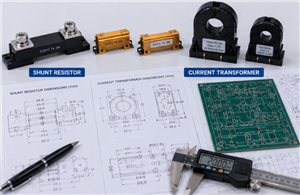
How To Choose Between Shunt Resistors And Current Transformers For Different Smart Meter Designs
Choosing between shunt resistors and current transformers for different smart meter designs requires more than a simple cost comparison. The right method depends on the project’s current sensing architecture, safety structure, thermal strategy, integration style, and long-term production plan. When buyers and engineers evaluate these factors together, they can choose a sensing method that supports not only the design target, but also smoother OEM execution and lower future risk.

Shunt Resistor Or Current Transformer: Which Current Sensing Method Is Better For Smart Meters
Shunt resistors and current transformers each offer clear advantages for smart meter design, but they support different priorities. Shunt resistors often stand out for economy, direct sensing, and compact integration. Current transformers often stand out for isolation-related advantages, magnetic sensing structure, and suitability in certain robust metering architectures. The better option depends on the actual meter platform, including cost target, thermal strategy, safety concept, integration method, and long-term reliability goals. By comparing both methods from a full system perspective, project teams can make a more practical and more reliable current sensing decision.

On May 13, a tech firm released the SE8518 series of four BMS-focused shunt resistors, targeting critical industry challenges: SE8518-10: Micron-level tin plating withstands 2,000-hour salt spray testing. SE8518-02/12: Triple-pin design enables simultaneous voltage, temperature, and current sensing. SE8518-03/13: M3 threaded holes boost installation efficiency by 60%, ideal for battery-swap systems.

Compact 800×800mm Shunt Resistor Debuts, Solving Precision Challenges in EV Battery Management
As the global EV industry enters a critical phase of battery management system (BMS) upgrades, a tech company unveiled the SEFL-100A-100mV-01 fixed-value shunt resistor on August 1. Measuring 800×800mm, this brass-based component achieves a 100mV voltage drop at 100A current, utilizing high-purity manganin alloy for ±0.5% accuracy across -40°C to 125°C. Its 30% smaller footprint enables direct integration into battery modules.
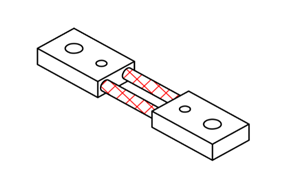
A fixed value shunt, often referred to as a constant current source or a fixed resistance, plays a significant role in various domains of electrical engineering. This article aims to delve into its applications, principles, and significance from a university professor's perspective, providing a reservoir of knowledge for students and professionals alike.
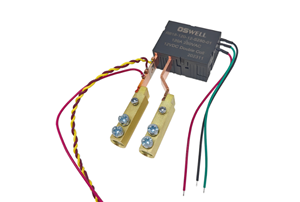
Decoding the Comprehensive Structure of the 100A Magnetic Latching Relay with Shunt Technology
The intricate design of the 100A Magnetic Latching Relay equipped with shunt technology is a testament to its engineering prowess. At its core, the product is composed of several essential components that harmoniously work together to deliver exceptional performance.