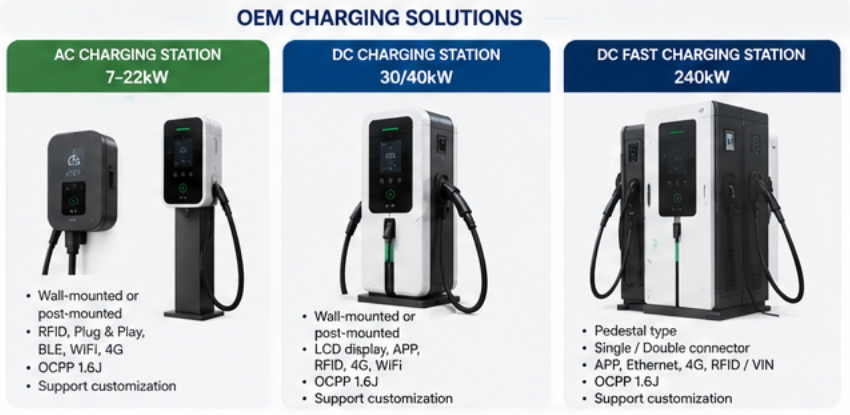
In conclusion, while often unseen within the charging station's enclosure, low-resistance, high-precision shunt sensors are fundamental components that underpin the entire EV charging ecosystem. They are critical for accurate revenue collection, ensuring operational safety, enabling fast charging protocols, and facilitating smart grid integration. Their performance directly impacts user trust, station profitability, and grid stability. As charging powers increase and V2X applications emerge, the demands on these components for higher accuracy, greater power handling, and unwavering reliability will only intensify. For international buyers and designers specifying components for next-generation charging infrastructure, partnering with a trusted, high-quality manufacturer like Oswell is a strategic imperative. It ensures access to the precise, reliable, and robust current sensing technology needed to build a trustworthy, efficient, and future-ready EV charging network.
Before ordering a shunt resistor, buyers should check three things in depth: whether the resistance value matches the real current range and acceptable power loss, whether TCR and Kelvin sensing support accurate measurement under heat and parasitics, and whether power rating, drift, and traceability are strong enough for long-term use. A shunt resistor is not just a resistor. In many systems, it is the foundation of current measurement quality.
Choosing the right shunt resistor for a battery management system means balancing four things at the same time: measurable signal, power loss, temperature stability, and integration quality. The best choice is usually not the one with the lowest resistance or the lowest price by itself. It is the one that fits the pack’s current profile, maintains accuracy across temperature, supports clean sensing connections, and stays stable over real operating life. That is the kind of choice that improves BMS performance instead of creating hidden cost later.
Long-term operating stability should never be judged by initial appearance, short sample testing, or price alone. It should be evaluated through performance retention, thermal behavior, material reliability, life testing, batch consistency, and full-system risk. For procurement teams, the most valuable product is not simply the one that can pass a first test, but the one that can keep working accurately, safely, and consistently throughout the real service life of the project.
The shunt resistor, though small and often overlooked, plays an outsized role in the EV ecosystem. Its accuracy is the foundational data point upon which battery performance optimization and critical safety interventions are built. Inaccurate current sensing can lead to unreliable range estimates, accelerated battery degradation, and, in extreme cases, compromise vehicle safety. Investing in a high-precision, stable, and robustly engineered BMS shunt resistor, such as those from dedicated manufacturers, is not a cost but a strategic investment. It is an investment in driver confidence, vehicle performance, battery longevity, and above all, the fundamental safety that enables the widespread adoption of electric mobility. Precision in measurement is, therefore, the first and most crucial step towards a safe and efficient electric future.
In conclusion, the BMS shunt resistor is far more than a passive component; it is the critical sensory organ of the battery management system. Its unparalleled precision in translating current flow into a measurable signal forms the bedrock for accurate state estimation, robust safety protection, and optimal system efficiency. The choice of a shunt resistor with excellent metrological characteristics—low temperature coefficient, high stability, and precise tolerance—is therefore a decisive factor in the reliability, safety, and longevity of any lithium-ion battery system. Investing in a high-quality shunt, such as those engineered for precision metering, is an investment in the integrity and performance of the entire BMS.
The evolution from brass to Manganin encapsulates Oswell's commitment to scientific advancement and precision. It's a journey from acceptable conductivity to engineered stability, where material science is meticulously applied to solve real-world measurement challenges. By mastering the properties of Manganin and coupling it with rigorous manufacturing discipline, Oswell establishes its shunt resistors as pillars of reliability in applications where measurement accuracy is non-negotiable. This focus on foundational component excellence ultimately powers smarter, safer, and more efficient electrical systems across the globe.
Oswell's approach to building lasting global partnerships rests on a powerful triad: uncompromising quality delivering reliable performance, flexible customization addressing specific needs, and forward-looking innovation driving mutual growth. By consistently exceeding expectations across these dimensions while maintaining transparent, collaborative relationships, Oswell transforms client engagements into strategic alliances built on trust, shared success, and a common vision for the future of electrical technology.
Far from being a simple passive component, the shunt sensor is a pivotal technology that dictates the accuracy and intelligence of a Battery Management System. Its role in providing precise, stable, and temperature-resilient current data is irreplaceable for calculating State of Charge, State of Health, and implementing protective controls. Investing in high-quality, precision-engineered shunt sensors, such as those from Oswell, is a foundational decision that safeguards battery safety, unlocks optimal performance, and ensures the long-term reliability and value of any energy storage or electric mobility system.
Shunt Sensors: The "Fuel Gauge" for EVs - Monitoring Charging/Discharging Currents in Real Time
Shunt sensors have emerged as the unsung heroes of the electric vehicle revolution, providing the critical current measurement capabilities that enable safe, efficient, and reliable operation. Through advanced manufacturing techniques and robust design principles, these components deliver the precision necessary for accurate battery management, energy monitoring, and system protection. As EVs continue to evolve toward higher performance and greater adoption, shunt sensors will remain essential components in the electrification ecosystem, faithfully serving as the "fuel gauges" that power the future of transportation.