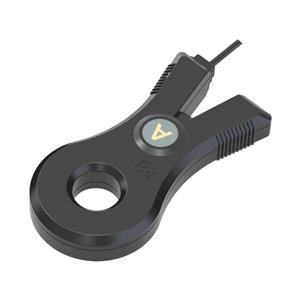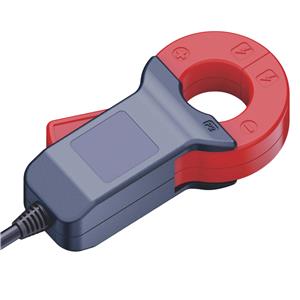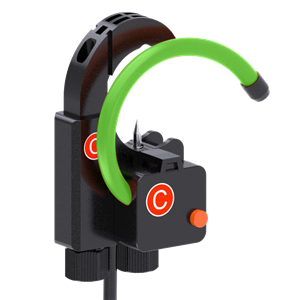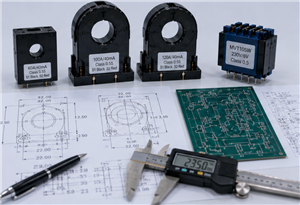
Buyers should check application fit, electrical behavior, dimensional compatibility, insulation confidence, thermal stability, and future batch consistency before approving a metering current transformer sample. A stronger sample approval process reduces redesign risk, avoids hidden accuracy problems, and improves confidence in the next quotation and mass-production stage. In smart meter projects, better sample approval leads to better final component decisions.

Shunt Resistor Or Current Transformer: Which Current Sensing Method Is Better For Smart Meters
Shunt resistors and current transformers each offer clear advantages for smart meter design, but they support different priorities. Shunt resistors often stand out for economy, direct sensing, and compact integration. Current transformers often stand out for isolation-related advantages, magnetic sensing structure, and suitability in certain robust metering architectures. The better option depends on the actual meter platform, including cost target, thermal strategy, safety concept, integration method, and long-term reliability goals. By comparing both methods from a full system perspective, project teams can make a more practical and more reliable current sensing decision.
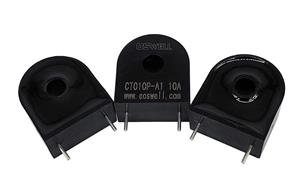
A 10A miniature current transformer (CT) is a compact, precision instrument designed to measure alternating current (AC) in low-voltage electrical systems. Unlike traditional CTs, which are often bulky, this miniaturized version is engineered for applications where space constraints and portability are critical, such as in industrial control panels, renewable energy systems, and consumer electronics.
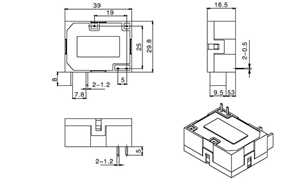
The accuracy is unchanged for a long time, and there is no need to run the school, no installation and transportation, etc.

The concept of smart meters
As an intelligent product developed by new technology, smart electricity meter can complete the contact function between users and smart grid. It not only has the function of human-computer interaction, but also has the basic function of electricity energy measurement, information transmission and remote status monitoring.
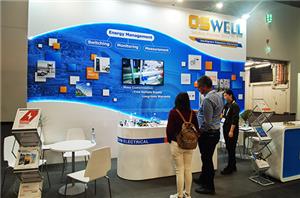
This exhibition will focus on:Power plant products and equipment systems: power devices, high voltage switches, transmission, distribution network, transformers, current transformers, voltage transformers, power capacitors, high voltage cabinets, monitors, electrical engineering, power supply and accessories, wires and cables, insulation materials, measurement and electronic equipment systems, etc
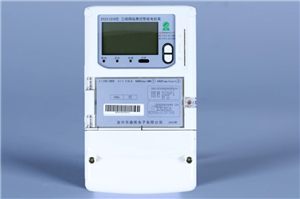
What is a Smart Meter?
Smart meter is a metering device that can measure electricity remotely through RS485 data transmission and terminal computer software management. Free automatic power off, timed power off, student apartment malignant load identification and other functions.
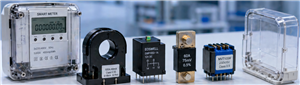
Evaluating smart meter components before mass production starts requires more than confirming that the sample works once. The right evaluation process should verify electrical stability, thermal behavior, safety support, dimensional compatibility, environmental durability, and batch consistency under realistic smart meter conditions. When these checks are carried out together and linked to the real application, project teams can reduce launch risk, improve manufacturing confidence, and support stronger long-term product reliability.
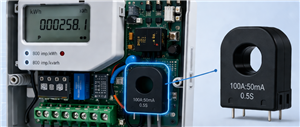
Preventing accuracy drift in smart meter current transformer selection requires more than checking one nominal performance value. The right CT should support stable ratio behavior, good linearity, proper burden compatibility, reliable thermal performance, mechanical consistency, and repeatable batch quality. When these factors are evaluated together in the context of the real smart meter design, project teams can reduce drift risk, improve calibration stability, and build meters with stronger long-term measurement reliability.

Before finalizing a smart meter design, the meter case should be checked from a full system perspective rather than as a simple enclosure choice. The right housing should support material stability, safe structure, reliable sealing, dimensional compatibility, practical installation, and repeatable production quality. When these factors are reviewed together, project teams can lock the design with stronger confidence, reduce hidden tooling and assembly risk, and support more reliable long-term smart meter performance.