The relay coil is represented in the circuit by a long box symbol, and if the relay has two coils, two long boxes are drawn side by side. At the same time, mark the relay word symbol "J" in or beside the long box. There are two ways to represent the contacts of relays: one is to draw them directly on one side of the long box, which is more intuitive. The other is to draw each contact into its own control circuit according to the needs of the circuit connection. Usually, the contact of the same relay and the coil side are marked with the same text symbol, and the contact group is numbered to show the difference.
Self-locking and interlocking are achieved by auxiliary contacts of relays. First of all, you need to understand what is called self-locking and what is called interlocking. Self-locking is to short off the button switch of the contactor coil loop with your own contacts, and make the coil loop open continuously after the button switch is released, which is self-locking.
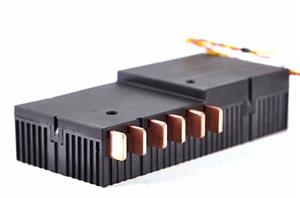
Parameters of double coil relays
Type: Double coil magnetic latch type (reverse polarity) Manual switch type Series : ADJH series Model: ADJH24112 Appearance size: 39×15×30.2(L×W×H)
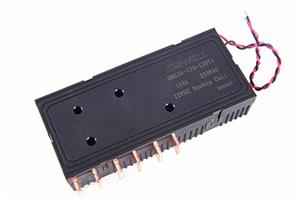
Three Phase Magnetic Latching Relay
3 groups of 120A contact switching capability Contact on-off detection auxiliary switch can be provided Coil control single and double coil optional
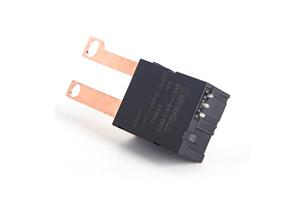
When choosing a relay with QC lead-out method, please do not use soldering to connect the load lead-out end of the relay. If other welding methods are used, it is also necessary to ensure that the heat generated by welding will not affect the function of the magnetic latching relay
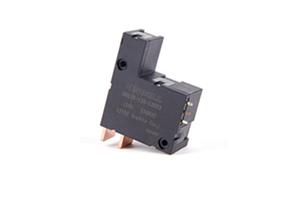
Please apply a suitable voltage to the coil according to the coil polarity specified in the manual, otherwise the operating voltage of the relay will increase or even not operate; it needs to be changed When driving the polarity, please use the "-R" type relay.
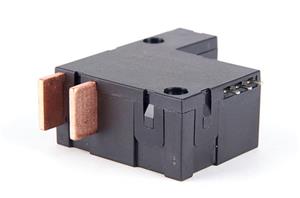
Magnetic Latching Relay characteristics
The factory state of the Magnetic Latching Relay is in the state of action or return, but it may change due to the impact of transportation or relay installation and other factors, so please set it to the state of return or action as required when using it (when the power is connected);

Thermal Reed Relay is a new type of thermal switch that uses thermal magnetic material to detect and control temperature.
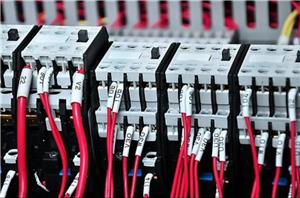
Magnetic Latching Relay
Latching refers to "self-locking", which means that after the relay is energized, its state is automatically locked and the circuit is kept connected. Even if the control current is disconnected at this time, its state will not be changed. That is to say, when the power is energized and absorbed, the control current is disconnected, and it remains on until the unlock button is pressed.
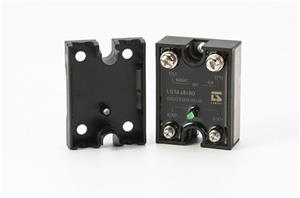
What is a solid state relay?
Solid-state relay is a new type of non-contact switching device composed of solid-state electronic components. It uses the switching characteristics of electronic components (such as switching triodes, triacs and other semiconductor devices) to achieve non-contact and non-sparking.