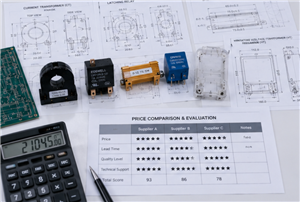
The price of smart meter components in OEM projects is affected by more than the component category alone. Technical requirement, customization level, tooling impact, testing expectation, order quantity, and RFQ clarity all influence the final quotation. When buyers understand these pricing drivers and provide clearer project information, they can receive faster, more accurate quotes and make better purchasing decisions with lower future project risk.

Choosing a current transformer for smart meter projects without causing accuracy problems requires more than checking rated current or one good sample result. The right CT should match the real operating range, burden condition, linearity target, mounting structure, insulation needs, and supplier batch consistency requirements of the project. When these points are reviewed together, buyers and engineers can reduce calibration trouble, avoid hidden measurement errors, and support more reliable long-term smart meter performance.
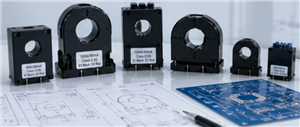
Buyers should provide clear application, electrical, dimensional, installation, safety, and project information before requesting a smart meter CT quote. Doing so helps the supplier recommend the right model faster, reduces repeated communication, improves quotation accuracy, and shortens the sampling and decision process. A better CT RFQ leads to a better quotation, and a better quotation usually leads to a smoother smart meter project.
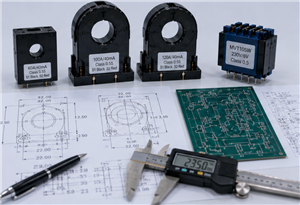
Buyers should check application fit, electrical behavior, dimensional compatibility, insulation confidence, thermal stability, and future batch consistency before approving a metering current transformer sample. A stronger sample approval process reduces redesign risk, avoids hidden accuracy problems, and improves confidence in the next quotation and mass-production stage. In smart meter projects, better sample approval leads to better final component decisions.
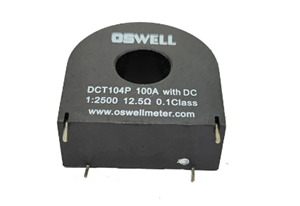
In the field of electrical power systems, current transformers (CTs) play a crucial role in measuring and monitoring electrical currents. These devices are widely used in various applications to ensure the safe and efficient operation of power systems. In this technical blog post, we will explore the application of current transformers in the United States.
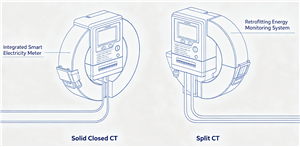
Split core and solid core current transformers each offer clear advantages for metering applications, but they solve different project needs. Split core CTs stand out for retrofit flexibility, non-shutdown installation, and field convenience. Solid core CTs stand out for structural continuity, planned integration, and stable use in fixed meter assemblies. The right decision should be based on installation conditions, system design, mechanical requirements, and long-term reliability goals. By selecting the CT structure according to the real application instead of structure alone, metering projects can achieve better efficiency, stronger performance stability, and lower implementation risk.
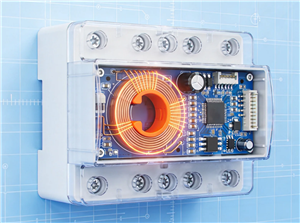
Choosing the best current transformer for smart meter accuracy and stability requires more than checking a few catalog parameters. The right CT should match the meter’s electrical design, mechanical layout, safety requirements, and production goals. When ratio performance, accuracy behavior, burden compatibility, insulation reliability, thermal stability, and manufacturing consistency are evaluated together, smart meter projects can achieve better long-term performance and lower development risk. A careful selection process leads to more stable meters, smoother production, and stronger confidence in field operation.
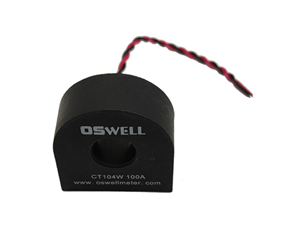
Oswell's automatic winding process is a cornerstone of their manufacturing excellence, directly translating into superior CT performance. By ensuring precision in electrical characteristics, enhancing mechanical durability, and guaranteeing production consistency, this automated approach delivers current transformers that are accurate, reliable, and built to last. This commitment to advanced manufacturing is why Oswell's CTs are trusted in critical applications worldwide, providing the foundation for accurate energy measurement and safe electrical system operation.
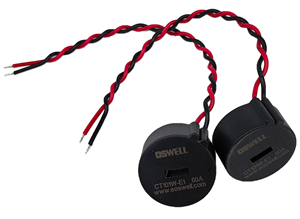
Selecting the right current transformer requires careful consideration of accuracy class, rated parameters, construction quality, safety certifications, and application-specific features. These five key aspects ensure optimal performance, reliability, and compliance for any electrical measurement application. By prioritizing these features, engineers can make informed decisions that result in accurate measurements, extended equipment lifespan, and enhanced system safety.