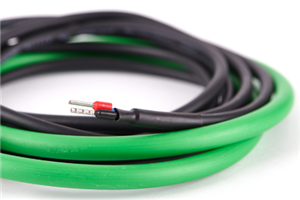
Advantages of Rokowski coil
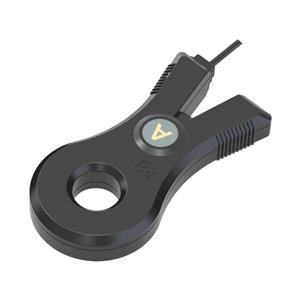
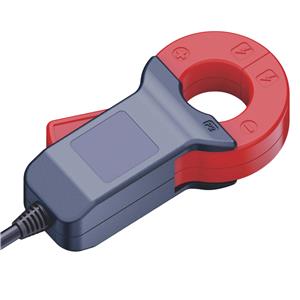
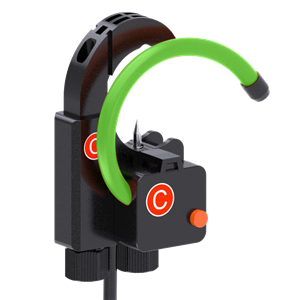
A Rogowski coil, also known as a current measuring coil or differential current sensor, is a circular coil uniformly wound around a non-ferromagnetic material. The output signal is the derivative of the current with respect to time.
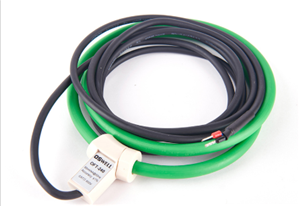
Current transformer and rogowski coil
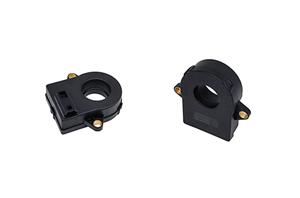
What are the similarities and differences of voltage and current transformers? The current transformer is called CT and the voltage transformer is called PT. What they have in common is that they work on the principle of electromagnetic induction, which is used to monitor the electrical circuit: the current of the electrical circuit is monitored through CT, which is the current source of secondary instrument and protection

main feature of intestinal sensor
The current transformer is flexible in the secondary time. You can also use soft cables to plug a pins. It can be installed with a fixed lead.

Introduction of Relay
A relay is an electrical control device. It has a control system (also known as input loop) and a quilt The interaction between control systems (also known as output loops). Usually applied to the control of automation

The relay coil is represented in the circuit by a long box symbol, and if the relay has two coils, two long boxes are drawn side by side. At the same time, mark the relay word symbol "J" in or beside the long box. There are two ways to represent the contacts of relays: one is to draw them directly on one side of the long box, which is more intuitive. The other is to draw each contact into its own control circuit according to the needs of the circuit connection. Usually, the contact of the same relay and the coil side are marked with the same text symbol, and the contact group is numbered to show the difference.
Self-locking and interlocking are achieved by auxiliary contacts of relays. First of all, you need to understand what is called self-locking and what is called interlocking. Self-locking is to short off the button switch of the contactor coil loop with your own contacts, and make the coil loop open continuously after the button switch is released, which is self-locking.

Usage of current transformers
A transformer is a device that converts voltage or current proportionally. The function of the transformer is to convert high voltage or high current into standard low voltage (100V) or standard low current (5A or 1A, both referring to the rated value), so as to achieve the standardization and miniaturization of measuring instruments, protection equipment and automatic control equipment.
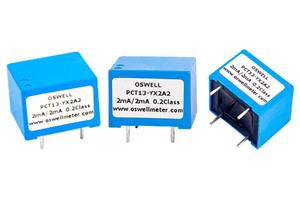
In order to ensure the safe and economical operation of the power system, the operation of the power equipment must be monitored and measured.
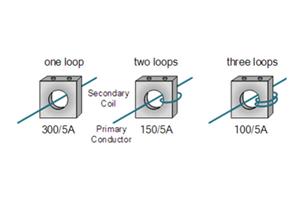
Three basic types of current transformer
Wound Current Transformer – The transformers primary winding is physically connected in series with the conductor that carries the measured current flowing in the circuit. The magnitude of the secondary current is dependent on the turns ratio of the transformer.